Thank you for contacting
GetTaxReliefNow.com!
or wage garnishment — call us now at +(888) 260 9441 for immediate help.



Currently Not Collectible | Immediate Relief
Currently Not Collectible status may suspend IRS collection efforts when you show economic hardship. We prepare a Collection Information Statement using Form 433-F and document your financial status as your authorized representative.

What This Service Does
Currently Not Collectible status is a formal IRS determination that temporarily suspends enforced collection because paying would create economic hardship. Under Internal Revenue Code § 6343, the IRS must release a levy if it is causing immediate financial hardship. According to IRS.gov, hardship exists when a taxpayer cannot pay reasonable basic living expenses.
This service is not tax forgiveness. You still owe the debt. Interest and penalties continue to accrue. However, while your account is in CNC status, the IRS stops forced collection actions. When you hire us, we manage the entire process from start to finish.
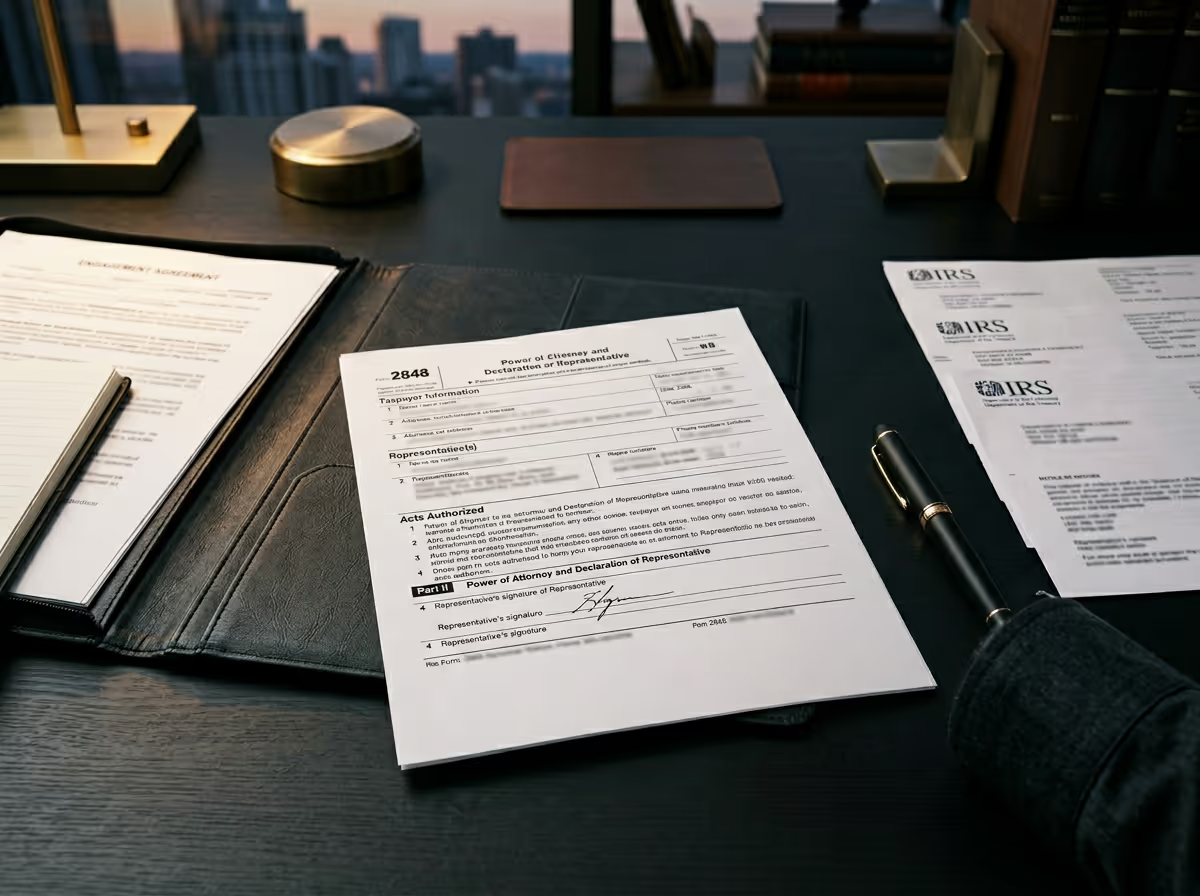
We begin by filing IRS Form 2848, Power of Attorney and Declaration of Representative. Once accepted, the IRS must communicate with us instead of contacting you directly. Collection calls stop. Enforcement letters come to our office. You gain legal protection through representation.
- Balance Verification: We confirm the total amount owed, including penalties and interest.
- Collection Timeline Review: We determine how long the IRS has left to collect under IRC § 6502.
- Enforcement Risk Assessment: We identify pending levies, lien filings, or revenue officer assignments.
- Passport Risk Evaluation: We review whether certification under IRC § 7345 may apply.
Next, we prepare the required Collection Information Statement using Form 433-A or 433-F. This document is the foundation of your hardship request.
The IRS evaluates your income, allowable expenses, assets, and equity. The IRS uses National Standards and Local Standards published on IRS.gov to determine allowable expense amounts. If your expenses exceed those standards, we must justify them. The IRS may deny hardship status if you fail to document permissible costs properly.
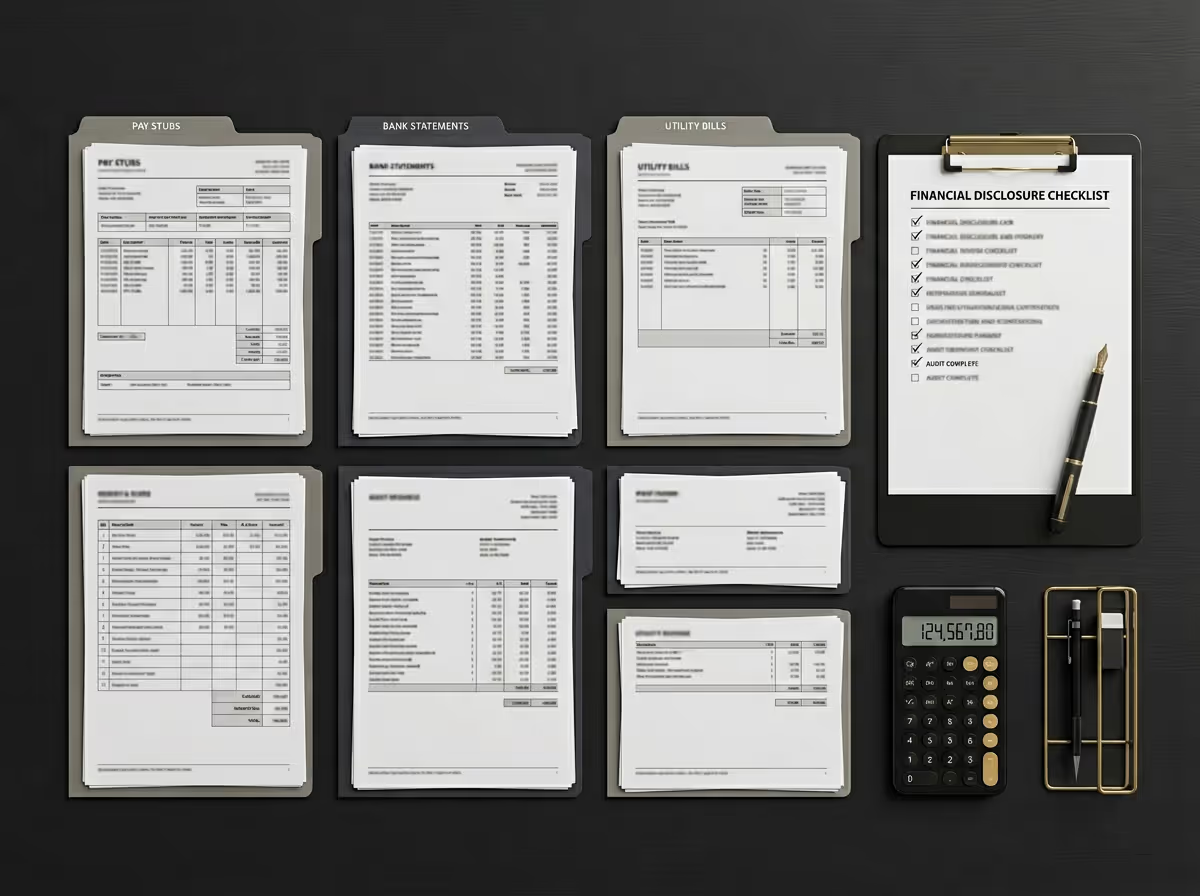
We gather supporting documentation, including pay stubs, benefit statements, bank records, lease agreements, mortgage statements, medical bills, insurance payments, and court-ordered obligations. We ensure that every legitimate expense is properly presented and supported.
We formally request the Currently Not Collectible status and submit your financial documentation to the assigned IRS representative or revenue officer. If objections arise, we respond with documentation and policy references.
- Wage Garnishment Stops: The IRS releases continuous wage levies.
- Bank Levies Halt: New bank levies are prevented.
- Asset Seizure Ends: Active enforcement action ceases.
- Collection Contact Stops: Revenue officer collection efforts are suspended.
While in CNC status, the 10-year collection statute continues running. The IRS does not pause the statute simply because you are in hardship status.
We continue to monitor your account to ensure compliance and handle future IRS reviews.
Why This Gets Worse Without Help
IRS collection follows a structured escalation process. Ignoring notices does not make the problem disappear. It speeds up enforcement.
The process typically begins with CP14, CP501, and CP503 notices. It escalates to a Final Notice of Intent to Levy (Letter 1058, LT11, or CP90). According to IRS.gov, after issuing the Final Notice, the IRS must wait 30 days before levying.
Without professional representation, taxpayers often make critical errors:
- Missed Appeal Deadlines: Failing to request a Collection Due Process hearing within 30 days deprives you of important protections.
- Uninformed Negotiation: Speaking directly to the IRS without understanding allowable expenses often weakens hardship claims.
- Incomplete Financial Disclosure: Missing documents or inaccurate reporting frequently result in denial.
- Unaffordable Payment Agreements: Accepting unsustainable installment payments triggers default and expedites subsequent enforcement.
Revenue officers are responsible for collecting revenue. They are not tasked with structuring hardship cases on your behalf. Proper hardship presentation requires strategy and experience. Early intervention preserves leverage. Once levies begin, we can still act, but the process becomes more urgent and stressful.
How the IRS Enforces This
The IRS has broad authority to collect unpaid taxes without filing a lawsuit.
Legal Authority
Under IRC § 6331, the IRS may levy wages, bank accounts, Social Security benefits, retirement accounts, and other property after proper notice. According to IRS.gov, levy authority begins after:
No court judgment is required.
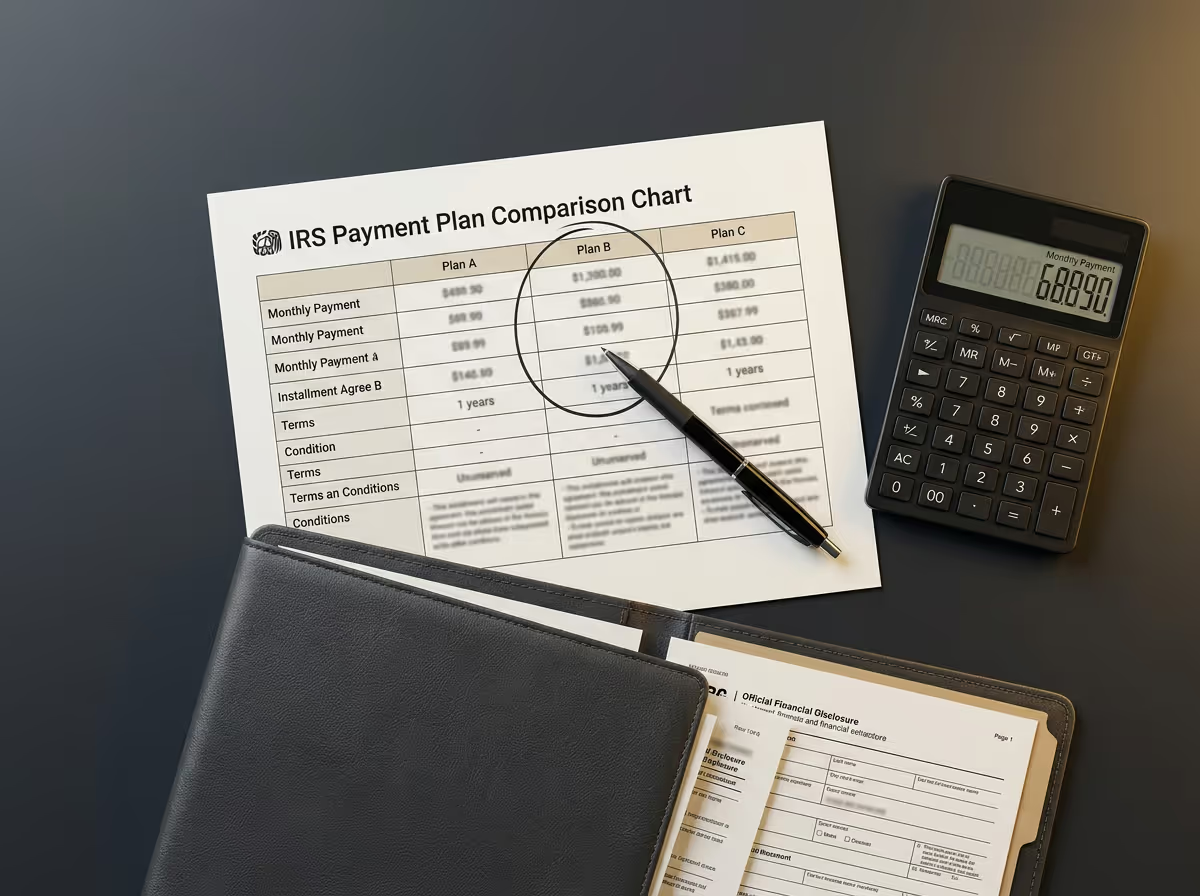
Wage Garnishment
A wage levy is continuous. The IRS instructs your employer to withhold a portion of your paycheck. The levy remains in place until it is released or the debt is resolved.
Bank Levy
The IRS can freeze your bank account. IRS.gov explains that banks must hold funds for 21 days before sending them to the IRS. This window allows time to request hardship release.
Federal Payment Levy Program
Under IRC § 6331(h), the IRS may levy certain federal payments, including Social Security benefits.
Notice of Federal Tax Lien
Under IRC § 6323, the IRS may file a Notice of Federal Tax Lien. This public record attaches to all property you own or acquire.


Passport Certification
Under IRC § 7345, seriously delinquent tax debt may lead to certification to the State Department, potentially resulting in passport denial or revocation.
Currently Not Collectible status halts active enforcement when hardship is properly documented.
Who This Service Is For
You need this service if:
- No Disposable Income: You need this service if paying the IRS would prevent you from covering essential expenses such as housing, utilities, food, or transportation.
- Fixed Government Benefits: You may qualify if your only income comes from Social Security, disability, unemployment, or similar benefits, and your expenses exceed income.
- Final Levy Notice Received: You should seek representation if you received a Final Notice of Intent to Levy and cannot pay the balance.
- Active Wage Garnishment: You need this service if your wages are being garnished and you cannot meet necessary living expenses.
- Bank Account Frozen: If your bank account was levied and you cannot access funds for essential bills, hardship relief may apply.
- Revenue Officer Assigned: You require representation if an IRS Revenue Officer is demanding payment or financial disclosure.
- Failed Installment Agreement: You may need CNC status if you entered a payment plan but cannot afford the monthly amount.
- Severe Financial Hardship: You may qualify if recent unemployment, illness, or family hardship has eliminated your ability to pay anything toward the debt.
Common Mistakes People Make
Many taxpayers worsen their situation by making avoidable mistakes:
Our Representation Process
Initial Case Evaluation
We begin with a detailed and confidential consultation to understand your financial situation, IRS history, and enforcement risk. We review all IRS notices, determine whether a revenue officer is assigned, analyze your total balance, and identify critical deadlines. We also examine your income, necessary living expenses, assets, and liabilities to determine whether the Currently Not Collectible status is the most appropriate strategy, or whether another resolution option is more effective.
During this stage, we assess urgency. If you are facing an active levy or a Final Notice deadline, we prioritize immediate intervention. If enforcement has not yet begun, we strategically structure the case to prevent escalation.
File Power of Attorney
Once representation begins, we prepare and submit IRS Form 2848, Power of Attorney and Declaration of Representative. This legally authorizes us to act on your behalf before the IRS. After the IRS processes the form, all communication must go through our office.
This step immediately changes the dynamic of your case. You no longer speak to IRS collection representatives. You no longer answer enforcement calls. IRS notices are redirected to us. We obtain your IRS account transcripts, confirm balances, review assessment dates, and verify the Collection Statute Expiration Date under IRC § 6502. This feature ensures we understand exactly how long the IRS has the legal right to collect.


Immediate Collection Protection
If levy action is pending or already in place, we act immediately. We contact the assigned IRS unit—either the Automated Collection System or a Revenue Officer—to request a temporary hold on enforcement while your financial disclosure is prepared.If you are within the 30-day window after receiving a Final Notice of Intent to Levy, we may initiate a Collection Due Process request to preserve appeal rights.
If a wage levy or bank levy is already active, we request hardship-based release under IRC § 6343. Speed matters during this stage, especially in bank levy situations where funds are held for 21 days before transfer.
Our goal is to stabilize the situation before financial damage deepens.
Financial Statement Preparation
The Collection Information Statement (Form 433-A or 433-F) is the foundation of a hardship request. The IRS scrutinizes every figure. Errors, missing documentation, or improperly categorized expenses frequently lead to denial.
We work closely with you to gather and organize the required documentation, including:
We calculate allowable living expenses using IRS National Standards and Local Standards published on IRS.gov. Where actual expenses exceed standard allowances, we prepare documentation and justification. We also evaluate asset equity to determine whether the IRS may question your ability to borrow against property.
The financial presentation must be accurate, complete, and defensible.

Formal Hardship Submission
Once documentation is complete, we formally submit your financial disclosure and hardship request to the IRS. If a revenue officer is assigned, we coordinate directly with that officer. If your case is handled through the Automated Collection System, we submit documentation via approved channels and confirm receipt.
We clearly state the request for the Currently Not Collectible status based on economic hardship. We reference applicable IRS procedures and explain why enforced collection would prevent you from meeting necessary living expenses.
Proper framing of the request increases the likelihood of approval.
IRS Negotiation
The IRS often responds with follow-up questions or objections. They may challenge certain expenses, question income stability, or inquire about asset equity.
We handle all communication and negotiation. If the IRS disputes an expense category, we provide additional documentation or policy support. When concerns arise about asset equity, we assess whether liquidation would worsen the situation and adjust our response accordingly.
Our role is to advocate for your financial reality while ensuring compliance with IRS standards. We maintain professionalism and persistence throughout the review process

Hardship Confirmation
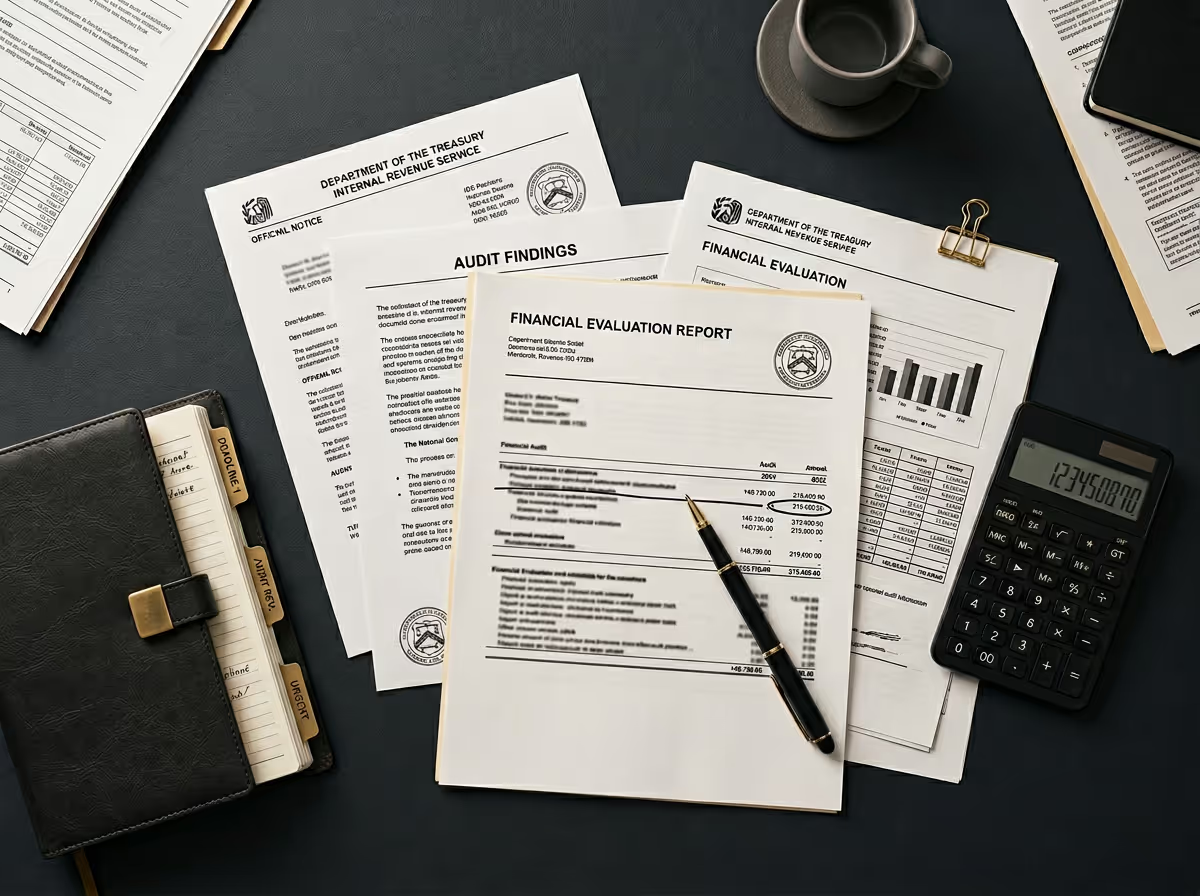
When the IRS agrees that hardship exists, they update your account to Currently Not Collectible status, commonly coded as Status 53. We confirm this coding through transcript review and, when available, written verification.
We ensure any active wage levies are released and confirm that bank levy actions are halted. We also verify that collection calls and enforcement activity cease.
At this stage, you regain stability. Enforcement pressure is lifted, and you can focus on maintaining compliance and financial recovery.
Ongoing Compliance Monitoring
Currently Not Collectible status requires ongoing compliance. You must file future tax returns on time and avoid incurring new unpaid balances. If you fall out of compliance, the IRS may remove hardship status.
We provide guidance on proper withholding or estimated payments to prevent new liabilities. We explain how IRS review cycles work and what triggers reassessment.
If the IRS later requests updated financial information, we will handle that review on your behalf and advocate for continued hardship status if appropriate.

Collection Statute Tracking
Under IRC § 6502, the IRS generally has ten years from the date of assessment to collect a tax debt. While in Currently Not Collectible status, this statute continues to run.
We track your Collection Statute Expiration Date and explain how it impacts your long-term strategy. In some cases, remaining in hardship status until the statute expires is a realistic outcome. In other situations, improved finances may require reevaluation of options.
We provide clarity so you understand both your short-term protection and long-term position.
Throughout this entire process, you are not alone. We manage IRS communication, documentation, negotiation, and compliance so you can regain control of your financial situation without constant enforcement pressure.
What Happens If You Do Nothing
Levy Authority Begins: After the Final Notice expires, the IRS may issue wage or bank levies without further warning.
Immediate Income Loss: Your paycheck may be garnished, or your bank account may be frozen, disrupting your ability to pay basic bills.
Continuous Wage Garnishment: The IRS continues withholding income each pay period until the levy is released or resolved.
Tax Lien Filing: The IRS may file a Notice of Federal Tax Lien, affecting credit and property transactions.
Asset Seizure Risk Increases: The IRS may seize assets if collection remains unresolved.
Long-Term Financial Damage: Ongoing levies and public liens can create lasting financial consequences.
Frequently Asked Questions (FAQs)
Take Action Now
IRS enforcement does not cease on its own. If you cannot afford to pay and are facing collection pressure, representation changes the outcome. We take over communication, prepare your hardship documentation correctly, and negotiate directly with the IRS to secure protection.
Call today. The sooner we intervene, the more control you regain.
Results depend on individual circumstances and IRS determinations. No outcome is guaranteed. Representation is subject to IRS rules and procedures. IRS Circular 230 Disclosure applies.