Thank you for contacting
GetTaxReliefNow.com!
or wage garnishment — call us now at +(888) 260 9441 for immediate help.



Peer-to-Peer Payment Scams Hit Refund Season
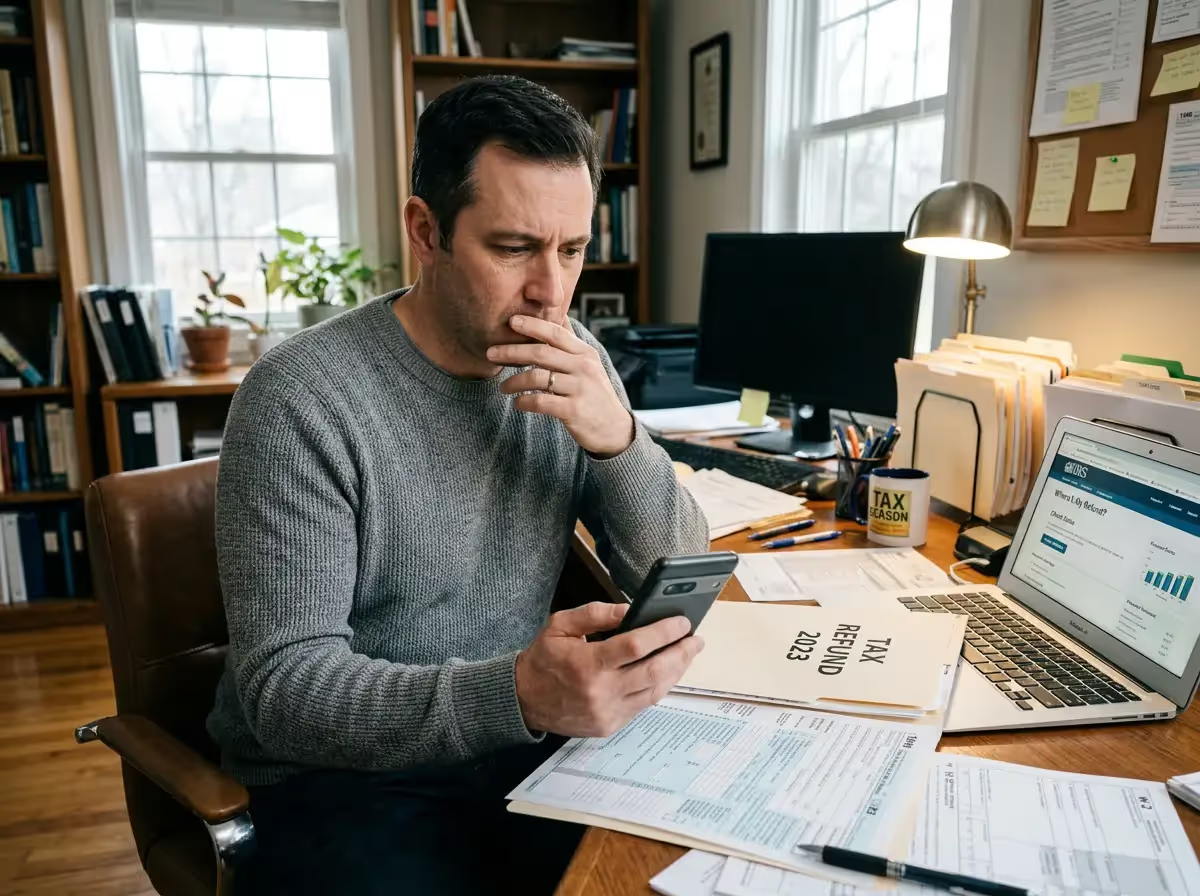
Banks and federal agencies are warning taxpayers about a spike in peer-to-peer payment scams during refund season. Fraudsters are targeting individuals who expect tax refunds through payment and P2P apps. Officials say the surge in digital money transfer activity is creating more opportunities for payment scams across the financial system.
Fraudsters Exploit Tax Refund Timing to Launch Payment Scams
Financial institutions, credit unions, and regulators report a noticeable rise in peer-to-peer (P2P) payment scams tied to tax season. Criminals are using P2P payment apps such as Cash App, Google Pay, and other mobile payment app platforms to pressure taxpayers into sending money under pretenses.
These schemes often begin with phishing scams, text messages, or phone calls that appear to come from the IRS or a bank’s customer service team. Victims are told there is a problem with their tax refund, bank account, or filing status and are asked to act immediately. The urgency is designed to override caution and trigger fast online payments.
The Federal Trade Commission has tracked a steady increase in payment scams involving digital wallet services. Many of these fraud attempts result in unauthorized money transfers initiated by victims who believe they are resolving a legitimate issue.
Scammers Use Imposter Tactics and Digital Tools to Deceive Victims
Authorities say imposter scams remain one of the most common tactics used in refund-related fraud. Scammers pose as IRS agents, bank representatives, or credit union staff and request personal information, such as a Social Security number, phone numbers, or bank account credentials.
Criminals are also deploying more advanced methods, including fake login page designs and phishing links that mimic legitimate digital banking systems. In some cases, victims are redirected through a web browser to fraudulent portals designed to capture login data or trigger unauthorized electronic fund transfers.
Once trust is established, victims are directed to send funds through peer-to-peer (P2P) payment platforms or a smartphone app. Unlike credit cards or debit cards, these transactions usually do not include a payment protection service, making recovery difficult once the funds are transferred.
Payment Apps Increase Risk of Fast and Irreversible Losses
The rapid growth of P2P services has made digital cash exchange faster and more convenient, but it has also increased exposure to risk. Peer-to-peer payments allow near-instant transfers, which scammers exploit to complete transactions before fraud departments can intervene.
Unlike wire transfers or payment card disputes, many P2P payment apps offer limited recourse for victims. While Regulation E covers certain unauthorized electronic fund transfers, it may not apply when users willingly send money under deception.
Banks, including Wells Fargo and other major institutions, have strengthened fraud protection tools such as account alerts and monitoring systems. However, unauthorized money transfers tied to scams continue to rise as criminals adapt to evolving payment technologies and exploit gaps in fraud prevention systems.
Taxpayers Face Broader Threats Beyond Refund Scams
Experts say these payment scams often connect to a broader ecosystem of Internet crimes. Victims who share personal information may later face identity theft, unauthorized purchases, or long-term damage to their credit score.
Common scam categories include over-payment scams, seller scams, buyer scams, and investment schemes. Some cases also involve romance or money mule scams, in which individuals unknowingly help move stolen funds across digital wallet platforms.
The FBI's Internet Crime Complaint Center has reported rising losses tied to online payment scam activity. These losses reflect a growing number of online attacks targeting users of P2P apps, digital wallet services, and mobile payment applications.
Security Experts Urge Stronger Fraud Prevention Steps
Regulators and advocacy groups, such as the ABA Foundation, are urging consumers to strengthen their fraud prevention practices. Enabling multifactor authentication, monitoring account alerts, and avoiding unsecured Wi-Fi networks are among the most effective security steps.
Consumers are advised to avoid using public Wi-Fi or unsecured Wi-Fi networks when accessing financial accounts. Experts recommend verifying communications directly with a bank’s fraud department rather than relying on unsolicited messages or links.
Additional fraud protection strategies include safeguarding a personal identification number, reviewing transaction histories, and understanding the process for disputing unauthorized purchases or electronic fund transfers.
Awareness Remains the First Line of Defense Against Scams
Officials emphasize that awareness remains the most effective defense against peer-to-peer payment scams. The IRS does not request payments through P2P apps, digital wallet services, gift cards, or other digital money transfer methods under any circumstances.
Taxpayers should verify all communications independently and avoid responding to unsolicited requests for personal information. Any message demanding immediate payment through a mobile app or P2P services should be treated as suspicious.
As the regulatory landscape evolves, including increased attention from Compliance & Risk Council groups and emerging state AI laws, financial institutions continue to develop new security solutions. Still, experts say individual vigilance, combined with strong fraud prevention habits, remains essential during refund season.
Sources
Federal agencies, financial regulators, and independent research groups continue to track the rise in peer-to-peer (P2P) payment scams and related fraud trends. The findings of these agencies highlight the use of payment apps, phishing scams, and impersonation tactics to target taxpayers during refund season. The links below point to official pages and verified data that explain these risks and outline fraud prevention guidance:
Taxpayers are encouraged to review these sources to better understand how peer-to-peer payments and digital wallet systems are being targeted by fraud. Staying informed about common scam categories and evolving fraud attempts can help reduce the risk of financial loss and identity theft. Taking time to verify information and follow recommended security steps remains one of the most effective ways to prevent fraud.
By William Mc Lee, Editor-in-Chief & Tax Expert—Get Tax Relief Now
If you need help with a tax issue discussed in this article, you can reach a licensed tax professional at Get Tax Relief Now at (888) 260-9441 or visit our contact page.
Thank you for submitting!
Start My Confidential, No-Judgment Case Review
Ready to stop penalties and garnishments? Complete the form or call/email us directly—our experts are standing by to assist.

Have a question?
+ (888) 260 9441
Write email
info@gettaxreliefnow.com
Address