Thank you for contacting
GetTaxReliefNow.com!
or wage garnishment — call us now at +(888) 260 9441 for immediate help.



Massachusetts Withholding Mismatch Triggers Filing Alert
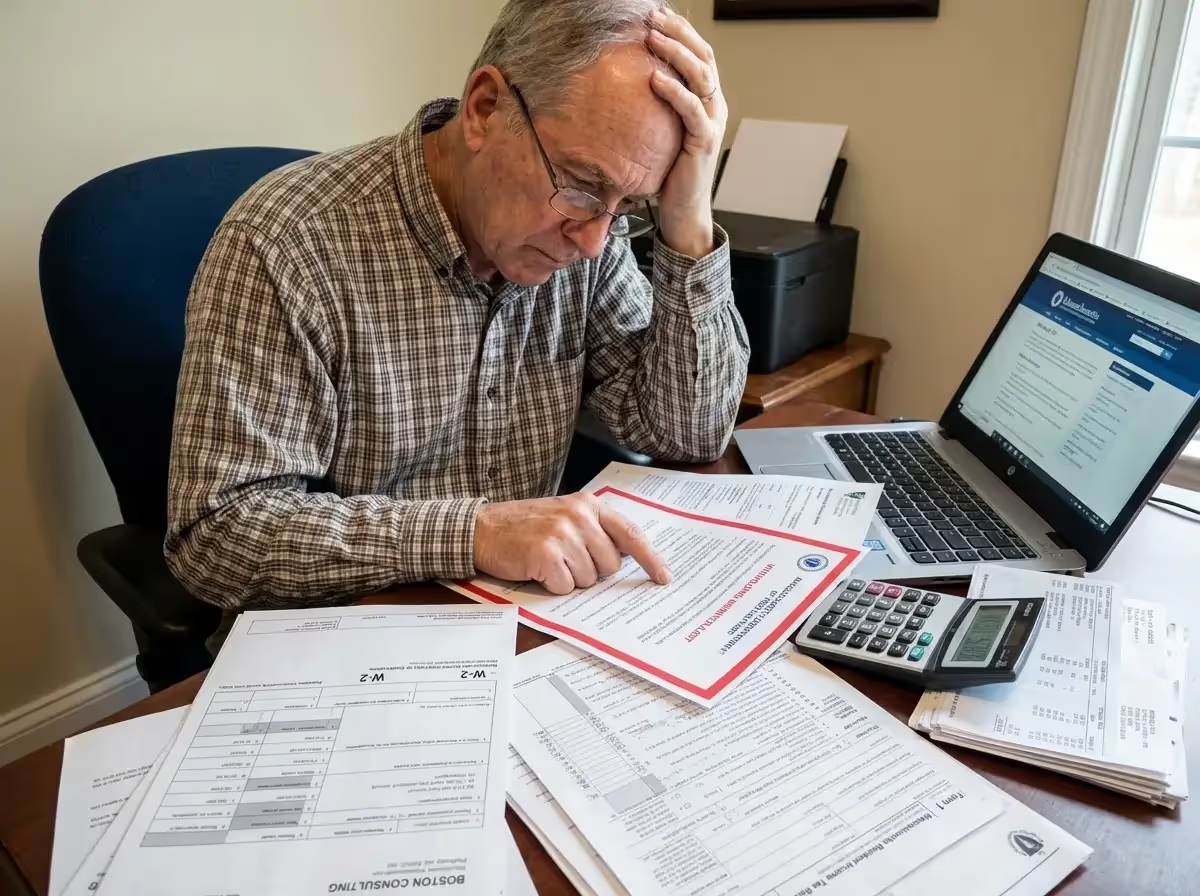
As the 2026 tax filing season opens, Massachusetts tax officials are warning residents about a recurring issue that can disrupt returns: a Massachusetts withholding mismatch between employer-reported wage data and a taxpayer’s actual state income tax liability. The Department of Revenue says the problem can lead to delayed refunds, additional tax bills, and penalties if left unresolved.
State Officials Issue Advisory as Returns Begin Processing
The Massachusetts Department of Revenue (DOR) said it is increasing outreach to taxpayers after identifying a steady pattern of withholding discrepancies during early return reviews. The agency’s filing season advisory coincides with the start of return processing on January 28 and focuses on mismatches between Form W-2 data and final tax calculations.
According to the DOR, withholding mismatches typically surface during reconciliation, when employer-submitted wage reports are compared with individual income tax returns. If the numbers do not align, returns may be delayed while the discrepancy is reviewed, or taxpayers may receive notices requesting payment of additional tax, interest, or penalties.
Massachusetts applies a flat 5 percent income tax rate, plus a 4 percent surtax on income above $1 million. While the rate structure is straightforward, the DOR said the mechanics of withholding continue to be a frequent source of error.
Withholding Mismatches and How They Occur
A withholding mismatch occurs when the amount of Massachusetts income tax withheld during the year does not match a taxpayer’s actual liability. These errors can arise even when wages are reported correctly, particularly when withholding instructions or payroll calculations are inaccurate.
Misapplied Forms Create Common Errors
Most employees complete Form M-4 to determine state withholding. The DOR said mismatches often result when taxpayers misunderstand the form, fail to update it after life changes, or incorrectly mirror information from their federal Form W-4, which operates under different rules.
Massachusetts allows employees to claim exemptions with only one principal employer. Claiming exemptions with multiple employers can significantly reduce total withholding, increasing the likelihood of underpayment.
Payroll Systems Contribute to Miscalculations
Employer errors also play a role. Payroll systems must be updated to reflect current withholding tables, including those published in Massachusetts Circular M. The DOR said failures to implement updated tables or misinterpretation of state rules can result in incorrect withholding even when employee forms are accurate.
Why the Department of Revenue Is Acting Now
State officials said the advisory is intended to prevent avoidable filing issues before enforcement actions become necessary. Withholding mismatches increase administrative costs for the state and create financial strain for taxpayers who may be unprepared for a balance due.
The DOR said the issue has intensified in recent years due to broader workforce shifts. Remote work, gig employment, and multiple income streams have complicated withholding compliance for both employers and employees.
The department also noted that high-income taxpayers subject to the state’s surtax may not see that additional liability reflected in regular payroll withholding, mainly when income includes bonuses, commissions, or investment gains.
Taxpayers Most Affected by Withholding Issues
While any filer can encounter withholding problems, the DOR identified several groups that face elevated risk.
Multi-Job and Remote Workers
Taxpayers holding multiple jobs are particularly vulnerable because each employer withholds taxes independently, regardless of total income. Remote workers employed by out-of-state companies may also encounter problems if their employer is unfamiliar with Massachusetts withholding requirements.
In some cases, Massachusetts residents working remotely receive little or no state withholding, while nonresidents working partly in Massachusetts may have withholding that does not reflect proper income allocation.
Retirees and Gig Workers
Retirees receiving pensions or annuities may also experience mismatches. Massachusetts generally requires withholding on these payments unless an exemption is elected using Form M-4P. Errors on that form frequently result in incorrect withholding amounts.
Gig workers and misclassified employees may face the most significant surprises. Independent contractors typically do not have withholding, but workers who believe taxes are being withheld may discover a considerable shortfall only when filing their return.
Steps Taxpayers Should Take Before Filing
The Department of Revenue urged taxpayers to review documents carefully before submitting a 2025 return.
Taxpayers should compare their final 2025 paystub with their Form W-2, focusing on Box 16 for Massachusetts wages and Box 17 for state income tax withheld. Any discrepancy should be reported to the employer immediately.
If a Form W-2 contains errors, employers must issue a corrected Form W-2C. When corrections are not provided in time, taxpayers may use federal Form 4852 as a substitute, relying on their own records to report wages and withholding.
Taxpayers are also encouraged to estimate their total Massachusetts tax liability and compare it to withholding from all sources. The DOR noted that underpayment penalties generally do not apply if the remaining balance due is $400 or less, though eligibility should be confirmed.
Withholding Adjustments for the Current Year
Beyond addressing past errors, the DOR said taxpayers should adjust withholding for 2026 to prevent future mismatches.
Employees with multiple jobs should coordinate Form M-4 submissions by claiming exemptions with their highest-paying employer and considering additional withholding with other employers. Taxpayers with variable income may benefit from requesting that a fixed additional amount be withheld each pay period.
Those who routinely owe at filing time may also consider making quarterly estimated tax payments. Massachusetts generally requires estimated payments when more than $400 is expected to be owed after withholding and credits.
What Filing Season Delays Could Mean
Massachusetts personal income tax returns for 2025 are due April 15, 2026. Returns affected by withholding mismatches may take longer to process, particularly if corrections or additional documentation are required.
The DOR said early review and prompt correction of errors can reduce refund delays and help taxpayers avoid penalties. For individuals with complex income situations, including multi-state employment or business ownership, professional tax assistance may be appropriate.
Source Links
- Massachusetts Department of Revenue, “Withholding Taxes on Wages”
- Massachusetts Department of Revenue, “Massachusetts Circular M: Income Tax Withholding Tables Effective January 1, 2026”
- Internal Revenue Service, “Corrected, Incorrect, or Missing Forms W-2”
By William Mc Lee, Editor-in-Chief & Tax Expert—Get Tax Relief Now
If you need help with a tax issue discussed in this article, you can reach a licensed tax professional at Get Tax Relief Now at (888) 260-9441 or visit our contact page.
Thank you for submitting!
Start My Confidential, No-Judgment Case Review
Ready to stop penalties and garnishments? Complete the form or call/email us directly—our experts are standing by to assist.

Have a question?
+ (888) 260 9441
Write email
info@gettaxreliefnow.com
Address