Thank you for contacting
GetTaxReliefNow.com!
or wage garnishment — call us now at +(888) 260 9441 for immediate help.



IRS Funding and Taxpayer Support Shift
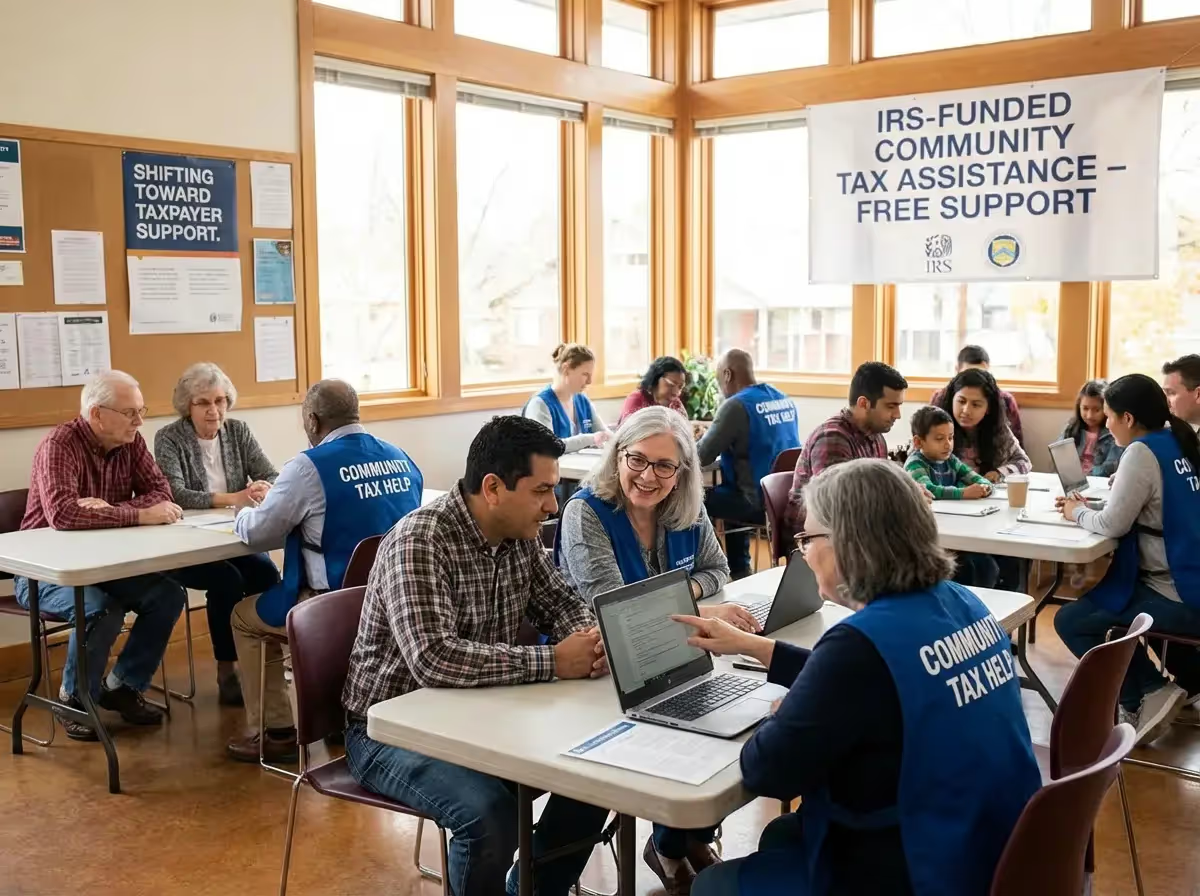
Internal Revenue Service budget documents show that IRS funding and taxpayer support move together, with staffing levels, phone access, and modernization efforts tied to annual appropriations. Treasury and IRS materials state that stronger or more stable funding improves service metrics, while lower funding reduces access and slows assistance.
Treasury Reports Funding Boost Improves IRS Phone Access
Treasury officials reported that phone performance improved during Filing Season 2024. According to a Treasury press release, the IRS reached an 88% Level of Service (LOS) on key phone lines, with average wait times of about three minutes.
That marked a sharp contrast from Filing Season 2022, when LOS was reported at 15% amid what officials described as a lack of resources. Treasury attributed the improved phone access to funding from the Inflation Reduction Act, stating that additional resources enabled the agency to increase staffing and respond more quickly to callers.
The IRS FY2024 Budget in Brief reinforces that connection. The document outlines investments intended to improve telephone LOS and reduce correspondence backlogs, while warning that funding below requested levels would reduce service performance and affect the taxpayer experience.
Filing Season Data Show Higher Level of Service
Budget materials describe the level of service as a core metric for measuring taxpayer support. LOS reflects the percentage of callers who successfully reach a live representative.
Officials state that funding increases directly support staffing levels needed to maintain high LOS. The documents also note that when funding declines, service levels tend to drop and wait times increase.
IRS Warns Lower Funding Could Reduce Service Levels
IRS budget documents describe taxpayer support as an interconnected system. When phone access declines, demand shifts to other channels such as paper correspondence and in-person visits.
The FY2026 Budget in Brief states that funding below requested levels would significantly reduce telephone LOS. It adds that reduced phone access would increase paper submissions and in-person demand, creating additional strain on processing operations and raising costs in specific service channels.
The same document links service levels to voluntary compliance. It states that reduced access to assistance may make it more difficult for taxpayers to meet their obligations accurately and on time.
Budget Documents Cite Risks to Phone and Paper Processing
In the FY2025 Budget in Brief, the IRS raises concerns about relying on temporary Inflation Reduction Act resources to support core operations. The agency describes potential “funding cliffs” as allocations in certain IRAs are exhausted.
The document projects declines in phone LOS in FY2026 and further reductions in FY2027 without additional appropriations. It outlines a chain of effects in which insufficient recurring base funding leads to greater reliance on temporary resources, which, when depleted, result in service reductions.
Officials Say Stable Funding Supports Modernization Efforts
Beyond phone service, IRS materials connect funding levels to modernization efforts. The agency’s Inflation Reduction Act Strategic Operating Plan outlines investments in online accounts, digital document submission, and expanded self-service tools for taxpayers and tax professionals.
Treasury’s filing season summary also referenced clearer “Where’s My Refund?” status messages and expanded digital response options for certain notices. Officials stated that these updates reduce the need for taxpayers to call the IRS for routine information.
Budget documents describe service, enforcement, and technology as interrelated. They state that stable base funding helps prevent transformation resources from being diverted to cover day-to-day operations.
Strategic Plan Links IRA Resources to Digital Upgrades
The strategic plan emphasizes that modernization investments are intended to improve how taxpayers interact with the agency. It highlights improvements in digital response options and online account functionality.
Officials frame these upgrades as part of a broader effort to strengthen taxpayer support while improving operational efficiency.
What It Means for Upcoming Filing Seasons
IRS funding and taxpayer support remain central to the federal appropriations process. Budget documents indicate that sustained or stable funding is associated with higher phone access, fewer backlogs, and expanded digital tools.
Conversely, the IRS projects that funding reductions could lead to lower levels of service, longer processing times, and increased reliance on paper channels. Final service levels for future filing seasons will depend on congressional funding decisions, which determine staffing capacity and modernization investments.
Sources
- Treasury Press Release, Filing Season 2024 Report
- IRS FY2024 Budget in Brief
- IRS FY2025 Budget in Brief
By William Mc Lee, Editor-in-Chief & Tax Expert—Get Tax Relief Now
If you need help with a tax issue discussed in this article, you can reach a licensed tax professional at Get Tax Relief Now at (888) 260-9441 or visit our contact page.
Thank you for submitting!
Start My Confidential, No-Judgment Case Review
Ready to stop penalties and garnishments? Complete the form or call/email us directly—our experts are standing by to assist.

Have a question?
+ (888) 260 9441
Write email
info@gettaxreliefnow.com
Address