Thank you for contacting
GetTaxReliefNow.com!
or wage garnishment — call us now at +(888) 260 9441 for immediate help.



IRS Digitization of Historical Records Gains Pace
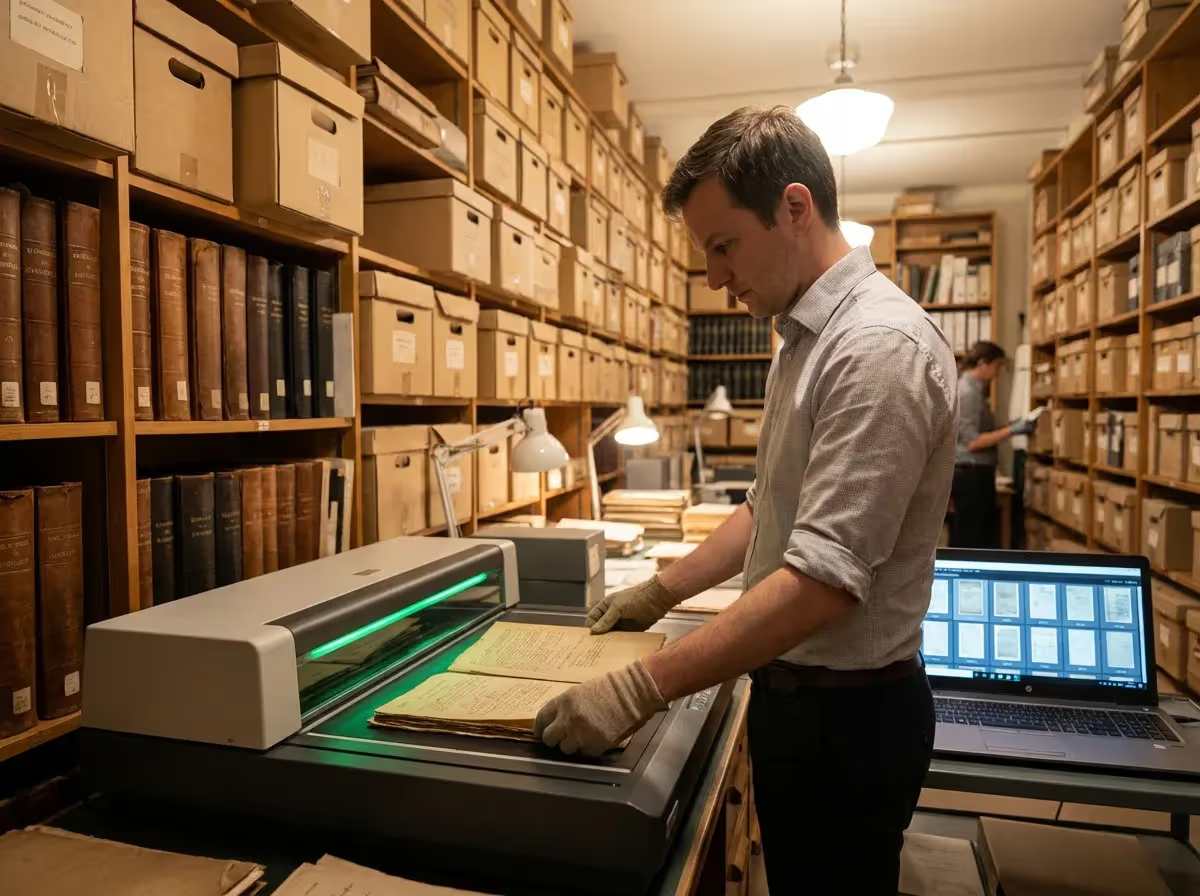
The Internal Revenue Service is accelerating efforts to convert decades of paper files into searchable digital records, part of a modernization initiative designed to reduce delays and improve access to historical tax records. The project targets more than one billion archived documents that have historically required manual retrieval. Officials say the digitization efforts will help the Internal Revenue Service process tax returns, manage electronic records, and resolve prior-year issues more efficiently.
Paper Archives Move Into Searchable Digital Systems
For decades, tax administration relied heavily on paper tax returns, tax forms, and mailed correspondence. Millions of paper filings still arrive each year, including Forms 941, Forms 1040, historical Forms 709, and Forms 940 used for employment and payroll taxes. Large volumes of non-tax forms and supporting paperwork also enter the system during each filing season.
To address the backlog, the Internal Revenue Service launched a paperless processing initiative to digitize incoming documents and convert historical records already stored in warehouses. The effort supports broader Records Management and Records and Information Management programs designed to preserve official taxpayer documentation.
Officials say the initiative will digitize tax returns and other documents so employees can retrieve them through electronic systems rather than requesting physical files. Expanding electronic recordkeeping systems should also reduce the long-term storage costs associated with maintaining paper archives.
Digital Conversion Includes Data Extraction
The modernization effort goes beyond scanning images of paper files. Projects include internal and external contractor scanning designed to extract data from paper documents for use in electronic recordkeeping systems.
Once documents are digitized, information can be indexed using metadata elements that help organize taxpayer files. This process allows employees to locate source records more easily and improves pattern recognition when reviewing historical tax data.
These upgrades fall under the agency’s Electronic Records Management strategy within the Records and Information Management, or RIM, program. Federal guidance, such as NARA Bulletin directives, also shapes how permanent records must be preserved in digital form.
Digitization May Reduce Processing Delays
Moving historical records into electronic systems could significantly shorten the time required to resolve taxpayer questions. Many account disputes depend on reviewing earlier filings or correspondence connected to prior income taxes.
When those documents exist only as paper files, retrieving them requires manual searches through storage facilities. Digitization enables employees to access accounting records and historical tax returns via electronic systems, eliminating the need to wait for physical file retrieval.
The change may also improve the IRS examination process. Audits often involve requests for documentation through an Information Document Request, commonly issued on Form 4564. Digital records can allow examiners to verify filings more quickly during case reviews.
Archived Records Are Often Needed for Transcript Requests
Requests for tax transcripts frequently depend on historical documentation stored in agency archives. Lenders, universities, and immigration programs often require verification of income tax returns or filing history.
Many transcript records draw information from Forms 1040 tax return filings and other tax forms submitted in earlier years. Tax professionals also rely on archived records when representing wealthy individuals or large corporations during examinations or compliance reviews.
Practitioners who are subject to Treasury Department Circular No. 230 must verify taxpayer records when representing clients before the agency. Access to digitized records can help them confirm filings and address discrepancies related to the Internal Revenue Code.
Federal Funding Supports Technology Modernization
Digitizing historical records is one component of a broader modernization effort, funded in part by the Inflation Reduction Act. The law allocated multi-year funding to strengthen technology used in tax administration.
Funding supports digitization efforts, upgrades to the agency's electronic accounting software, and improvements to electronic information systems that manage taxpayer records. Officials say the goal is to reduce reliance on paper files while improving operational efficiency.
Treasury officials have also described these initiatives as part of a broader Zero Paper Initiative aimed at modernizing government operations and expanding secure digital services.
Oversight and Compliance Shape Recordkeeping Policies
Digitization projects must meet federal oversight requirements designed to protect taxpayer records. The Treasury Inspector General monitors technology modernization programs and evaluates compliance with records laws.
The Taxpayer Advocate and Taxpayer Advocate Service also track how modernization affects taxpayers, particularly during high-volume periods such as Filing Season 2024 and the upcoming Filing Season 2025.
Federal rules governing electronic recordkeeping systems also apply. Guidance, including Revenue Procedure 98-25 and Revenue Ruling 71-20, outlines how agencies must maintain electronic records, backup file systems, and portable electronic media used to store taxpayer documentation.
Online Tools Already Provide Access to Tax Records
Even before all historical records are digitized, taxpayers can access many documents through existing online services. The IRS Online Account allows individuals to retrieve transcripts linked to their tax returns and income records.
Once identity verification is complete, users can download electronic records associated with their filings. These tools allow taxpayers to review Form 1040 filings and other tax forms that appear in electronic systems.
If online access is not available, transcripts can still be requested through the agency’s Get Transcript by Mail system. As digitization efforts continue, officials expect more historical documents to become available through electronic recordkeeping systems rather than manual retrieval.
Sources
The following resources provide official information on federal tax administration modernization, electronic recordkeeping requirements, and transcript services available to taxpayers. These government publications outline the policies, programs, and technical initiatives supporting digitization and paperless processing across the tax system.
- IRS Newsroom — Paperless Processing Initiative
- IRS — Modernizing Tax Processing Systems
- IRS — Get Transcript Service
By William Mc Lee, Editor-in-Chief & Tax Expert—Get Tax Relief Now
If you need help with a tax issue discussed in this article, you can reach a licensed tax professional at Get Tax Relief Now at (888) 260-9441 or visit our contact page.
Thank you for submitting!
Start My Confidential, No-Judgment Case Review
Ready to stop penalties and garnishments? Complete the form or call/email us directly—our experts are standing by to assist.

Have a question?
+ (888) 260 9441
Write email
info@gettaxreliefnow.com
Address