Thank you for contacting
GetTaxReliefNow.com!
or wage garnishment — call us now at +(888) 260 9441 for immediate help.



IRS Bilingual Representatives Expand 2025 Filing Help
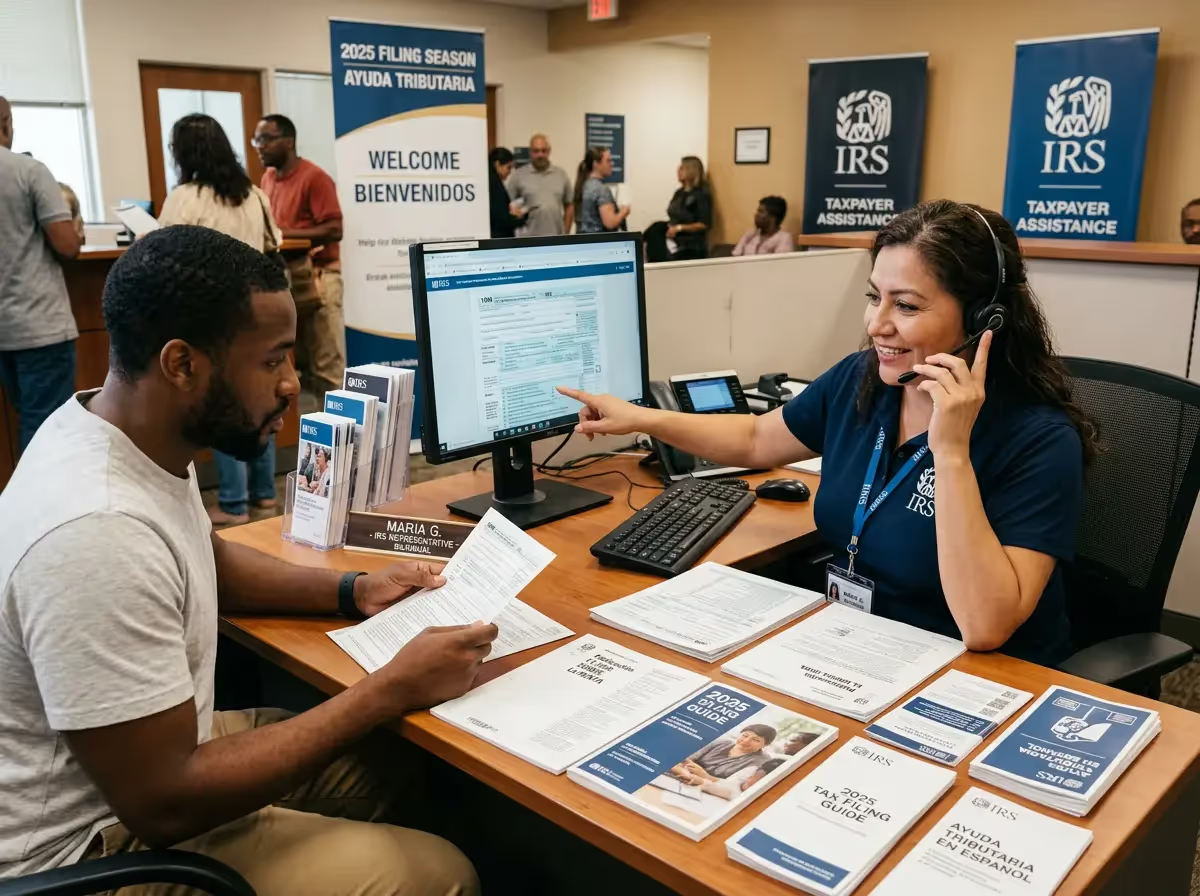
As the 2025 tax filing season progresses, the Internal Revenue Service is expanding access to bilingual representatives to help taxpayers who prefer assistance in languages other than English. The effort strengthens customer service across phone lines, online tools, and live chat so taxpayers can better understand income taxes, tax returns, and their tax responsibilities under federal tax law.
Expanded Language Assistance for the 2025 Filing Season
The Internal Revenue Service explains that the expanded language support aims to help taxpayers file tax returns accurately and resolve issues more easily. Millions of Americans interact with the agency each year, and officials say language assistance policies are intended to ensure meaningful access for people who speak languages other than English.
Spanish-language assistance remains the most widely used option. Taxpayers calling the agency can select Spanish support and contact a representative trained to answer questions about tax law, income taxes, and filing requirements.
For other languages, interpreter and translation services are available. The program provides hundreds of language options, including Haitian Creole, helping taxpayers understand notices, error messages, and tax return instructions.
Direct File Adds Real-Time Bilingual Assistance
The Direct File platform now includes live chat support, allowing taxpayers to contact a representative for help while completing their returns. The tool is part of expanded online services overseen by the Department of the Treasury and other federal government modernization initiatives.
Representatives can guide users through filing steps, help locate relevant tax forms and publications, and explain how to correct an error message that appears during submission.
Officials say providing bilingual customer service during the filing process can help reduce mistakes and ensure taxpayers comply with tax law requirements.
Where Taxpayers Can Find Language Assistance
Language support is available through several channels, including phone lines, in-person assistance, and digital resources on IRS.gov.
The agency’s Help Center provides search tips, saved searches, and email updates to help taxpayers locate information quickly. It also includes a “contact us” section where individuals can find the appropriate office or support option.
These tools are designed to help taxpayers understand filing requirements and resolve questions before contacting a representative.
Phone Lines Connect Taxpayers With Interpreters
Phone assistance remains one of the most common ways taxpayers seek help with income taxes and tax returns. Spanish-language customer service is available through the main individual taxpayer phone line.
Taxpayers who speak other languages can request interpreter support. Translation services allow taxpayers to communicate in many languages other than English and receive explanations of notices or account issues.
During a call, taxpayers may be asked to verify identity information, such as a Taxpayer Identification Number, before a representative can access account records or explain error information related to a return.
In-Person Help Through Taxpayer Assistance Centers
When online or phone resolutions fail, Taxpayer Assistance Centers offer in-person assistance. These visits may address identity verification, notice responses, or corrections to tax return records.
Appointments are usually required before visiting a center. Taxpayers should bring identification, tax documents, and any correspondence received from government agencies.
Some taxpayers may also receive help through Volunteer Income Tax Assistance programs, which provide free filing support for eligible individuals. Others may consult a tax attorney or tax professional when dealing with complex tax law questions.
Expanding Language Access Across Federal Services
Language assistance policies across federal agencies aim to ensure taxpayers understand official communications and comply with tax law. Officials say bilingual representatives play an important role in providing meaningful access to tax services.
These efforts are guided in part by executive order directives that require government agencies to improve access for individuals with limited English proficiency.
Officials say language assistance also supports taxpayer protections rooted in the United States Constitution and reinforces the rule of law that underpins the American republic.
Taxpayer Rights and Support Programs
Taxpayers experiencing unresolved tax issues may seek assistance from the Taxpayer Advocate Service. This independent organization within the Internal Revenue Service helps taxpayers resolve disputes or delays.
The agency also highlights the Taxpayer Bill of Rights, which outlines the protections individuals have when dealing with federal tax authorities.
Additional resources include Low Income Tax Clinics, which provide legal guidance and help taxpayers understand their rights and responsibilities under federal tax law.
Online Filing Tools and Taxpayer Resources
The IRS continues to expand its digital platforms to help taxpayers file accurately and resolve issues more easily. While the Direct File program, which offered free guided filing directly through the IRS, was discontinued ahead of Filing Season 2026, other online tools remain available to help taxpayers meet their tax responsibilities.
Taxpayers who previously used Direct File to submit their returns can no longer access those returns through the platform. The IRS advises that return transcripts can be retrieved through an IRS Online Account or by submitting Form 4506 to request a copy by mail.
The IRS Free File program remains available as an alternative. Through a public-private partnership, Free File connects eligible taxpayers with guided tax software from participating companies at no cost. Bilingual representatives and Spanish-language assistance remain available through IRS phone lines and in-person channels to help taxpayers comply with tax law requirements during the filing process.
Language support and translation services continue to be available by phone, at Taxpayer Assistance Centers, and on IRS.gov. Eligible taxpayers may also access free filing assistance through Volunteer Income Tax Assistance programs, which provide support for eligible individuals with qualifying income levels.
Language Preferences for Written Communications
Taxpayers who want to receive certain IRS communications in another language can submit Schedule LEP with Form 1040.
This form allows individuals to submit a translation request for written correspondence in a preferred language. Officials say these requests help document originators and content owners determine which languages should be prioritized for translation services.
When expanding language support, the agency evaluates staffing needs, operational demands, and resource constraints while ensuring taxpayers have access to reliable information.
Sources
By William Mc Lee, Editor-in-Chief & Tax Expert—Get Tax Relief Now
If you need help with a tax issue discussed in this article, you can reach a licensed tax professional at Get Tax Relief Now at (888) 260-9441 or visit our contact page.
Thank you for submitting!
Start My Confidential, No-Judgment Case Review
Ready to stop penalties and garnishments? Complete the form or call/email us directly—our experts are standing by to assist.

Have a question?
+ (888) 260 9441
Write email
info@gettaxreliefnow.com
Address