


Trust Fund Recovery Penalty Defense | Immediate Relief
We provide trust fund recovery defense by reviewing your role as a responsible person, analyzing Form 4180 and the IRS Form 4180 interview, and responding to Letter 1153. Acting under Power of Attorney, we challenge assessments under Internal Revenue Code Section 6672 and pursue solutions such as a payment plan or an offer in compromise.

What This Service Does
Hiring us means we step between you and the IRS from day one. Our job is to protect your rights, control communication, and build a strategy in accordance with federal tax procedures.
We File IRS Form 2848 and Take Over Communication
- Immediate Power of Attorney Filing: We prepare and submit IRS Form 2848 to obtain legal authorization to represent you. Once processed, the IRS must communicate directly with our office instead of contacting you, which prevents damaging statements and reduces stress during the investigation phase.
- Transcript and Case File Review: After authorization is in place, we obtain your IRS transcripts and review internal assessment records. This allows us to confirm the exact penalty amount, assessment dates, and enforcement stage, so we can respond strategically rather than guess.
- Direct Revenue Officer Management: If a revenue officer is assigned, we handle all calls, document requests, and negotiations. You are no longer exposed to high-pressure conversations that could negatively affect your case.
We Evaluate “Responsible Person” Status Under IRC §6672
According to IRS.gov, the Trust Fund Recovery Penalty applies to any responsible person who willfully fails to collect, account for, or pay over trust fund taxes. Responsibility is based on authority and control, not just title.
- Authority Analysis: We review who had the authority to sign checks, access bank accounts, and decide which creditors were paid. Having limited signing authority does not automatically mean you were legally responsible.
- Control Over Financial Decisions: We analyze whether you had actual control over payroll and tax deposits or whether someone else directed financial priorities.
- Knowledge and Willfulness Review: The IRS defines willfulness broadly. If you knew taxes were unpaid and that other creditors were paid, that could support a finding of willfulness. We examine the facts carefully to determine whether the IRS’s conclusion is accurate.
We Challenge Improper Assessments Through Appeals
- Formal Protest Preparation: If you receive Letter 1153 proposing an assessment, you generally have 60 days to appeal. We prepare a detailed written protest supported by financial records, corporate documents, and legal arguments.
- Representation Before IRS Office of Appeals: Appeals is independent from collection and has the authority to review and settle disputes. We represent you during conferences and present your defense professionally and thoroughly.
- Strategic Positioning for Resolution: Even when full removal is unlikely, a well-prepared appeal can improve negotiation leverage and reduce enforcement pressure.
We Negotiate Collection Alternatives When Necessary
If the penalty stands, we shift to protection and structured resolution.
- Installment Agreements: We negotiate monthly payment plans based on verified income and allowable expenses under IRS financial standards.
- Partial Payment Installment Agreements: When full repayment is not possible within the collection period, we negotiate reduced payment structures that partially satisfy the balance by the expiration date.
- Offer in Compromise: If your financial condition meets IRS criteria, we prepare and submit an Offer in Compromise to settle for less than the full amount owed.
- Currently Not Collectible Status: If you cannot afford any payment, we request a hardship status that temporarily suspends active collection.
We Defend Against Active Enforcement
- Levy Release Requests: If your bank account has been levied, we act within the 21-day holding period to request release based on hardship or pending resolution.
- Collection Due Process Hearings: If you receive a final notice of intent to levy, we file a timely request for a hearing, which pauses enforcement while your case is reviewed.
- Lien Negotiation and Withdrawal Requests: When appropriate, we pursue lien withdrawal or subordination options consistent with IRS procedures.
You are not simply hiring someone to “file paperwork.” You are hiring a representative who controls the process.
Why This Gets Worse Without Help
Trust Fund Recovery Penalty cases escalate faster than most tax matters.
Enforcement Is Administrative and Immediate
The IRS does not need a court judgment to levy your bank account or garnish your wages. Under its statutory authority described on IRS.gov, the agency can proceed administratively once proper notice is issued.
Deadlines Expire Quickly
- 60-Day Appeal Window: If you do not appeal Letter 1153 in time, the penalty becomes final.
- 30-Day collection due process Window: If you miss this deadline after receiving a final notice of intent to levy, enforcement proceeds.
- Lien Negotiation and Withdrawal Requests: When appropriate, we pursue lien withdrawal or subordination options consistent with IRS procedures.
Missing either deadline significantly limits your rights.
Personal Credit and Assets Are Exposed
Once a federal tax lien is filed, the debt attaches to your property and to any future acquisitions. Credit impact can be severe and long-lasting.
Statements Can Create Willfulness
Without representation, individuals often attempt to “explain” the situation to a revenue officer. Those explanations may unintentionally confirm knowledge of unpaid taxes while other bills were paid, supporting a willfulness finding.
Early representation prevents these mistakes.
How the IRS Enforces This
Once the IRS assesses the taThe Trust Fund Recovery Penalty is enforced under federal law and backed by significant administrative authority. Once the IRS determines that payroll taxes were withheld but not paid, it can move quickly to investigate individuals connected to the business. Unlike many other debts, the IRS does not need to sue you in court before beginning collection. The process follows a structured path, and understanding each phase is critical to protecting yourself.x, it has broad collection authority.
Investigation of Responsible Persons
The process usually begins when payroll tax returns, such as Form 941, show unpaid balances. The IRS assigns a revenue officer to investigate. That officer reviews bank records, signature cards, corporate documents, and payroll records to determine who had authority and control over financial decisions.
You may be asked to participate in an interview documented on Form 4180. This interview focuses on your role in the company, your authority to sign checks, your involvement in deciding which bills were paid, and your knowledge of unpaid payroll taxes. The information gathered during this phase becomes the foundation for determining responsibility and willfulness.
Proposed Assessment – Letter 1153
According to IRS.gov, a federal tax lien is the government’s legal claim against your property when If the IRS concludes that you are a responsible person who acted willfully, it will issue Letter 1153, proposing an assessment of the Trust Fund Recovery Penalty. This letter explains the amount and provides notice of your right to appeal. You generally have 60 days from the date of the letter to submit a written protest to the IRS Office of Appeals.you neglect or fail to pay a tax debt. The lien attaches to real estate, personal property, and financial assets. Transcript codes reflect lien filing and related fees.
If you do not respond within that timeframe, the IRS will formally assess the penalty. Once evaluated, the liability becomes legally collectible, and the focus shifts from investigation to enforcement.


Federal Tax Lien Filing
Before levying, the IRS must issue a Final Notice of Intent to Levy and provide 30 days to request a hearing. If you do not act within that period, the levy authority becomes After assessment, the IRS may file a notice of federal tax lien. This public filing attaches the debt to your current and future property, including real estate and personal assets. A lien can significantly affect your credit and restrict your ability to refinance, sell property, or obtain financing. It remains in place until the debt is paid or otherwise resolved under IRS procedures.active.
Levy Authority and Bank Account Seizure
According to IRS.gov, once required notices have been issued, the IRS may levy property administratively. A bank levy freezes the funds in your account immediately upon receipt. The bank must hold those funds for 21 days before sending them to the IRS, giving a limited window to request release.
In the absence of any action, the government receives the funds. The IRS may issue additional levies later if the balance remains unpaid.
Wage Garnishment
The IRS can also garnish wages without a court order. After proper notice, your employer is required to withhold a substantial portion of each paycheck and send it directly to the IRS. Unlike many other creditors, the IRS wage levy continues until the debt is resolved or an alternative arrangement is approved.
This can severely disrupt your ability to meet basic living expenses.
Asset Seizure in Serious Cases
In more severe or prolonged cases, the IRS has the authority to seize and sell personal property, including vehicles, business assets, and, in certain circumstances, real estate. Although the IRS does not routinely seize property in every Trust Fund Recovery Penalty case, following administrative procedures legally permits it to do so.


Ten-Year Collection Period
The IRS generally has ten years from the date of assessment to collect the Trust Fund Recovery Penalty. However, certain actions—such as filing an Offer in Compromise or requesting a collection due process hearing—can suspend the running of that period. Understanding how this timeline works is important when evaluating long-term resolution strategies.
Because the IRS has broad administrative powers, early intervention is critical. Once enforcement begins, options narrow and financial disruption increases. Proper representation allows you to respond within the framework of federal procedure rather than reacting after damage has occurred.
Who This Service Is For
You need this service if:
- You received Letter 1153 proposing a Trust Fund Recovery Penalty against you personally: This notice triggers strict deadlines and requires immediate review to preserve your appeal rights.
- You were an owner, officer, manager, or check signer for a business with unpaid payroll taxes: Even limited authority can result in an investigation, and you need representation to determine whether liability is appropriate.
- You were asked to complete Form 4180: Completing this interview without guidance can create damaging admissions that affect your case permanently.
- The IRS filed a federal tax lien or issued a levy related to payroll tax debt: Active enforcement requires rapid intervention to prevent further financial harm.
- You disagree with the IRS’s claim that you were a responsible person: Many assessments are based on incomplete information, and a formal appeal may be necessary.
- You cannot afford to pay the full balance but want to avoid wage garnishment or bank levies: Structured negotiation can protect your income while addressing the debt.
Common Mistakes People Make
Many taxpayers worsen their situation by making avoidable mistakes:
Our Representation Process
Initial Consultation and Strategic Risk Assessment
We begin with a detailed consultation to understand your situation in full. This includes reviewing IRS notices, identifying assessment dates, confirming appeal deadlines, and determining whether enforcement has already started.
We examine your role in the business, your level of financial authority, and your knowledge of unpaid payroll taxes. This step allows us to assess exposure, identify weaknesses in the IRS’s position, and immediately prioritize urgent protections such as levy prevention or appeal preservation.
Power of Attorney Filing and Immediate IRS Control
Once retained, we prepare and file IRS Form 2848, a power of attorney, and a declaration of representative. This legally authorizes us to act on your behalf before the IRS. After the form is processed, the IRS must communicate directly with our office instead of contacting you.
We also request your IRS transcripts and your internal case history to confirm the exact penalty amount, the assessment timeline, and the enforcement status. From this point forward, communication becomes structured and controlled.


Responsible Person and Willfulness Investigation
We request complete transcripts for all relevant years, ensuring that no assessment or transaction is overlooked.A critical part of your defense is determining whether the IRS correctly identified you as a responsible person who acted willfully under Internal Revenue Code §6672. We conduct a comprehensive review of corporate documents, bank signature authority, payroll records, ownership interests, and internal financial decision-making processes.
We analyze who controlled payments, who had access to accounts, and who knew about unpaid taxes. If responsibility or willfulness cannot be legally supported, we prepare to challenge the assessment.
Appeals Preparation and Formal Protest Submission
If you are within the 60-day appeal window following Letter 1153, we will prepare a formal written protest to the IRS Office of Appeals. This protest outlines factual and legal arguments supported by documentation, affidavits, and financial evidence.
Appeals officers operate independently from collection personnel and have the authority to resolve disputes. We represent you during conferences, respond to follow-up inquiries, and negotiate from a position grounded in federal procedure and documented evidence.
Collection Defense and Enforcement Intervention
Once we assess the penalty and initiate enforcement, we prioritize stabilization immediately. We evaluate whether a levy has been issued, whether a notice of federal tax lien has been filed, and whether wage garnishment is pending.
When appropriate, we file requests for collection due process hearings or applications for levy releases. These actions can pause enforcement and create an opportunity to negotiate structured solutions while protecting your income and assets.
Resolution Strategy and Negotiation of Payment Alternatives
We continue reviewing updated transcripts to confirIf the assessment stands, we shift from defense to structured resolution. We conduct a comprehensive financial analysis using IRS-allowable expense standards and asset valuation guidelines. Based on your financial condition, we determine whether an installment agreement, partial payment plan, Offer in Compromise, or Currently Not Collectible status is appropriate.
We carefully prepare the required financial disclosures to avoid overstating the ability to pay and negotiate sustainable terms.m corrections, ensure enforcement holds are in place, and verify that statute dates are tracked accurately.

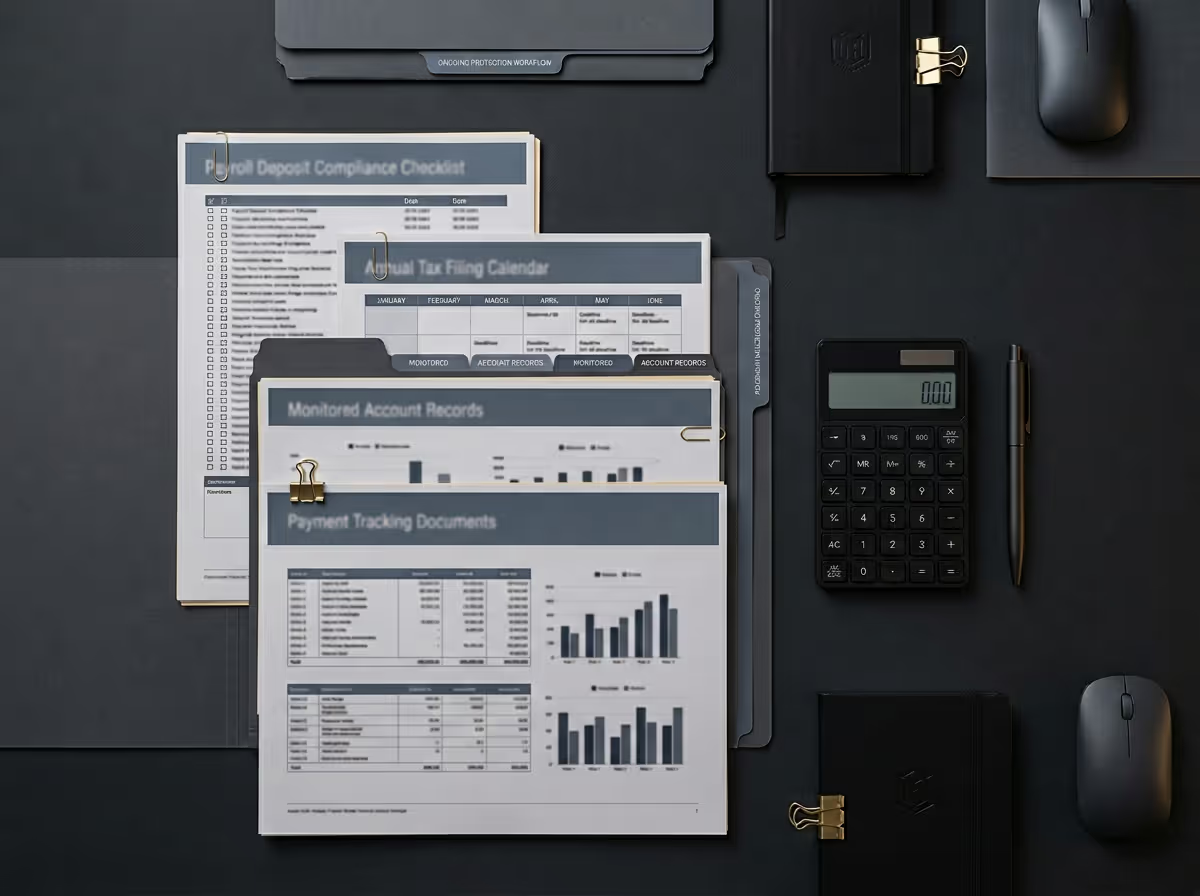
Ongoing Compliance Oversight and Case Monitoring
Once we achieve resolution, maintaining compliance becomes crucial. The IRS requires that all future payroll taxes and filings remain current to maintain negotiated agreements. We provide guidance to help ensure proper payroll deposits and timely filings moving forward.
If your financial circumstances change, we can request modifications to existing arrangements. Our representation does not end with an agreement; we remain available to protect your standing and prevent future enforcement.
What Happens If You Do Nothing
Assessment Finalization: If you do not appeal, the penalty becomes final, and the IRS prepares enforcement action.
Notice Issuance: You may receive a final notice of intent to levy, triggering a 30-day window to request a hearing.
Federal Tax Lien Filing: The IRS may file a notice of federal tax lien, attaching the debt to your property and affecting your credit.
Levy Preparation: Revenue officers may begin contacting banks or employers in preparation for the levy.
Bank Levy Execution: Your bank account can be frozen and funds seized after the 21-day holding period.
Wage Garnishment: A portion of your paycheck may be withheld each pay period until the debt is addressed.
Delays reduce leverage and increase financial damage.
Frequently Asked Questions (FAQs)
Take Action Now
The Trust Fund Recovery Penalty exposes your personal finances to federal enforcement. Waiting increases risk and reduces flexibility. Early representation preserves rights, protects income, and improves negotiation leverage.
Call us today. We will review your situation, explain your options clearly, and take immediate steps to protect you.
Results depend on individual circumstances and IRS determinations. No outcome is guaranteed. Representation is subject to IRS rules and procedures. IRS Circular 230 Disclosure applies.