


State Payroll Tax Problems | Immediate Relief
We assist small business owners with payroll tax compliance by reviewing tax filings such as Form 941, correcting payroll system errors, and addressing tax regulations. Acting under the power of attorney, our tax professionals work to resolve payroll tax problems through installment agreements, offer in compromise, and other solutions under state and local tax requirements.

What This Service Does
Issues with state payroll taxes often involve more than a missed payment. They can include failures in payroll tax compliance, errors on tax forms, unfiled tax returns, issues with income tax withholding, and disputes with the Internal Revenue Service. Our service is designed to correct these payroll-related tax issues, protect your business assets, and move you toward structured tax relief under federal tax laws.
We Take Control of IRS Communication and Enforcement Exposure
Once you sign Form 2848, we communicate directly with the Internal Revenue Service regarding your payroll tax matters. This includes issues involving Form 941, federal income taxes withheld from employees, Social Security tax, FICA taxes, and employer-side payroll tax obligations.
If your case involves federal tax issues such as levy threats, lien filings, or an IRS audit tied to payroll reporting, we step in immediately. You no longer have to interpret technical notices or respond to tax authorities without preparation. We manage all communications in accordance with established IRS procedures.
We Verify Payroll Tax Liabilities and Filing Gaps
Payroll tax cases frequently involve unfiled or incorrectly filed tax returns, including Form 941 and Form W-2 reporting errors. We obtain account transcripts and reconcile reported income tax withholding, Social Security, and federal income tax deposits against IRS records.
If W-2 forms were issued incorrectly, if federal W-4 withholding elections were misapplied, or if tax form errors created assessment discrepancies, we identify and correct them. Accurate reporting is essential before negotiating back taxes or seeking tax relief options.
We Address Income Tax Withholding and FICA Compliance
Employment taxes include federal income tax withholding, Social Security tax, and Medicare components commonly referred to as FICA taxes. Employers are responsible for withholding and remitting these amounts properly under federal tax laws.
Missed or miscalculated deposits can quickly escalate fines and penalties. We analyze whether the issue involves employer payroll tax miscalculations, deposit timing issues, or broader payroll tax compliance failures. Stabilizing current withholding and deposit procedures is critical to prevent ongoing tax delinquency.
We Evaluate Independent Contractor Classification Risks
Some payroll problems stem from misclassifying independent contractors. If workers were treated as contractors when they should have been employees, payroll tax liabilities can expand to include back taxes, federal income taxes, Social Security tax, and employer-side payroll tax obligations.
We review classification practices and assess exposure under federal tax laws. Proper classification is essential to prevent additional payroll-related tax issues and further enforcement from tax authorities.
We Stabilize Multistate and Remote Work Payroll Issues
Remote work and out-of-state employees have increased payroll complexity. Businesses operating across state lines may face multistate taxation issues, reciprocity agreements, and overlapping state and local taxes.
While this service focuses on IRS enforcement, federal payroll compliance failures often intersect with state laws, state unemployment taxes, and local tax jurisdictions. We help identify whether federal payroll reporting conflicts may also impact state income taxes or state unemployment insurance obligations.
We Analyze Exposure to Trust Fund and Personal Liability
The IRS may assess trust fund exposure when employees withhold federal income taxes and Social Security amounts but do not remit them. This procedure can lead to personal liability assessments against responsible individuals.
We examine who had authority over income tax withholding, deposit decisions, and financial control. Early intervention can reduce the need to escalate to personal assessment territory and protect both business and individual interests.
We Pursue Structured Tax Relief Solutions
After verifying balances and ensuring current payroll tax compliance, we pursue appropriate tax relief options allowed under IRS procedures. This may include installment agreements or, in qualifying cases, an offer in compromise based on financial analysis.
Tax relief strategies must be realistic and supported by accurate documentation. We evaluate cash flow, back taxes, and ongoing payroll obligations to propose a resolution aligned with your financial capacity while maintaining forward compliance.
We Correct Payroll Reporting and Withholding Errors
Payroll errors can include incorrect Form W-2 reporting, misapplied federal W-4 elections, underreported income tax withholding, or improper allocation of FICA taxes. These mistakes can trigger an IRS audit or enforcement.
We review payroll systems, identify reporting discrepancies, and implement corrective steps. Proper payroll reporting not only resolves current federal tax issues but also protects against future enforcement tied to tax form errors.
We Reduce Fines and Penalties Where Possible
Payroll tax delinquency often results in substantial fines and penalties. While penalties do not automatically disappear, we review whether reasonable cause arguments or structured resolution paths may reduce the financial burden where appropriate under IRS standards.
Our objective is not only to stop enforcement but also to limit long-term financial damage to your business and preserve your tax base and operational stability.
We Protect Business Continuity and Financial Stability
Payroll tax enforcement disrupts cash flow, threatens business assets, and interferes with daily operations. Bank levies, receivable levies, and wage levies can quickly destabilize a company.
We structure our service to safeguard business continuity while addressing back taxes. By addressing payroll tax compliance, stabilizing income tax withholding, and navigating IRS procedures, we help move your case toward a sustainable resolution rather than reactive crisis management.
In short, this service addresses the full scope of payroll-related tax issues tied to federal enforcement. We manage corrections, liability verification, tax relief strategy, and negotiations, so you can focus on running your business while we handle the IRS.
Why This Gets Worse Without Help
Penalties Increase Rapidly
The failure-to-deposit penalty applies when payroll deposits are late, incomplete, or incorrect. The penalty percentage increases as the payment is made later. Delay directly increases liability.
Interest continues to accrue until the balance is paid in full. Waiting increases total exposure.
Enforcement Tools Are Strong
After notice and demand for payment, the IRS may file liens and eventually levy property if no resolution is arranged. Enforcement authority is structured and procedural, but it moves forward unless interrupted by action.
Revenue officer involvement often accelerates collection pressure.
Personal Exposure Is Possible
The penalty for recovering trust fund taxes may be assessed against responsible individuals who willfully fail to collect or pay certain payroll taxes. Once assessed, the IRS may pursue collecting personal assets.
Business owners are often surprised to learn that payroll issues can become personal.
Waiting Shrinks Your Options
The IRS must provide notice before levying in most cases, generally at least 30 days before the levy after a final notice of intent to levy is issued. Missing that window limits procedural protections.
Early intervention preserves leverage.
How the IRS Enforces This
Billing and Demand for Payment
After assessment, the IRS sends a notice and demand for payment. Additional notices follow if payment is not received. Each notice increases urgency.
Federal Tax Lien
A federal tax lien arises by law when a balance is assessed and unpaid after demand. The IRS may file a notice of federal tax lien to protect the government’s interest.A filed lien may affect financing, credit relationships, and business operations.


Levy Authority
A levy is a legal seizure of property to satisfy a tax debt. Under Internal Revenue Code section 6331, the IRS may levy wages, bank accounts, accounts receivable, retirement income, and other property after required notice steps.
Generally, the IRS must assess the tax, send notice and demand, and issue a final notice of intent to levy at least 30 days before levy action in most cases.
Bank levies involve a 21-day holding period before funds are sent to the IRS, allowing time for resolution.
Hardship Relief
Levies may be released if they create immediate economic hardship. Wage levies must be released in qualifying hardship cases. Prompt documentation is essential.
Installment Agreement Protection
When a valid installment agreement request is pending, the IRS is generally prohibited from levying in many situations. Proper submission is critical for these protections to apply.
We intervene within this structured system.

Who This Service Is For
- You received IRS notices regarding unpaid payroll taxes: You have received letters referencing Forms 941, employment tax balances, or deposit penalties, and you are unsure how to respond without worsening the situation.
- You are behind on payroll deposits: You have missed required federal tax deposits and are concerned about escalating failure-to-deposit penalties and enforcement risk.
- A revenue officer has contacted you: An IRS revenue officer has requested financial records, meetings, or payment proposals, increasing urgency and personal exposure risk.
- You are worried about a federal tax lien: You are concerned about credit damage or business disruption from a notice of federal tax lien filing.
- You fear levy action: You are concerned that the IRS may levy business bank accounts, wages, or accounts receivable under its collection authority.
- You are concerned about personal liability: You are worried about potential trust fund recovery penalty assessments against responsible individuals.
- You need representation under power of attorney: You want a professional to communicate directly with the IRS using Form 2848 to protect your interests.
Common Mistakes People Make
Many taxpayers worsen their situation by making avoidable mistakes:
Our Representation Process
Case Intake and Urgency Assessment
We begin with a structured intake to understand exactly where your case stands. This includes reviewing all IRS notices, identifying the relevant tax periods, and determining whether enforcement deadlines are approaching. We assess levy risk, lien exposure, and potential trust fund recovery issues. This early evaluation allows us to prioritize immediate threats and build a response plan that addresses both short-term stabilization and long-term resolution.
Filing Form 2848 Power of Attorney
We prepare and submit IRS Form 2848 to legally represent you before the IRS for the specified payroll tax matters. Once processed, the IRS communicates directly with us instead of contacting you. This allows us to control the flow of information, ensure accurate responses, and prevent unstructured conversations that could complicate your case. Representation formalizes our role and establishes clear communication channels.


Transcript Retrieval and Liability Verification
We obtain IRS account transcripts to confirm the exact balances assessed, including tax, penalties, and interest. We must identify discrepancies, misapplied payments, or missing filings in payroll tax accounts before beginning negotiations. By verifying each assessment and comparing it with your internal records, we ensure that any proposed resolution is based on accurate, complete financial information.
Compliance Stabilization
The IRS expects current payroll deposits and filings to be up-to-date before approving most resolution options. We work with you to correct unfiled Forms 941 and align ongoing deposit requirements. Demonstrating forward compliance shows good faith and improves the likelihood of agreement approval. This step is critical because unresolved filing gaps can stall or even fail negotiations.
Financial Review and Strategy Development
We conduct a detailed financial analysis of your business income, expenses, assets, and cash flow. This allows us to determine which type of IRS-recognized resolution is realistic and sustainable. Rather than proposing an unaffordable plan, we structure a strategy that reflects your actual financial capacity while meeting IRS procedural standards and expectations.
Submission and Negotiation
After organizing the documentation, we prepare and submit the necessary requests or proposals to the IRS. We communicate directly with assigned personnel, respond to follow-up inquiries, and advocate within established IRS guidelines. Our negotiation approach focuses on accuracy, compliance, and realistic terms that reduce enforcement risk while maintaining business stability.

Enforcement Monitoring
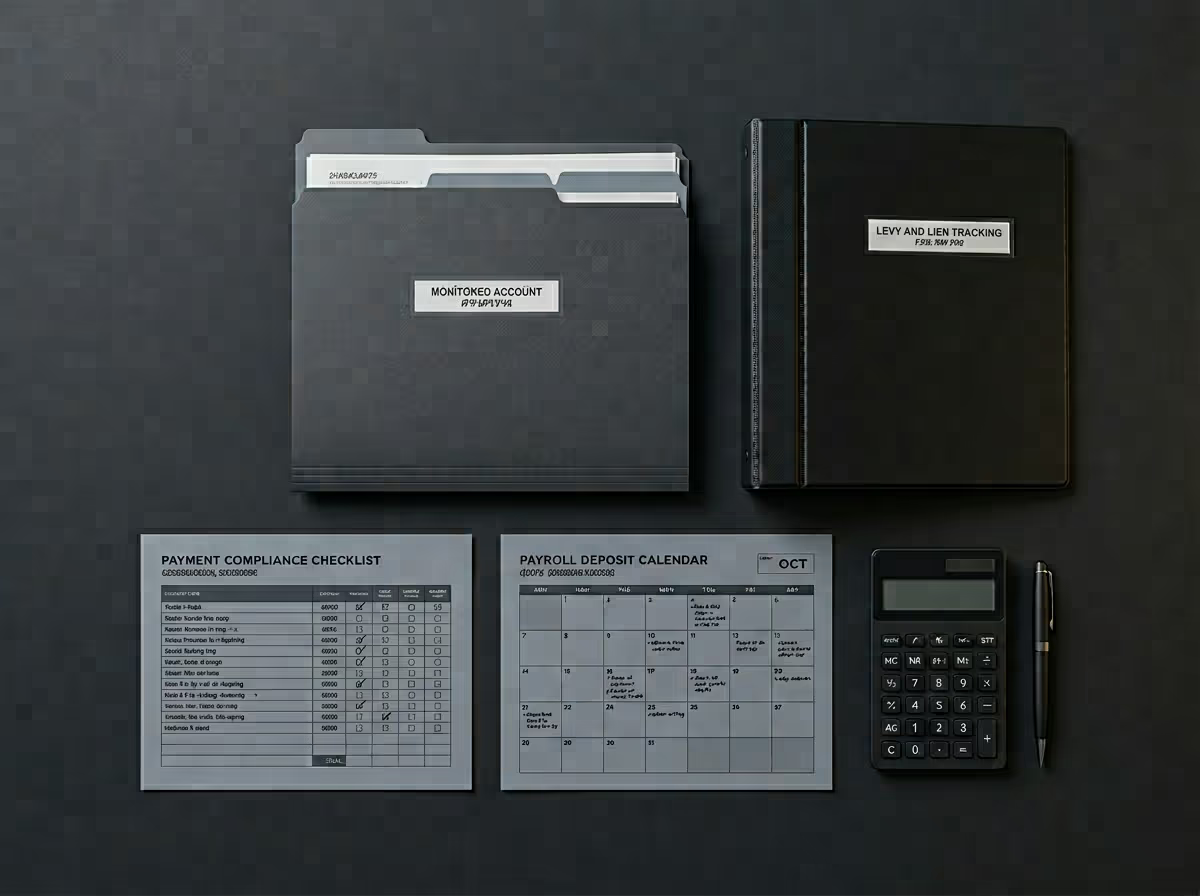
Throughout the process, we closely monitor the enforcement status. This includes tracking levy deadlines, lien filings, and any revenue officer activity. If enforcement risk increases, we act promptly to submit appropriate documentation or requests that may pause or limit collection actions. Ongoing monitoring ensures your case does not escalate unexpectedly during negotiations.
Ongoing Case Oversight
Once we resolve, our role continues. We monitor payment compliance, confirm deposits remain current, and address any IRS correspondence that arises. Many payroll tax cases fail because agreements default. Our continued oversight reduces that risk and helps maintain long-term stability so enforcement pressure does not return.
What Happens If You Do Nothing
Additional notices continue: The IRS continues billing under its structured collection process.
Penalties and interest continue to accrue: Failure to deposit them continues to accrue under IRS calculation rules.
Collection posture escalates: The account moves closer to lien or levy status if no arrangement is made.
Lien filing risk increases: The IRS may file a notice of federal tax lien to secure its claim.
Revenue officer involvement becomes more likely: Field collection assignment increases enforcement pressure.
Personal exposure review may begin: Trust fund recovery penalty investigation risk may rise in certain payroll cases.
Final notice of intent to levy may be issued: The IRS provides the required notice before levy in most cases.
Bank levy risk becomes real: Funds in business accounts may be frozen, subject to the 21-day holding period.
Wage or receivable levy risk increases: The IRS may target wages or accounts receivable under levy authority.
Frequently Asked Questions (FAQs)
Take Action Now
Payroll tax problems do not resolve themselves. They expand through penalties, interest, liens, levies, and potential personal exposure. The earlier you intervene, the more options remain available under IRS procedures.
Call us before responding to the next IRS notice. We will file Form 2848, take control of communication, verify your liability, stabilize compliance, and pursue an appropriate IRS-recognized resolution path.
Immediate action protects your business and your future.
Results depend on individual circumstances and IRS determinations. No outcome is guaranteed. Representation is subject to IRS rules and procedures. IRS Circular 230 Disclosure applies.