


State Business Bank Levy Help | Immediate Relief
We provide legal support to pursue a levy release by reviewing bank levy documents, identifying errors in the levy, and addressing economic hardship. Acting under the power of attorney, we communicate with the Internal Revenue Service to resolve your tax liability through a payment plan, installment agreement, or offer in compromise.

What This Service Does
This service provides direct federal representation before the Internal Revenue Service when a business bank account has been levied or is at risk of levy. We do not offer casual advice. We assume responsibility for managing the enforcement issue in accordance with proper IRS procedures.
We File a Power of Attorney and Take Over the Case
Under IRS Form 2848, Power of Attorney and Declaration of Representative, you authorize us to act on your behalf before the IRS. Once processed, we can communicate directly with the IRS collections office, request transcripts, confirm balances, and submit documentation. This removes you from high-pressure conversations and ensures that every communication is controlled and strategic.
We Confirm the Legal and Procedural Basis for the Levy
The IRS generally must assess the tax, send a notice and demand for payment, and issue a final notice of intent to levy at least 30 days before enforcing. We confirm whether these requirements were satisfied and whether the correct tax periods and balances are involved. This step ensures that we are addressing the correct liability using the appropriate strategy.
We Act Within the 21-Day Bank Levy Window
According to IRS guidance, when a bank levy is issued, the bank must hold the funds for 21 days before sending them to the IRS. Funds are frozen at the time the levy is received. Typically, funds deposited after that time are not included. That 21-day holding period is the operational window in which action must occur.
We move quickly to contact the IRS, evaluate release options, and determine whether hardship, payment arrangements, or procedural corrections apply.
We Evaluate Hardship and Business Impact
IRS guidance states that if a wage levy creates immediate economic hardship, it must be released, and if a bank levy creates immediate economic hardship, it may be released. Hardship requires documented proof. We gather the necessary financial information and present it clearly and accurately.
We Build a Sustainable Resolution
A levy is a symptom of an unresolved tax balance. Publication 594 explains that the IRS collection process escalates when taxes remain unpaid. Our role is not only to address the immediate levy but also to stabilize the account through structured resolution, often including installment agreement evaluation when appropriate under IRS rules.
Why This Gets Worse Without Help
IRS audits follow a formal path. If you ignore notices or handle them incorrectly, the situation can escalate quickly.
Frozen Funds Become Permanent Transfers
The 21-day holding period is a countdown. If no action is taken before the period expires, the bank generally sends the frozen funds to the IRS. Once transferred, recovery becomes far more difficult.
Additional Levies Can Follow
The IRS has the authority to levy wages, bank accounts, and other property rights under Internal Revenue Code section 6331. One levy does not prevent another. If balances remain unresolved, enforcement can continue.
Penalties and Interest Continue to Accrue
Publication 594 explains that penalties and interest continue until the debt is fully paid or otherwise resolved. Waiting increases the total liability.
Business Disruption Expands
Frozen accounts can quickly escalate the operational damage. Payroll delays may affect employees. Vendor relationships may suffer. This could impact merchant processing and financing arrangements. The longer enforcement continues, the harder recovery becomes.
Negotiation Leverage Declines
The earlier you act, the more flexibility you typically retain. Once multiple enforcement actions occur, options narrow. Acting early preserves leverage.
How the IRS Enforces This
Assessment and Demand for Payment
The IRS must assess the tax and send a notice and demand for payment. This is the first formal step in the collection process described in Publication 594.
Final Notice of Intent to Levy
Before issuing most levies, the IRS generally must send a final notice of intent to levy and notice of your right to a hearing at least 30 days before enforcement. This notice provides an opportunity to request a collections due process hearing.


Legal Authority to Levy
Internal Revenue Code section 6331 authorizes the IRS to collect delinquent tax by levy after proper notice. A levy is distinct from a lien. A lien is a claim against property. A levy is the actual seizure of property.
Bank Levy Mechanics
When the IRS serves a levy on a bank:
Installment Agreement Protections
IRS guidance clarifies that the IRS generally refrains from levying in many situations when a properly submitted installment agreement request is pending. However, incomplete submissions or noncompliance can eliminate that protection.

Who This Service Is For
- You need this if your business bank account has been frozen: If you discover that your account is inaccessible due to an IRS levy, immediate representation is critical to act within the 21-day holding period and protect operational funds.
- You need this if you received a final notice of intent to levy: If the 30-day notice period is running, structured intervention may prevent enforcement before a bank levy occurs.
- You need this if payroll is at risk: If frozen funds prevent you from meeting payroll obligations, swift action may reduce operational harm and allow a structured presentation of hardship.
- You need this if vendors or landlords are threatening action: If bounced payments are creating contractual risk, representation can help stabilize enforcement while resolution is pursued.
- You need this if you are behind on payroll or business income taxes: Unresolved federal business tax debt often triggers levy enforcement, and structured representation can address both immediate and long-term exposure.
- You need this if you believe the levy involves incorrect balances or periods: Errors in applied payments or tax periods require transcript review and direct communication with the IRS to correct.
- You need this if the levy is causing documented economic hardship: Proper documentation and a structured presentation are required to request consideration under IRS hardship rules.
- You need this if you feel overwhelmed by IRS notices: Federal enforcement language can be technical, and professional representation ensures that deadlines and procedural rights are handled properly.
Common Mistakes People Make
Many taxpayers worsen their situation by making avoidable mistakes:
Our Representation Process
Initial Emergency Case Review
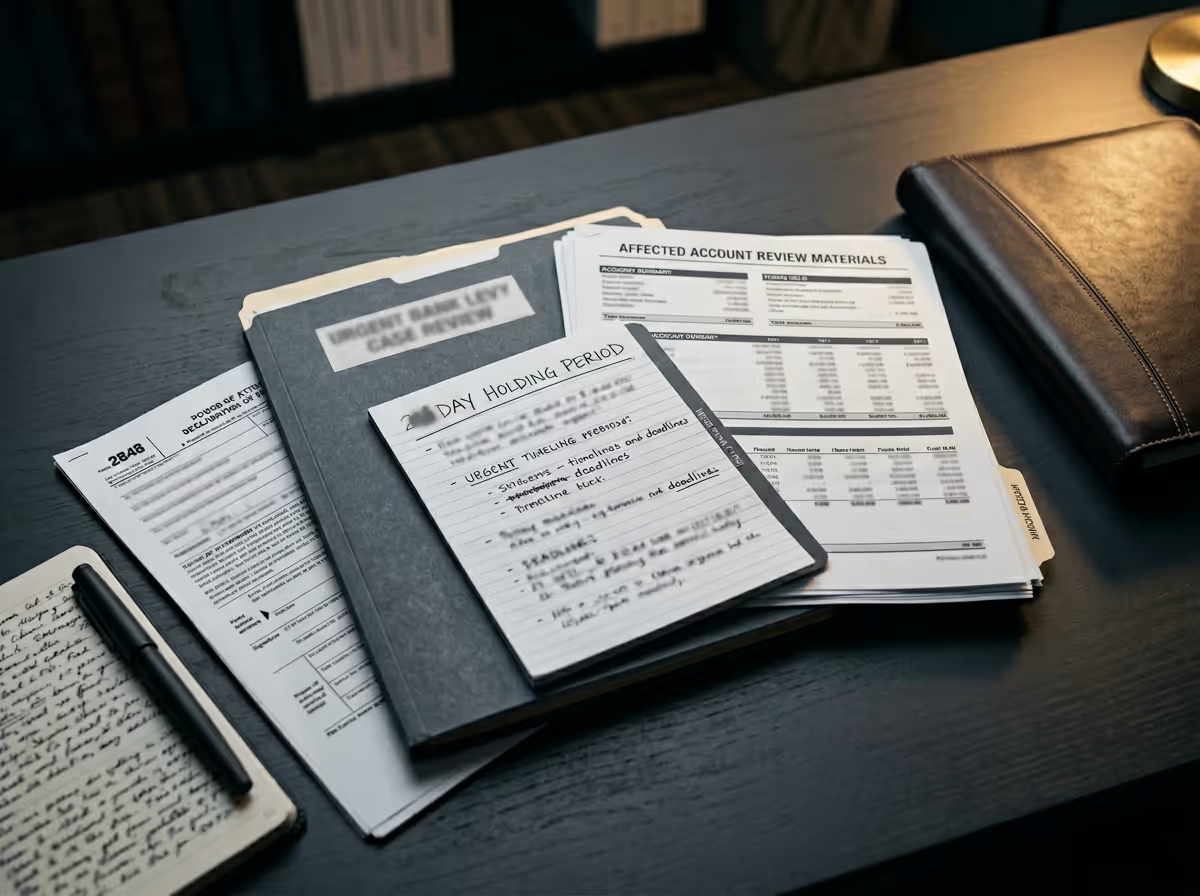
We begin with an immediate assessment of your situation to determine how much time remains in the 21-day bank levy holding period and whether funds have already been transferred. We confirm the date and time the bank received the levy, identify affected accounts, and evaluate payroll or vendor deadlines. This early review allows us to prioritize actions and protect your business operations without delay.
Power of Attorney Filing
We prepare and submit IRS Form 2848 to formally represent you before the Internal Revenue Service. Once processed, this authorization allows us to speak directly with IRS collections personnel, request account transcripts, and receive enforcement updates. This step removes you from stressful negotiations and ensures all communications are handled strategically and consistently from the beginning.
Transcript and Notice Analysis
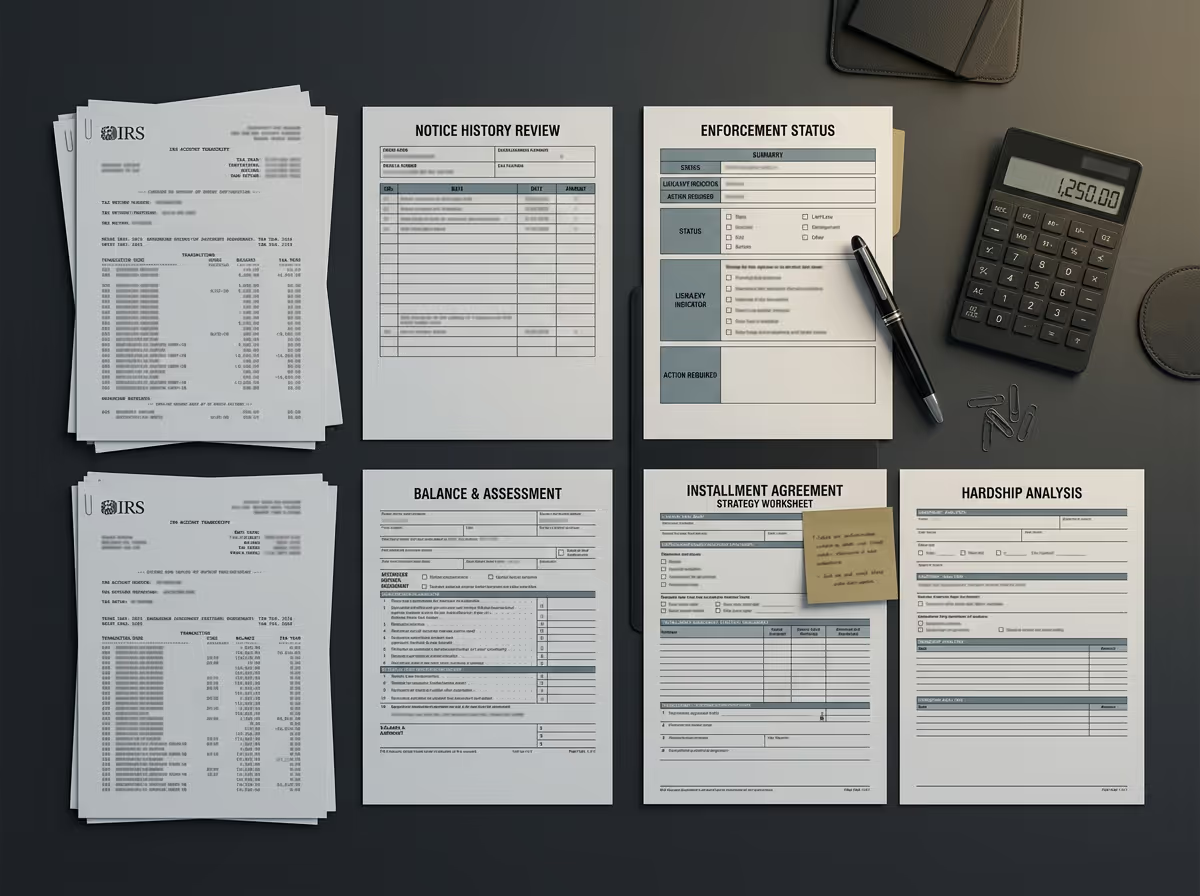
Once authorization is in place, we will obtain and analyze your IRS account transcripts. We review assessment dates, notice issuance history, balance calculations, and enforcement activity. This confirms whether the required procedures were followed and identifies any discrepancies or errors. A complete understanding of the account status enables us to develop a response strategy grounded in verified facts rather than assumptions.
Immediate Enforcement Strategy
Based on transcript findings and your financial position, we determine the most appropriate immediate course of action. This may include requesting a temporary collection hold, preparing a hardship submission, initiating an installment agreement request, or addressing compliance gaps. Stabilizing enforcement risk and preventing additional levies while structuring a long-term resolution is the goal at this stage.
Financial Documentation Preparation
If the IRS requires financial disclosure, we assist you in preparing accurate and complete documentation. This includes income statements, expense summaries, asset information, and supporting records. Accuracy and consistency are critical because incomplete or conflicting information can delay approval. We ensure your financial presentation reflects your true ability to pay while complying with IRS standards.
Negotiation and Resolution Submission
After preparing the necessary documentation, we initiate direct communication with IRS collections personnel to submit and discuss your proposed resolution. We present the financial information clearly, respond to IRS follow-up questions, and negotiate within the boundaries of federal procedures. Our role is to maintain structured dialogue and work toward an outcome that addresses the levy and stabilizes your account status.

Compliance Monitoring and Follow-Through
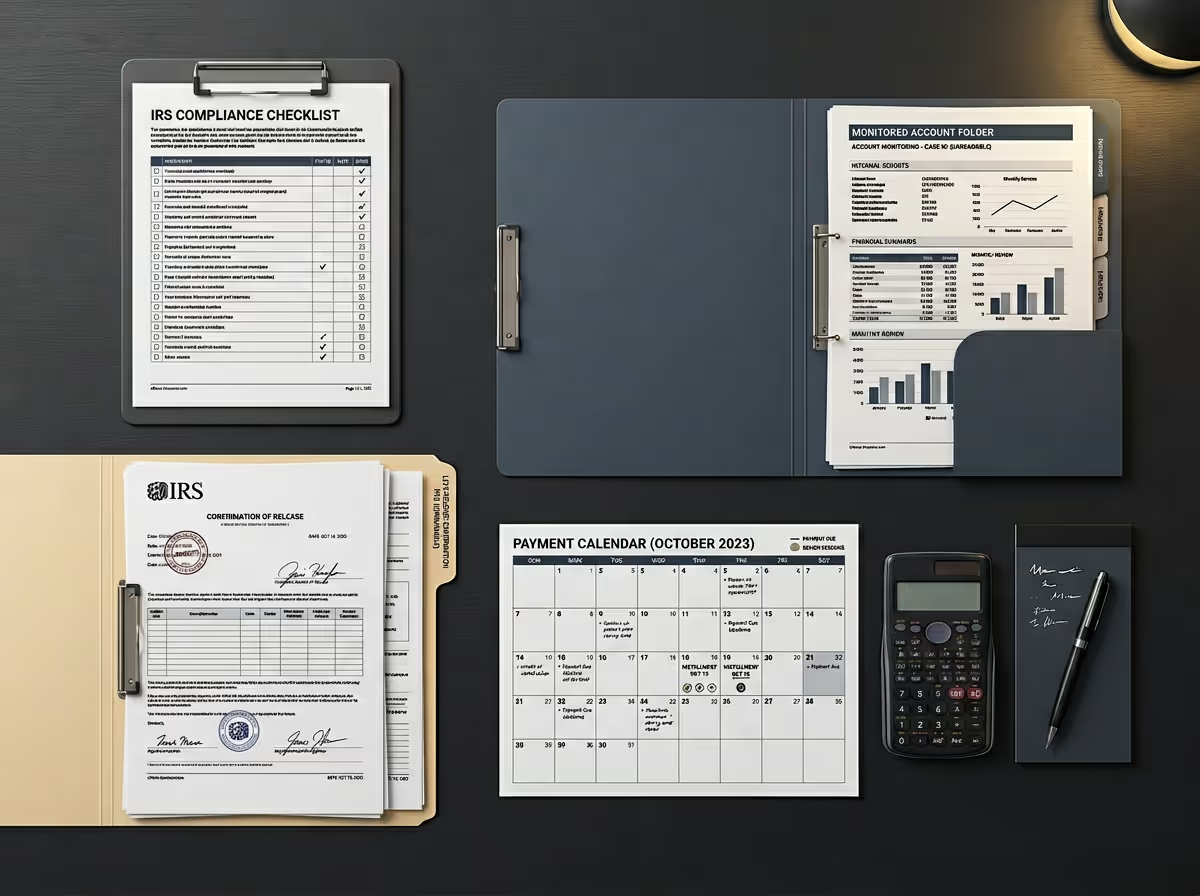
After an agreement or enforcement adjustment is reached, we continue monitoring the case to confirm that levy release instructions are issued and that account status reflects the updated resolution. We also help ensure ongoing compliance with filing and payment obligations. Maintaining compliance reduces the risk of future enforcement actions and supports your business's long-term financial stability.
What Happens If You Do Nothing
Funds are transferred: The 21-day holding period expires, and frozen funds are generally sent to the IRS.
Operational strain increases: Payroll disruptions and vendor issues may expand.
Balance continues to grow: Penalties and interest continue to accrue under Publication 594 guidelines.
Additional notices arrive: The IRS continues its collection process as described in Publication 594.
Enforcement risk expands: Additional levies or collection actions may be initiated if the debt remains unresolved.
Business credit may suffer: Ongoing enforcement can affect financial relationships and vendor confidence.
Multiple levies may occur: The IRS retains authority to levy other property rights if balances remain unpaid.
Escalated collection assignment: Cases may be assigned to field collection personnel depending on circumstances.
Long-term financial damage develops: Prolonged enforcement may create structural business harm beyond the tax debt itself.
Frequently Asked Questions (FAQs)
Take Action Now
A federal bank levy is not a routine notice. It is active enforcement backed by statutory authority. The IRS has already moved beyond billing and into seizure.
If the IRS freezes or puts your business bank account at risk, you have a limited time. The 21-day holding period moves quickly. Every day that passes reduces flexibility and increases financial pressure.
We can file a power of attorney, take control of IRS communications, evaluate hardship or installment eligibility, and pursue a structured resolution under federal procedures. Acting now can protect your business operations and prevent further escalation.
Contact us immediately so we can begin working within the levy window and move your case toward stabilization.
Results depend on individual circumstances and IRS determinations. No outcome is guaranteed. Representation is subject to IRS rules and procedures. IRS Circular 230 Disclosure applies. Use IRS.gov only for enforcement citations. Do not reference third-party sources.