


State Bank Levy Help | Immediate Relief
We provide legal support to pursue a levy release by reviewing bank levy documents, identifying errors in the levy, and addressing economic hardship. Acting under the power of attorney, we communicate with the Internal Revenue Service to resolve your tax liability through a payment plan, installment agreement, or offer in compromise.

What This Service Does
Our service is a full-service IRS representation focused on stopping, releasing, or preventing IRS bank levies. We do not simply explain your options. We act for you.
When you hire us, we immediately begin working under federal representation rules to take over contact with the IRS and move your case toward stabilization.
We Establish Legal Authority to Represent You
IRS Form 2848, power of attorney and declaration of representative, allows us to speak to the IRS on your behalf for the specific tax years and issues listed on the form. IRS guidance confirms that this form authorizes a representative to act for you before the IRS.
Once the IRS processes the power of attorney, we can:
- Direct communication authority: We speak directly with IRS collections officers and automated collection units, so you do not have to manage stressful calls yourself.
- Account access rights: We request and review your IRS transcripts to confirm balances, assessments, and enforcement status.
- Submission authority: We provide documentation, financial information, and formal requests directly to the IRS.
- Negotiation authority: We discuss collection alternatives and levy release options in accordance with IRS procedures.
We Investigate the Levy and Confirm the Facts
Not every levy situation is identical. Some involve missed deadlines. Others involve account errors, misapplied payments, or incorrect balances.
We review:
- Assessment verification: We confirm the tax was properly assessed and determine when the 10-year collection statute began, as described in Publication 594.
- Notice history review: We verify whether the required final notice of intent to levy was properly issued at least 30 days before enforcement, as IRS guidance explains.
- Levy timing analysis: We confirm when the bank received the levy and where you are in the 21-day holding period.
We Act During the 21-Day Holding Period
IRS guidance explains that when a bank receives a levy, it must freeze funds available at that time. There is generally a 21-day waiting period before the bank sends the money to the IRS. This waiting period allows the taxpayer time to contact the IRS and resolve the issue.
That window is critical.
During this time, we may:
- Request hardship review: The IRS states that it must release a levy if it creates immediate economic hardship.
- Propose qualifying installment agreements: Certain agreements, when approved, may require levy release under IRS rules.
- Correct errors: If payments were misapplied or balances are incorrect, we address those issues immediately.
- Address joint account claims: IRS guidance explains that non-liable joint account holders may present documentation to show ownership of funds.
We Build a Long-Term Resolution Strategy
Stopping one levy does not automatically resolve the underlying debt. IRS guidance explains that releasing a levy does not eliminate the tax liability.
After stabilizing the immediate crisis, we:
- Evaluate compliance status: We confirm that all required returns have been filed, as most collection alternatives require compliance.
- Determine financial eligibility: We assess whether installment agreements or hardship classifications apply under IRS guidelines.
- Structure sustainable terms: We pursue solutions that reduce the risk of future enforcement.
Why This Gets Worse Without Help
Our service is a full-service IRS representation focused on stopping, releasing, or preventing IRS bank levies. We do not simply explain your options. We act for you.
When you hire us, we immediately begin working under federal representation rules to take over contact with the IRS and move your case toward stabilization.
Escalation of Enforcement
- Expanded levy authority: If the tax debt remains unresolved, the IRS may expand enforcement beyond a single bank levy and pursue wages, additional bank accounts, or other property to satisfy the balance.
- Repeated account freezes: If funds are deposited into the same account after a levy and the debt remains outstanding, the IRS may issue additional levies, causing ongoing disruption.
- Federal tax lien filing: The IRS may file a notice of federal tax lien, which can affect credit and attach to certain property interests.
Expiration of Appeal Rights
- Loss of collection due to processing protection: Final notice letters, such as LT11 or CP90, provide a limited 30-day window to request a collection due process hearing, and missing that deadline can permanently limit your ability to challenge levy action before it proceeds.
- Reduced negotiation leverage: Once formal appeal rights expire, the IRS may continue enforcing collection while discussions occur, which reduces your ability to pause enforcement during negotiations.
- Narrowed resolution pathways: Some collection alternatives are easier to secure when appeal rights are still open, and waiting may restrict available options.
Compounding Financial Damage
- Increased penalties and interest: While enforcement is ongoing, penalties and interest continue to accrue, increasing the total balance owed over time.
- Operational disruption: A frozen account can lead to missed payroll, returned payments, and vendor interruptions, damaging business stability and reputation.
- Personal financial strain: For individuals, frozen funds can lead to missed mortgage payments, late fees, and damaged credit relationships.
Loss of Negotiating Leverage
- Funds permanently transferred: Once the 21-day holding period expires and funds are sent to the IRS, the immediate financial damage is complete, and recovery options may be limited.
- Reduced hardship impact: Acting early allows you to present hardship documentation before funds are transferred, which can strengthen a levy release request.
- Stronger IRS position: The longer enforcement continues without structured communication, the greater the IRS's control over timing and collection actions.
How the IRS Enforces This
The IRS follows a structured legal process before issuing a levy. Understanding that process helps clarify why deadlines and proper responses matter.
Tax Assessment and Notice
Final Notice of Intent to Levy


Collection Due Process Rights
Issuance of Bank Levy
Continued Enforcement

Who This Service Is For
You need this service if:
- Frozen bank account: You need this service if you logged into your bank account and found it frozen due to IRS action, preventing access to funds necessary for living or operating expenses.
- Final notice received: You need this service if you received LT11, Letter 1058, or CP90 and you are within the 30-day response window described by IRS guidance.
- Small business risk: You need this service if you operate a small business, and a frozen operating account could disrupt payroll, vendor payments, or contracts.
- Hardship situation: You need this service if losing access to your funds creates immediate economic hardship for you or your family.
- Escalating notices: You need this service if IRS notices have become more urgent and you are unsure which deadlines apply.
- Failed DIY attempts: You need this service if you have tried contacting the IRS yourself but have not achieved progress or clarity.
- Fear of wage levy: You need this service if you are concerned that wage garnishment or additional enforcement may follow the bank levy.
Common Mistakes People Make
Many taxpayers worsen their situation by making avoidable mistakes:
Our Representation Process
Initial Case Review
We begin with a focused and urgent review of your situation. This includes examining IRS notices, confirming whether a bank levy has already been issued, identifying the exact tax years involved, and determining whether you are inside the 21-day holding period. We also look for active deadlines, including collection due process windows. This step ensures that our strategy is based on verified facts, not assumptions.
Power of Attorney Authorization
We prepare and file IRS Form 2848, power of attorney, and declaration of representative, so we can legally speak to the IRS on your behalf. Once processed, this form allows us to request account records, communicate with collections personnel, and submit documentation. Once we establish representation, our office quickly transitions the case from reactive phone calls to structured advocacy.

Transcript and Account Analysis
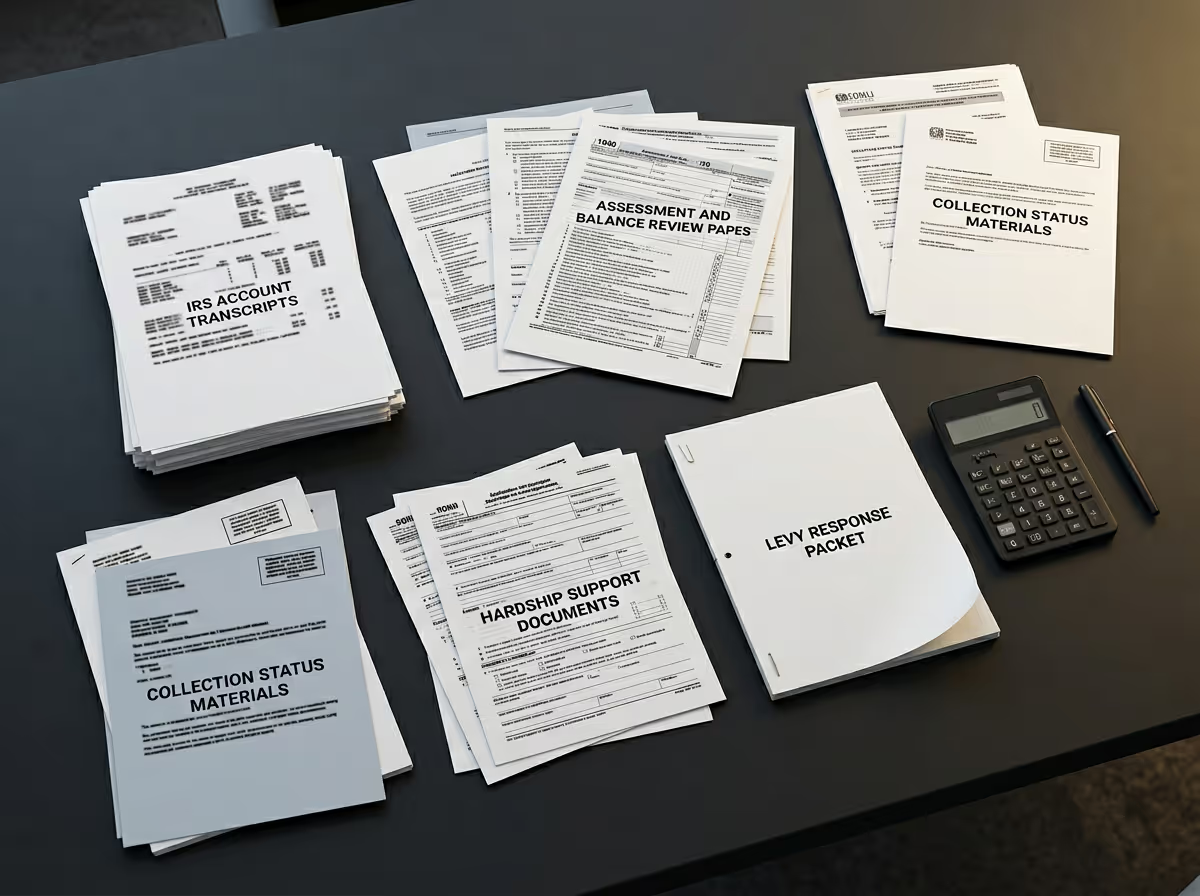
Once we establish representation, we acquire and scrutinize your IRS account transcripts. These transcripts confirm assessment dates, current balances, penalty accruals, collection status codes, and the collection statute expiration date. We also scrutinize the notice history to ensure adherence to the correct procedure. This deep review allows us to identify leverage points, possible errors, and the most effective resolution path under IRS rules.
Immediate Levy Response
If a levy is active, we act with urgency during the 21-day holding period. We contact the appropriate IRS unit, confirm the levy date, and determine whether the required documentation is to request release. If hardship applies, we prepare supporting financial statements. If an installment agreement qualifies, we structure the proposal correctly. Every action during this stage is designed to protect your funds before they are sent.
Resolution Development
After addressing the immediate crisis, our focus shifts to long-term stabilization. This includes reviewing compliance status, ensuring required returns are filed, and evaluating which collection alternative best fits your financial condition. We prepare any necessary financial disclosures and supporting documentation for the proposal. The goal is to create a solution that is realistic, sustainable, and aligned with IRS guidelines.
Negotiation and Follow-Through
We communicate directly with the IRS to negotiate terms, respond to follow-up questions, and submit any additional requested documentation. We track deadlines, confirm receipt of materials, and document all communication. Once the IRS approves an agreement or hardship classification, we monitor compliance to help prevent repeat enforcement. Our role continues beyond negotiation to ensure your case remains stable and protected.

What Happens If You Do Nothing
Funds transmission: Frozen funds may be sent to the IRS after the 21-day holding period expires.
Appeal rights expire: Collection due process deadlines may pass permanently.
Additional contact: IRS notices and phone calls may become more urgent
Wage levy risk: The IRS may initiate wage garnishment if the balance remains unresolved.
Additional bank levies: Multiple levies can be issued if accounts are replenished.
Seizing receivables: Form 668-A procedures can be used to target business receivables.
Compounded financial strain: Penalties and interest continue accruing, increasing the total balance.
Credit and operational damage: Business relationships and personal credit may suffer from repeated account freezes.
Ongoing enforcement: The IRS may continue collection actions until the liability is resolved or the collection statute expires.
Ignoring enforcement compounds financial damage.
Frequently Asked Questions (FAQs)
Take Action Now
An IRS bank levy is serious, but it is not the end. Fast action, proper documentation, and experienced representation can stabilize the situation and protect your income and operations.
Should the IRS freeze your account or issue a final notice of intent to levy, reach out to us immediately. We will establish representation, take over communication with the IRS, and pursue the strongest lawful path to protect your financial stability.
Do not wait for the next enforcement step. Call today.
Results depend on individual circumstances and IRS determinations. No outcome is guaranteed. Representation is subject to IRS rules and procedures. IRS Circular 230 Disclosure applies.