


State Audit Representation for Businesses | Immediate Relief
We provide state tax audit representation and audit representation services for small businesses by managing audit correspondence and acting as your tax professional under the power of attorney. Our team delivers professional representation, supports audit defense, and works toward tax resolution, including payment plan options or post-audit guidance where appropriate.

What This Service Does
This is a full-service representation for federal audits. We do not coach you on how to respond. We respond for you.
Representation Under Power of Attorney
We prepare and file Form 2848 to legally represent your business before the IRS. IRS guidance explains that Form 2848 authorizes an eligible representative to represent you and receive confidential tax information. Once accepted, IRS personnel communicate directly with our office for the matters listed on the form.
This protects you from direct pressure and ensures that every communication is strategic and documented.
Communication Control and Examiner Management
An audit is driven by documentation and explanation. Every word matters. We manage all examiner communications, including:
- Structured written responses: We prepare formal responses that directly address the IRS request and avoid unnecessary disclosures. Each submission is organized to match the examiner’s issue list, reducing confusion and follow-up requests.
- Deadline monitoring and extensions: We track every due date and request extensions when appropriate. Missing deadlines can lead to default assessments, which we prevent.
- Meeting and call representation: We attend or conduct all audit meetings and calls so that you are not placed in a position of answering technical questions without preparation.
Scope Limitation and Issue Framing
IRS Publication 556 explains that returns are examined to determine whether income, expenses, and credits are reported accurately. However, audits can expand if new questions arise.
- Year and issue confirmation: We confirm the exact tax year and issues under examination. This prevents informal expansion into unrelated areas.
- Focused documentation submission: We provide only what is necessary to support the issue under review. Oversharing can invite new lines of inquiry.
- Protection against audit creep: If the examiner attempts to expand the scope, we address it formally and strategically.
Record Reconstruction and Presentation
Disorganized records are common in small and mid-sized businesses. The IRS expects clean substantiation.
- Income reconciliation: We reconcile bank deposits, merchant statements, and reported revenue to eliminate discrepancies.
- Expense substantiation: We compile receipts, invoices, and evidence of business purpose into categorized summaries.
- Payroll and contractor review: When payroll or classification is involved, we prepare documentation that aligns with reported filings.
- Narrative explanation: We present a structured explanation that ties documents together logically.
Appeals Preparation When Necessary
If the IRS proposes changes, Publication 556 explains that a 30-day letter will be issued outlining your right to appeal. Publication 5 explains your right to a fair and impartial administrative appeal through the IRS Independent Office of Appeals.
- Protest letter preparation: We prepare formal written protests when required.
- Fact-based argument development: We build arguments supported by documentation, not emotion.
- Deadline protection: We ensure appeal rights are preserved within required timelines.
Coordination With Collection Risk
If an audit results in additional tax, and payment is not arranged, Publication 594 explains that the IRS collection process may begin.
- Assessment review: We evaluate the proposed balance before it becomes final.
- Collection strategy planning: If necessary, we coordinate next steps to prevent escalation to enforcement.
- Levy risk awareness: IRS guidance explains that a levy is a legal seizure of property after required notices are issued. We monitor for early warning signs.
Why This Gets Worse Without Help
Missed Deadlines Reduce Options
Publication 556 outlines the 30-day and 90-day letter process. If deadlines are missed, the IRS may assess the tax and move forward. Once evaluated, your leverage changes.
Overproduction of Documents Invites Expansion
- Unfiltered accounting files: Providing entire accounting backups can expose unrelated issues.
- Mixing personal and business records: Sending personal records when not required can complicate the audit.
- Irrelevant explanations: Answering beyond the scope of the question can generate new audit angles.
Informal Conversations Create Permanent Records
Examiners document conversations. Casual statements can conflict with written records, creating inconsistencies.
Assessment Leads to Collection Pressure
Publication 594 explains that when tax is assessed and billed, failure to pay can trigger collection. This may include refund offsets and further enforcement steps.
Levy Authority Is Real
IRS guidance explains that before issuing a levy, the IRS generally must assess the tax, send a notice and demand for payment, and provide a final notice of intent to levy at least 30 days before action. Waiting increases the likelihood that enforcement becomes part of your problem.
How the IRS Enforces This
Return Selection and Examination Authority
Publication 556 explains that some returns are selected for examination through screening and document-matching systems. Selection does not automatically indicate wrongdoing.
Examination Requests
The IRS may request records by mail or conduct an office or field examination. You have the right to representation during this phase.


Proposed Adjustments and 30-Day Letter
If the examiner proposes changes, Publication 556 explains that you may receive a 30-day letter outlining proposed adjustments and your right to appeal.
Publication 5 explains the administrative appeals process and protest requirements.
Notice of Deficiency
Publication 556 explains that in the absence of agreement, the IRS may issue a 90-day notice of deficiency. You then have a limited time to petition the U.S. Tax Court.
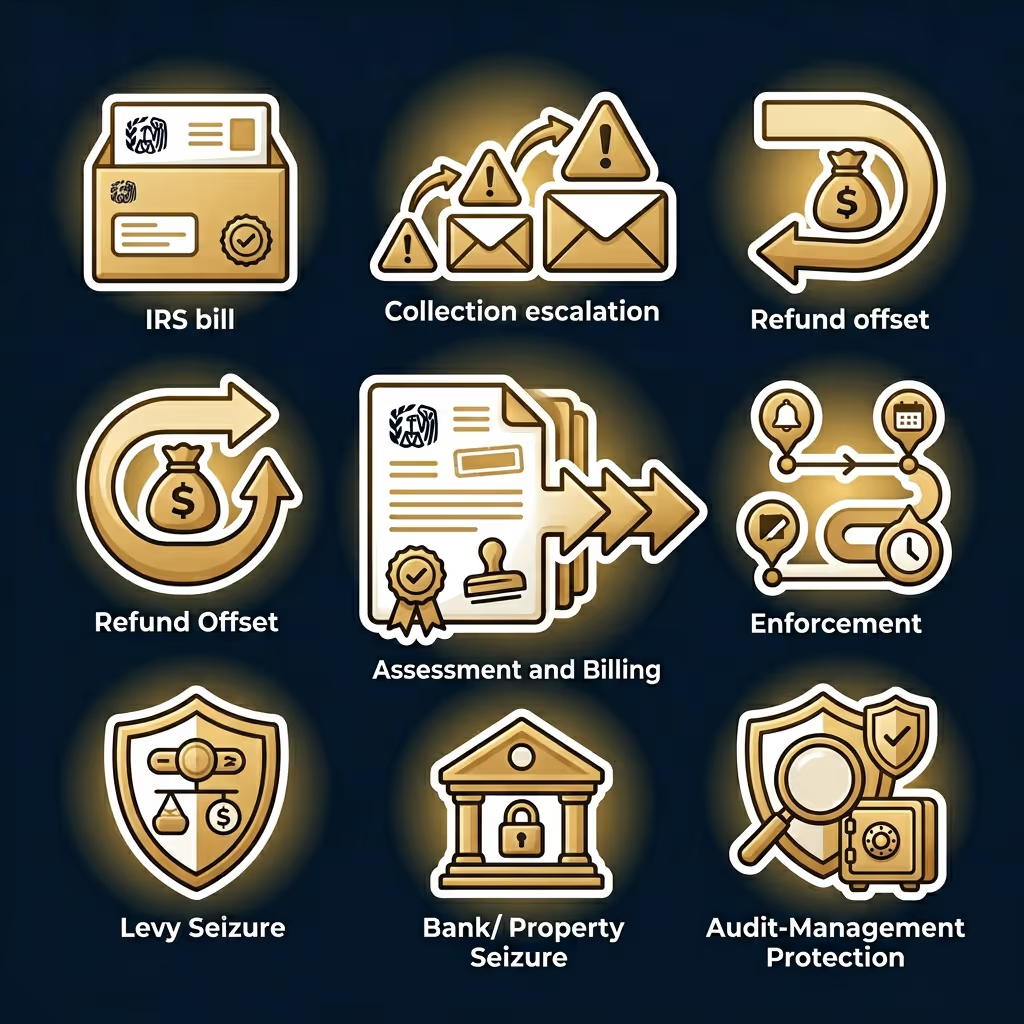
Assessment and Billing
Once assessed, the IRS sends a bill. Publication 594 explains that the collection process begins if required payments are not made.
Collection Escalation
Publication 594 describes collection actions as a series of steps to collect unpaid tax, which may include applying refunds and further enforcement actions.
Levy Action
IRS guidance explains that a levy is a legal seizure of property authorized under Internal Revenue Code section 6331, following required notices.
The audit phase is where exposure can often be managed most effectively.
Who This Service Is For
- You need this if you received an IRS audit letter for your business and do not want to respond alone: Professional representation ensures that every response is structured and aligned with IRS procedures.
- You need this if your bookkeeping is incomplete or disorganized: We reconstruct records and present them clearly, reducing confusion and limiting the need for expansion.
- You need this if the audit involves payroll or contractor classification: These issues can carry additional risk, and careful documentation is critical.
- You need this if you disagree with the proposed adjustments: We preserve and exercise our appeal rights within the required timelines.
- You need this if you fear that additional tax could trigger collections: Audit outcomes can transition into enforcement if not properly managed.
- You need this if prior-year balances already exist: Coordinating audit and collection strategies is essential to preventing compound risk.
Common Mistakes People Make
Many taxpayers worsen their situation by making avoidable mistakes:
Our Representation Process
Initial Consultation and Deadline Review
We begin with a structured consultation to review the IRS notice, identify the affected tax years, and determine exactly what the examiner is requesting. We analyze response deadlines and assess the level of risk associated with the issues raised. This early evaluation allows us to prioritize urgent items and prevent missed deadlines that could accelerate the audit or limit your options.
Power of Attorney Filing
We prepare and file Form 2848, power of attorney, so we can legally represent your business before the IRS. Once accepted, we communicate directly with the examiner and receive copies of audit correspondence. This step immediately reduces pressure on you and your staff. Additionally, it guarantees a strategic, documented, and defense-oriented approach to every interaction with the IRS.


Audit Scope Confirmation
Once we establish representation, we reach out to the examiner to verify the exact scope of the audit. We confirm the specific tax years and issues under review, along with the requested documentation. This conversation is critical because it prevents informal expansion into unrelated areas and ensures that we focus only on the issues properly identified for examination.
Record Collection and Organization
We guide you through gathering the necessary records in a structured way. Instead of submitting raw files, we organize financial documents into summaries and categorized support. This may include income reconciliations, expense breakdowns, and payroll documentation. Our goal is to present information clearly and logically so the examiner can understand the documentation without confusion or unnecessary follow-up.
Response Preparation and Submission
We prepare formal written responses that directly address the examiner’s questions. Each response is structured to match the issue list and supported by organized documentation. In compliance with IRS protocols, we submit materials and keep track of delivery. This reduces misunderstandings and helps prevent repeated or expanded requests for additional records.
Negotiation and Examiner Interaction
If the examiner proposes adjustments, we carefully evaluate the reasoning and supporting calculations. We communicate professionally to clarify misunderstandings and provide additional documentation when appropriate. Our objective during this phase is to resolve disagreements at the examination level whenever possible, thereby avoiding unnecessary escalation and preserving your time and resources.


Appeals Preparation
If we are unable to reach an agreement during the examination phase, we prepare for the appeals process. This includes drafting a formal written protest that outlines factual and legal support for your position. We ensure that all deadlines are met and that the appeal is organized clearly for review. A properly prepared appeal increases the likelihood of a fair and thorough reconsideration.
Post-Audit Planning
Once the audit concludes, we review the outcome and determine next steps. If no additional tax is assessed, we confirm closure and documentation. If a balance remains, we evaluate options to prevent collection escalation and protect your business operations. This final stage ensures that the audit does not transition into avoidable enforcement issues.
What Happens If You Do Nothing
Missed response deadlines: Failure to respond may allow the IRS to move forward with proposed adjustments based on available information.
Loss of early framing opportunity: The initial response shapes the audit narrative, and delay removes your chance to influence it.
Issuance of 30-day letter: Publication 556 explains that a 30-day letter outlines proposed changes and appeal rights.
Reduced preparation time: Delays limit your ability to gather proper documentation and build an organized defense.
Notice of deficiency: Publication 556 explains that a 90-day notice provides a limited time to petition the Tax Court before assessment.
Assessment and billing: Once assessed, Publication 594 explains that collection begins if payment is not made or arranged.
Frequently Asked Questions (FAQs)
Take Action Now
An IRS business audit is a structured legal process backed by federal enforcement authority. It is not simply a paperwork review. The system incorporates deadlines, appeal rights, and potential collection consequences.
The earlier you engage representation, the more control you maintain. We file Form 2848, take over communication, organize your documentation, protect your appeal rights under Publication 556 and Publication 5, and coordinate any collection concerns described in Publication 594.
Call us before you respond to the IRS. Strategic action at the beginning can prevent unnecessary expansion and reduce long-term exposure.
Results depend on individual circumstances and IRS determinations. No outcome is guaranteed. Representation is subject to IRS rules and procedures. IRS Circular 230 Disclosure applies. Use IRS.gov only for enforcement citations. Do not reference third-party sources.