


Payroll Tax Personal Liability | Immediate Relief
We represent individuals facing payroll tax liability by reviewing payroll records, bank records, and Form 4180 interviews to evaluate responsible-person status. Acting under the power of attorney, we respond to Letter 1153, challenge Form 2751's proposed assessments, and pursue solutions such as an installment agreement or offer in compromise.

What This Service Does
We focus on protecting you from personal enforcement while addressing the underlying employment tax issue through Payroll Tax Personal Liability representation. This is not just about numbers. It is about how the IRS evaluates responsibility, willfulness, and control over business funds.
We manage the legal and procedural side so you do not have to face the IRS alone.
We Take Over IRS Communication
Once you sign a power of attorney, we become your official representative before the IRS. This means IRS agents and revenue officers communicate with us instead of contacting you directly. We request transcripts, confirm balances, identify assigned personnel, and monitor deadlines.
This step protects you from making statements that could later be interpreted as admissions. Payroll tax investigations often involve detailed questions about authority and financial decisions. Controlled communication is critical.
We Analyze the Trust Fund Recovery Penalty Exposure
The IRS states that the Trust Fund Recovery Penalty may be assessed against any person who is responsible for collecting or paying withheld employment taxes and who willfully fails to do so. The IRS also explains that responsibility is based on authority and control, and willfulness can include paying other creditors instead of employment taxes.
We determine whether a TFRP investigation is open, whether a proposal letter has been issued, and whether an appeal deadline is approaching. If the IRS proposes an assessment, it provides 60 days to appeal, or 75 days if outside the United States, according to IRS.gov guidance.
We Develop the Responsibility and Willfulness Strategy
The IRS evaluates who had authority over financial decisions, including check-signing authority and control over bank accounts. It also evaluates whether the person knew, or should have known, that employment taxes were unpaid.
We carefully build the factual record. We review corporate documents, banking records, payroll processes, internal communications, and timelines. We present facts in a structured and strategic manner to address the IRS standards directly.
We Stabilize Current Payroll Compliance
Missing new payroll deposits reduces the IRS's flexibility. We assist in bringing current payroll reporting and deposits into compliance, ensuring that the government recognizes the forward correction. This step is often critical to slowing enforcement pressure.
We Coordinate Business and Personal Resolution
Once we assess personal liability, the debt transforms into an individual federal tax obligation. Once assessed, the IRS collection process may include liens and levies if the balance remains unresolved, as explained in Publication 594.
We evaluate lawful resolution options and pursue structured communication designed to reduce enforcement risk while protecting your rights.
Why This Gets Worse Without Help
Payroll tax cases escalate faster than most other tax matters because the IRS treats trust fund taxes differently from other business liabilities.
The IRS Can Shift the Debt to You Personally
Once the IRS assesses the Trust Fund Recovery Penalty, it has the authority to collect from your personal assets. This includes filing a Notice of Federal Tax Lien and issuing levies, as described in Publication 594 and on IRS.gov enforcement pages.
Many business owners assume the debt stays inside the corporation or LLC. That assumption is often incorrect when trust fund taxes are involved.
Multiple People Can Be Investigated
The IRS definition of a responsible person is broad. It may include officers, partners, shareholders, employees, and others with authority over financial decisions. More than one person may be assessed for the same trust fund amount.
Without representation, individuals sometimes submit written statements blaming each other. Those statements can expand the investigation and create additional exposure.
Enforcement Pressure Increases Over Time
If the IRS is not satisfied with voluntary compliance, it may resort to enforcement actions, including levies and summonses. Once enforcement begins, decisions must be made under time pressure. Acting early allows for planning instead of reacting.
How the IRS Enforces This
Understanding the enforcement process helps explain why immediate action is necessary.
Trust Fund Taxes Are Given Special Treatment
The IRS explains that withheld income and employment taxes are considered trust fund taxes because they are held in trust for the government. The IRS pursues individuals who fail to pay these taxes because of this classification.
Investigation Phase
A revenue officer may conduct interviews, request bank records, and analyze financial control. The IRS looks at who had the authority to direct payments and whether that authority was exercised.Statements made during this phase can heavily influence the outcome.


Proposal Letter and Appeal Rights
If the IRS intends to assess the TFRP, it sends a proposal letter giving 60 days, or 75 days if addressed outside the United States, to file an appeal. If no appeal is filed within that timeframe, the IRS may assess the penalty and issue a Notice and Demand for Payment.
Missing this window significantly reduces options.
Assessment and Collection
After assessment, the debt becomes personal. Publication 594 explains that the IRS may file a federal tax lien and may issue levies against wages, bank accounts, and other property if the balance remains unpaid.
At that stage, the matter has moved from investigation to active personal enforcement.
Who This Service Is For
- IRS TFRP Letter Received: You need this service if you have received a letter proposing the Trust Fund Recovery Penalty and you are unsure how to respond within the IRS appeal deadline.
- Revenue Officer Contact: You need this service if a revenue officer has contacted you about unpaid payroll taxes and has begun asking detailed questions about authority and decision-making.
- Financial Control Role: You need this service if you had check-signing authority, controlled bank accounts, or decided which creditors were paid while payroll taxes went unpaid.
- Business Behind on Deposits: You need this service if your company is behind on employment tax deposits and the IRS is escalating collection pressure.
- Personal Asset Concern: You need this service if you are worried that your personal bank account, wages, or property may be subject to a lien or levy action.
- Missed Appeal Deadline Risk: You need this service if you are close to or past the 60-day response window for a proposed assessment and do not know your remaining options.
Common Mistakes People Make
- Unprepared IRS Conversations: Speaking to the IRS without preparation often results in statements that can later be interpreted as admissions of responsibility or willfulness.
- Ignoring the Proposal Letter: Failing to respond within the 60-day appeal window can allow the IRS to assess the penalty and begin personal collection.
- Paying Other Creditors First: Using available funds to pay vendors, lenders, or suppliers rather than paying employment taxes may be viewed by the IRS as evidence of willfulness.
- Assuming Title Determines Liability: Believing that job title alone determines responsibility can lead to complacency, even though the IRS focuses on authority and control.
- Failing to Fix Current Deposits: Continuing to miss payroll deposits while negotiating past debt increases, enforcement pressure, and weakening credibility.
- Submitting Emotional Written Statements: Sending defensive or accusatory letters to the IRS can widen the investigation and complicate the case.
Our Representation Process
Immediate Case Assessment
We review your IRS notices, confirm balances, identify enforcement risks, and determine whether a TFRP investigation or assessment is active. This allows us to immediately prioritize urgent deadlines and enforcement threats.
Power of Attorney Filing
We file Form 2848 with the IRS so that all communication flows through our office. This step shifts direct contact away from you and ensures that every interaction is handled professionally and in a structured manner.

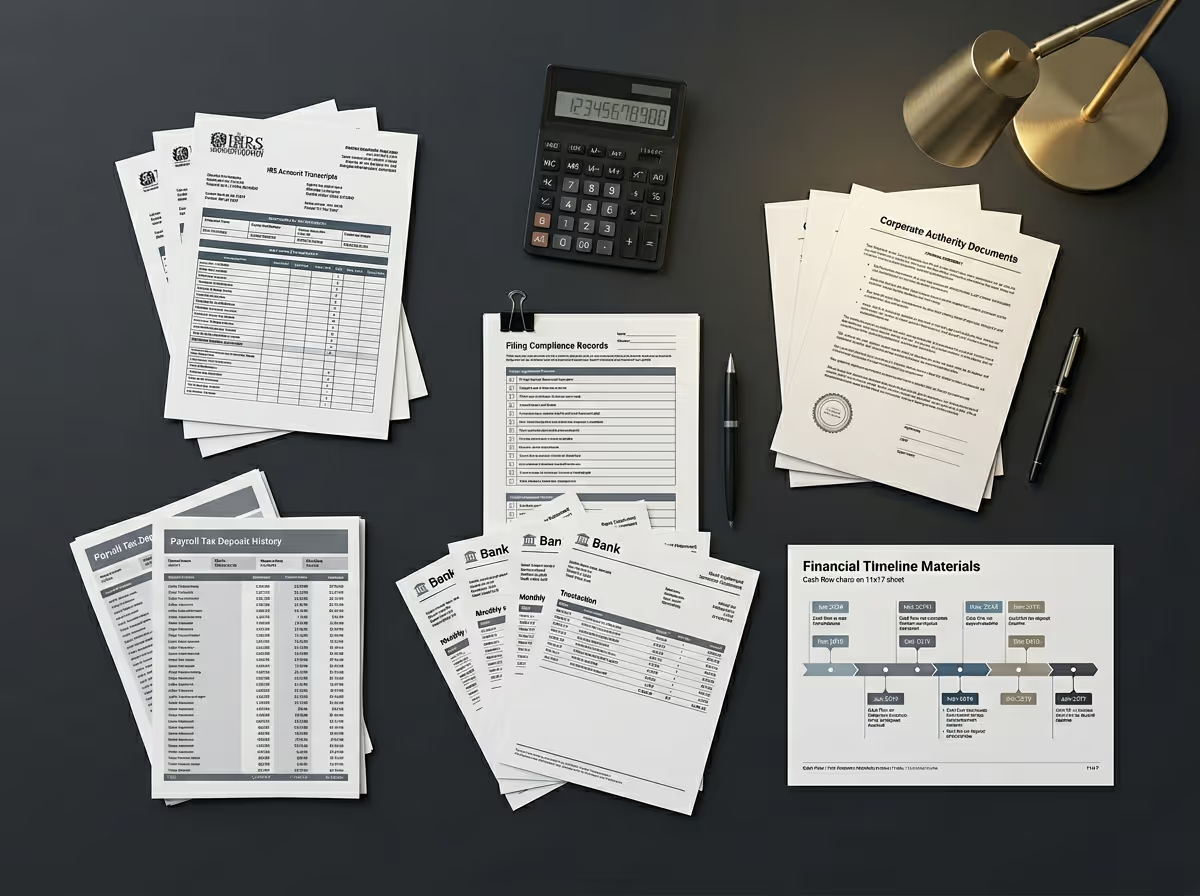
Transcript and Financial Review
We obtain IRS transcripts and analyze deposit history, filing compliance, and enforcement status. This helps us understand how the IRS views the case and what documentation will be required.
Responsibility and Willfulness Development
We gather corporate records, bank documents, and financial timelines to evaluate authority and decision-making. We prepare a strategic presentation of facts that directly addresses IRS standards.
Compliance Stabilization
We collaborate with you to ensure compliance with current payroll reporting and deposits, enabling the IRS to take corrective action while addressing past liabilities.
Proposal Response or Appeal
We prepare and file a timely response within the IRS appeal period after issuing a proposal letter. If assessment has already occurred, we evaluate collection procedures and protective strategies.
Collection Strategy Planning
Following the assessment of personal liability, we assess structured resolution options based on the IRS collection framework outlined in Publication 594 and associated IRS guidance.

What Happens If You Do Nothing
Ongoing Investigation: The IRS may continue interviewing individuals and gathering records to establish responsibility and willfulness.
Penalty Notices: You may receive additional employment tax penalty notices, including Failure to Deposit Penalty correspondence.
Escalating Contact: Revenue officer communication may become more frequent and more urgent.
Proposal Letter Issued: The IRS may issue a proposed TFRP assessment letter, beginning the 60-day appeal period.
Appeal Window Running: If you do not respond within the required timeframe, you may lose the opportunity to contest the proposal.
Increased Enforcement Pressure: The IRS may intensify enforcement efforts if compliance remains unresolved.
Assessment of Penalty: If no appeal is filed, the IRS may assess the Trust Fund Recovery Penalty and issue a Notice and Demand for Payment.
Federal Tax Lien Filing: The IRS may file a Notice of Federal Tax Lien, which can affect your credit and public records.
Levy Risk: Publication 594 explains that the IRS may issue levies against wages or bank accounts if the debt is not resolved.
Frequently Asked Questions (FAQs)
Take Action Now
Payroll tax personal liability cases do not remain quiet. Once the IRS assesses the Trust Fund Recovery Penalty, it may pursue collection of your personal assets under the enforcement authority described on IRS.gov and in Publication 594.
We step in under a power of attorney, take control of communication, and build a structured strategy to protect you and resolve the issue correctly. Call now. The sooner we act, the more control you keep.
Results depend on individual circumstances and IRS determinations. No outcome is guaranteed. Representation is subject to IRS rules and procedures. IRS Circular 230 Disclosure applies.