


IRS Levy Release Timing | Immediate Relief
We act under the power of attorney to pursue a levy release by addressing economic hardship, identifying errors in the levy, and responding within the 30-day deadline. Our team works to stop enforced collection through options like an installment agreement, payment plan, offer in compromise, or currently not collectible status while protecting your Taxpayer Bill of Rights.

What This Service Does
IRS Levy Release Timing is not a self-help guide. It is a professional representation designed to move you from active enforcement to controlled resolution as quickly as possible, in accordance with IRS rules.
We Take Over IRS Communication
Once you engage us, we prepare and file IRS Form 2848, granting us Power of Attorney. Publication 594 confirms that taxpayers have the right to representation during the collection process. From that point forward, we communicate directly with the IRS about your account.
We request transcripts, verify balances, pinpoint the tax years in question, and precisely identify the type of levy imposed. This procedure removes you from stressful and technical conversations while ensuring the IRS receives accurate, consistent information.
We Identify the Type of Levy and Timing Strategy
Different levies require different timing strategies.A bank levy freezes funds in your account at the time the bank receives them. A wage levy is continuous and applies to future paychecks until released. A business levy may intercept receivables or operating funds.
The IRS explains that bank levies involve a 21-day holding period before funds are sent. This creates a narrow but critical opportunity to request a release before money leaves your account. Understanding these timing rules is central to our strategy.
We Determine the Legal Basis for Release
The IRS states that it must release a levy in certain situations, including when the tax is paid in full, when the collection statute expires, when the levy causes economic hardship, when a qualifying installment agreement is in place, or when releasing the levy will help facilitate payment.
Our role is to analyze your situation and determine which legal basis applies. We do not rely on hope or informal requests. We rely on documented eligibility under IRS standards.
We Prepare and Present Financial Information
In many levy release cases, especially hardship cases, the IRS requires detailed financial disclosures. The IRS explains that hardship exists when the levy prevents you from meeting basic living expenses, and financial documentation is typically required.
We carefully prepare your financial presentation to align with IRS guidelines and increase the likelihood of timely approval.
We Push for Release and Confirm Processing
Even after the IRS approves a release, the process is incomplete. The release must be issued and transmitted to the bank or employer, and then processed internally.
We monitor that process and confirm that the levy has been lifted. We do not assume completion. We verify it.
Protecting Refunds and Financial Standing
We evaluate eligibility for tax refunds, including federal tax refund claims and refund trace requests when needed. Filing compliance can also support mortgage applications, loan approvals, and other financial transactions that require proof of a filed tax return.
We Prevent Re-Levy
The IRS clearly states that releasing a levy does not eliminate the underlying tax debt. If you fail to make arrangements, the enforcement process may resume.
Our service includes stabilizing the account through appropriate resolution strategies so that you are not back in crisis weeks later.
Why This Gets Worse Without Help
IRS enforcement follows a structured escalation pattern. Publication 594 outlines the IRS collection process, including billing, notices, and eventual levy action when debts remain unresolved.
When taxpayers delay action, several things tend to happen:
- Escalating Enforcement: The IRS may expand levy actions to additional accounts or income sources if initial enforcement efforts do not result in payment.
- Continuous Wage Garnishment: Wage levies continue with each paycheck until formally released, creating ongoing financial strain.
- Loss of Appeal Rights: Missing a 30-day window after a Final Notice of Intent to Levy can limit certain rights that might otherwise pause enforcement.
- Increased Financial Pressure: Interest and penalties continue to accrue while enforcement is active.
- Business Instability: For business owners, intercepted receivables can cause payroll failures, vendor disputes, and long-term operational damage.
Without structured representation, it is common for taxpayers to respond emotionally rather than strategically. The IRS system rewards preparation, documentation, and timely action.
How the IRS Enforces This
Final Notice Requirement
Before most levy actions, the IRS must issue a Final Notice of Intent to Levy and Notice of Your Right to a Hearing at least 30 days before seizure. Publication 594 explains this requirement and outlines the appeal window.
Common notices include LT11 or Letter 1058, which state that the IRS intends to seize property or property rights. The CP504 notice warns of an intent to levy and a possible lien filing. The IRS Collection Due Process FAQs clarify that CP504 alone does not authorize a levy and that a formal final notice must also be issued.
Missing the 30-day response window tied to a final notice can significantly reduce your options to stop enforcement.
Bank Levy Enforcement
When the IRS levies a bank account, the bank freezes funds that are available at the time it receives the levy. The IRS explains that there is a 21-day waiting period before the bank must send those funds to the IRS.
Deposits made after the levy date are generally not subject to that specific levy. This timing rule creates a brief window to request a release before funds are transferred.

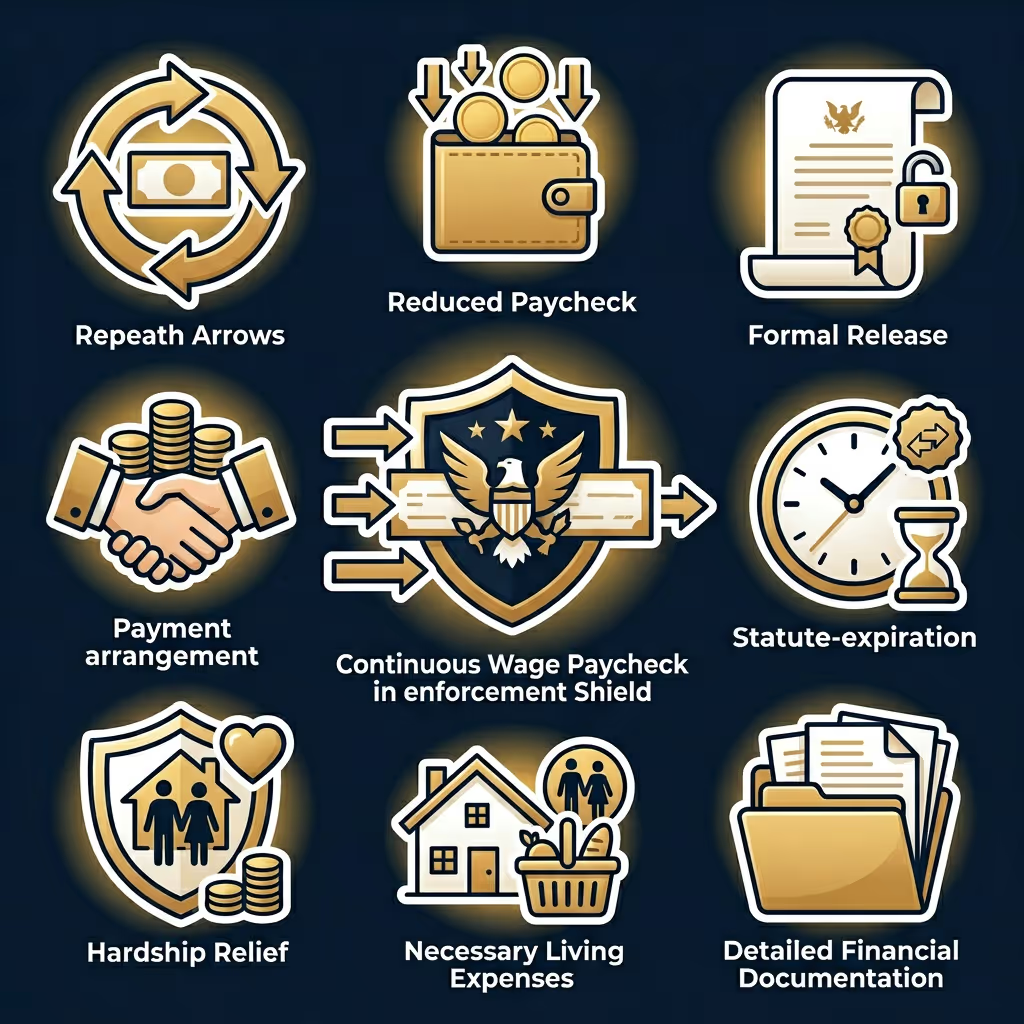
Wage Levy Enforcement
A wage levy is continuous. Publication 594 explains that once served, a wage levy continues until the debt is paid, arrangements are made, the collection statute expires, or the levy is released.
This means that each paycheck can be reduced until formal action is taken.
Hardship Release Standards
The IRS states that if a wage levy causes immediate economic hardship, it must be released. If the IRS can demonstrate hardship, it may release bank levies. Hardship typically involves the inability to meet necessary living expenses.
The IRS generally requires detailed financial documentation to evaluate hardship claims.
Who This Service Is For
- Frozen Bank Account: You need this service if the IRS has frozen your bank account and you are within the 21-day holding period, where funds may still be protected from transfer.
- Wage Garnishment in Effect: You need this service if your employer has received a wage levy and your take-home pay has already been reduced.
- Final Notice Received: You need this service if you received LT11 or Letter 1058 and you are within the 30-day window before levy enforcement begins.
- Business Cash Flow Disrupted: You need this service if the IRS has levied your business bank account or receivables, and your operations are at risk.
- Economic Hardship Situation: You need this service if the levy prevents you from paying rent, utilities, payroll, or other necessary expenses.
- Multiple Levy Sources: You need this service if the IRS has levied more than one income source or financial account.
- Overwhelmed by IRS Contact: You need this service if you are unsure how to communicate with the IRS and want professional representation to protect your interests.
Common Mistakes People Make
- Waiting for Another Notice: Many taxpayers assume the IRS will send additional warnings, but once required notices have been issued, enforcement can proceed quickly and without further delay.
- Misunderstanding the 21-Day Rule: Some believe the 21-day bank hold means the levy expires automatically, but the IRS requires banks to surrender funds if no release is issued during that period.
- Assuming Release Ends the Case: Taxpayers often believe a levy release eliminates the tax debt, but the IRS clearly states that enforcement may resume if arrangements are not made.
- Calling Without Preparation: Contacting the IRS without financial documentation can delay hardship reviews and reduce the effectiveness of negotiations.
- Missing Appeal Deadlines: Failing to act within the 30-day window tied to a Final Notice of Intent to Levy can eliminate important procedural protections.
- Entering an Unaffordable Payment Plan: Agreeing to payment terms without proper analysis can lead to default and renewed enforcement.
- Avoiding Communication Out of Fear: Ignoring the situation usually worsens outcomes and often results in expanded levy action.
Our Representation Process
Step 1: Immediate Case Review
We analyze your notices, determine the type of levy involved, confirm deadlines, and identify urgent timing windows so that no critical opportunity is missed.
Step 2: Power of Attorney Filing
We file IRS Form 2848 to establish representation, allowing us to speak directly with the IRS and obtain your account information.
Step 3: Emergency Levy Release Request
If enforcement is active, we identify the strongest legal basis for release and present a structured request supported by documentation.


Step 4: Financial Documentation Preparation
If hardship or negotiation is involved, we prepare the financial disclosures required under IRS standards to support your position.
Step 5: Negotiation of Long-Term Resolution
We work toward a stable resolution, such as an appropriate payment arrangement or other eligible status, to prevent future levy action.
Step 6: Monitoring and Confirmation
We confirm that the IRS has issued the levy release and that the bank or employer has processed it properly.
What Happens If You Do Nothing
Bank levy funds may be transferred after the 21-day hold period expires.
Wage levies continue to be deducted from each paycheck.
Financial strain increases as unpaid bills accumulate.
The IRS may levy additional accounts or income sources.
A federal tax lien may be filed, affecting credit and asset transactions.
Business operations may face serious cash flow shortages.
Enforcement actions may broaden.
Negotiation leverage may decrease.
Long-term financial damage may become more difficult to correct.
Frequently Asked Questions (FAQs)
Take Action Now
An IRS levy is not a situation to ignore. Timing determines outcomes. Acting within critical windows, especially during the 21-day bank levy hold period, can significantly impact the result.
We take over communication with the IRS, identify the strongest legal basis for release, and move with urgency to protect your income and financial stability.
Call now to begin immediate representation.
Results depend on individual circumstances and IRS determinations. No outcome is guaranteed. Representation is subject to IRS rules and procedures. IRS Circular 230 Disclosure applies.