Thank you for contacting
GetTaxReliefNow.com!
or wage garnishment — call us now at +(888) 260 9441 for immediate help.



OBBB vs TCJA: What Stayed and Changed
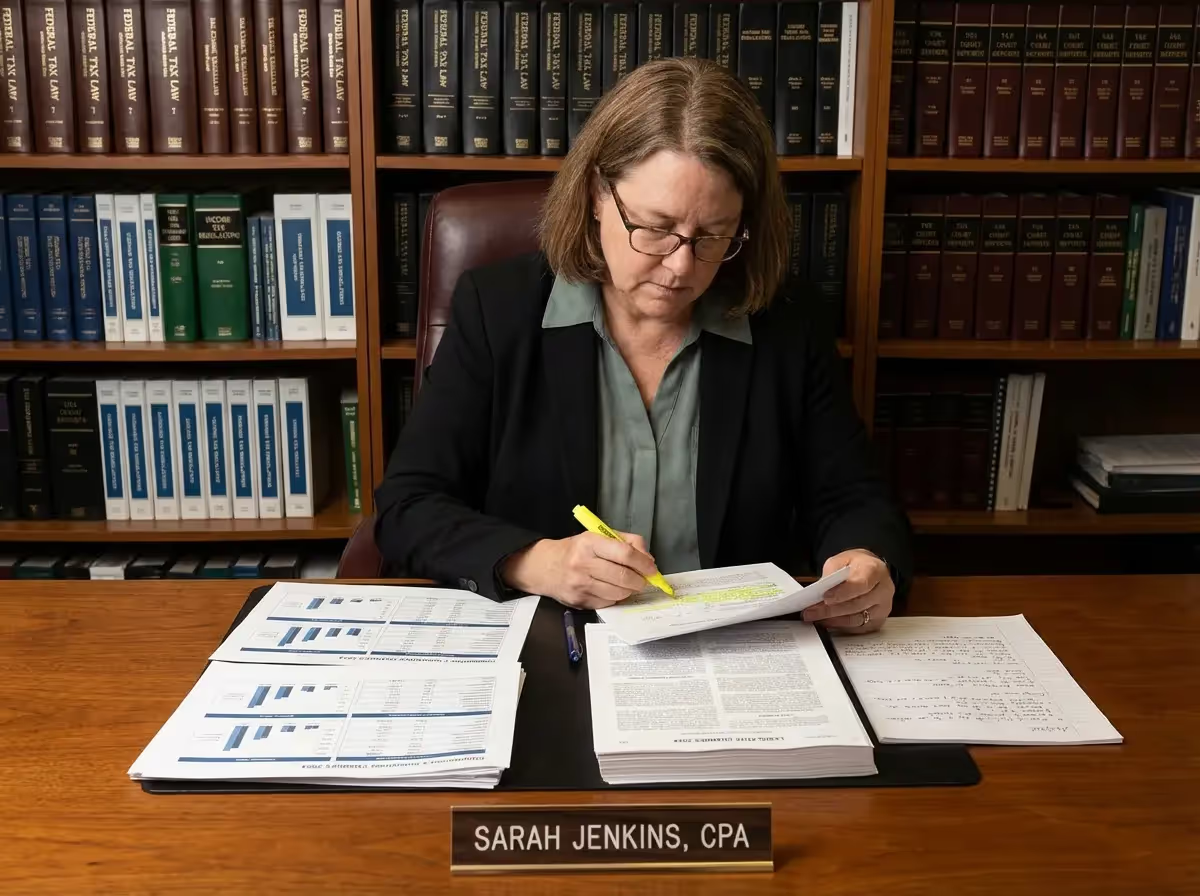
The One Big Beautiful Bill Act reshaped federal tax policy in July 2025 by revising and extending major elements of the Tax Cuts and Jobs Act that were scheduled to expire at the end of the year. Signed into law by President Trump, the legislation prevents widespread tax increases while introducing new deductions and revised timelines that affect individuals, families, and businesses.
Why Congress Faced a 2025 Tax Cliff
Expiring Provisions Put Pressure on Lawmakers
Without congressional action, most individual provisions enacted under the 2017 Tax Cuts and Jobs Act would have expired after 2025, reverting large parts of the tax code to pre-2018 rules. That shift would have raised income tax rates for many households, reduced the standard deduction, and reinstated personal exemptions that had been eliminated under the earlier law.
Lawmakers warned that allowing the provisions to lapse would result in increased taxes for the majority of filers, while also complicating future filing seasons. The looming deadline became a central issue in tax and budget negotiations throughout early 2025.
Budget Reconciliation Enabled Passage
Congress advanced the One Big Beautiful Bill Act using budget reconciliation, a process that allows revenue-related legislation to pass the Senate with a simple majority vote. Supporters argued that the approach was necessary to meet the deadline, while critics contended that it limited debate over the long-term fiscal effects.
The final law resolves the immediate expiration risk but replaces it with a new mix of permanent provisions and provisions that will sunset later, shaping tax policy discussions in the years ahead.
Individual Tax Rules That Are Now Permanent
Tax Brackets and Income Tax Rates
One of the most significant outcomes of the law is the permanent extension of the existing Tax Brackets and income tax rates introduced in 2018. The seven-bracket structure remains in place, preventing a scheduled increase in marginal rates that would have taken effect beginning in 2026.
For most taxpayers, this change maintains filing outcomes similar to those of recent tax years. Supporters argue that rate stability within the Internal Revenue Code allows households to plan more effectively and avoid sudden changes in tax liability.
Standard Deduction and Filing Status
The standard deduction, which replaced personal exemptions under prior law, is also made permanent and continues to adjust annually for inflation. This provision has reduced the number of taxpayers who itemize deductions and simplified filing for millions of households.
Rules for Single filers and joint filers, including those filing as Married Filing Jointly, remain unchanged. Personal exemptions are not restored, maintaining the structure that has governed individual filing since 2018.
SALT Deduction Changes Add a New Deadline
Temporary Increase to the Deduction Cap
The law modifies the SALT Deduction, formally known as state and local tax deductions, by temporarily raising the cap on deductible taxes. The higher cap applies for several tax years before reverting to its prior level unless Congress acts again.
The change primarily benefits taxpayers in high-tax states, though income-based phaseouts reduce the benefit for higher earners. Lawmakers described the provision as a compromise between regional concerns and revenue limits.
Another Sunset Date Ahead
Because the higher cap is temporary, the provision introduces another future deadline for lawmakers. Analysts expect renewed debate as the expiration approaches, particularly if state tax burdens or housing costs remain elevated.
The temporary structure reflects broader trade-offs in the law, which prioritize near-term certainty while deferring longer-term decisions.
Expanded Tax Benefits for Families and Seniors
Child Tax Credit Adjustments
The legislation increases the child tax credit and modifies phaseout thresholds, extending eligibility to more middle-income households. The credit remains one of the most significant tax benefits for families with qualifying children.
Supporters argue that the changes offer targeted relief without restructuring the program. Critics have raised concerns about long-term costs but acknowledge the credit’s broad reach.
New Senior Tax Deduction
A new senior tax deduction is available to taxpayers aged 65 and older for a limited period. The provision offers additional relief to retirees, particularly those on fixed incomes.
Because the deduction is temporary, it is scheduled to expire later in the decade. Its future will likely factor into upcoming tax negotiations.
Business Provisions Focus on Investment
Pass-Through Businesses and Section 199A
The law permanently extends the Qualified Business Income deduction, also known as the Section 199A deduction. Eligible pass-through businesses may continue to deduct a portion of their income, thereby improving long-term planning certainty.
Income thresholds and limitations remain in place, particularly for certain service-based businesses. Those constraints continue to shape how the deduction applies across sectors.
Bonus Depreciation and R&D Expensing
The legislation restores full bonus depreciation, allowing businesses to immediately deduct the cost of qualifying capital investments. Updated R&D expensing rules reverse prior phase-downs and permit full expensing of eligible research costs.
Supporters argue these provisions encourage domestic investment and innovation. Critics counter that the incentives may disproportionately benefit larger firms.
Estate Tax Rules Remain in Place
Higher Exemptions Become Permanent
The law makes permanent the higher estate and gift tax exemptions established under earlier legislation. The exemption level continues adjusting for inflation, allowing larger estates to transfer assets without triggering federal estate taxes.
The change primarily affects higher-net-worth households and has implications for long-term estate planning. Opponents argue it narrows the tax base, while supporters emphasize predictability.
Fiscal Impact Draws Scrutiny
Revenue Losses and Federal Deficits
According to estimates from the Congressional Budget Office and the Joint Committee on Taxation, making these provisions permanent will significantly reduce federal revenue over the next decade. Analysts project the law will add trillions of dollars to federal deficits, even after accounting for potential economic growth.
Supporters contend that investment and consumer spending will offset some of the cost. Critics argue the timing adds pressure amid rising interest costs and long-term budget constraints.
What the New Timelines Mean for Taxpayers
Stability Now, Uncertainty Later
The law eliminates the immediate threat of a 2025 tax increase but creates new expiration dates later in the decade. Temporary expansions, including changes to the SALT deduction cap and the senior tax deduction, will require future congressional action.
Tax policy experts anticipate that lawmakers will revisit these provisions well before their sunset dates. For now, the legislation provides stability while ensuring that tax reform remains an active policy issue.
Source Links
- Internal Revenue Service — Tax Cuts and Jobs Act Overview
- Congress.gov — H.R. 1, One Big Beautiful Bill Act (Enrolled Bill Text)
- Congressional Research Service — Expiring Provisions of the Tax Cuts and Jobs Act
By William Mc Lee, Editor-in-Chief & Tax Expert—Get Tax Relief Now
If you need help with a tax issue discussed in this article, you can reach a licensed tax professional at Get Tax Relief Now at (888) 260-9441 or visit our contact page.
Thank you for submitting!
Start My Confidential, No-Judgment Case Review
Ready to stop penalties and garnishments? Complete the form or call/email us directly—our experts are standing by to assist.

Have a question?
+ (888) 260 9441
Write email
info@gettaxreliefnow.com
Address