Thank you for contacting
GetTaxReliefNow.com!
or wage garnishment — call us now at +(888) 260 9441 for immediate help.



North Carolina Tax Penalty Recalculation Underway
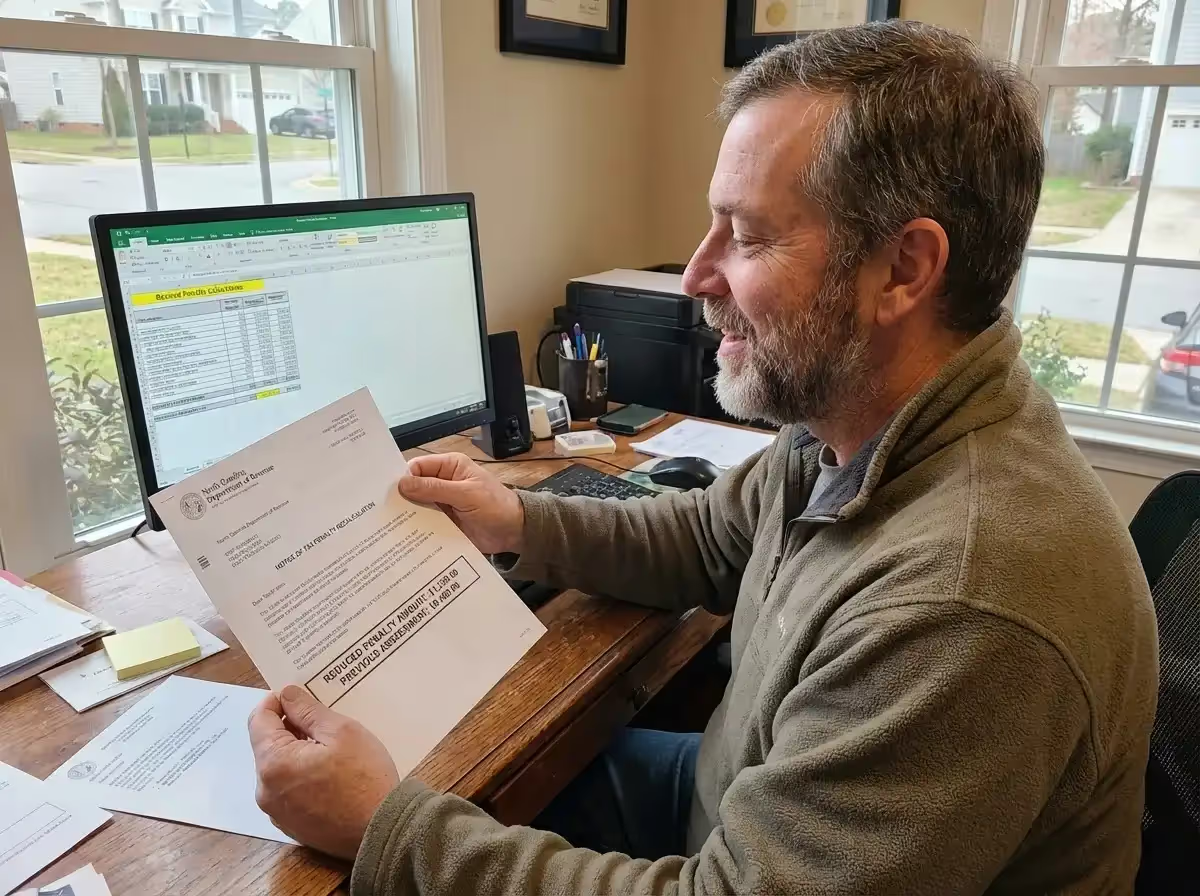
North Carolina tax penalty recalculation efforts are moving forward as state revenue officials reexamine penalties applied to thousands of individual and business tax accounts. The review focuses on penalties tied to late filings, underpayments, and calculation errors from recent tax years, with notices and adjustments expected to continue through 2026.
State Launches Review of Tax Penalties From 2021 to 2024
The North Carolina Department of Revenue has begun recalculating penalties assessed on state tax returns filed between 2021 and 2024. The initiative covers several tax categories, including individual income tax, corporate income tax, and sales and use tax, according to the department.
Officials say the review is intended to identify penalties that may have been improperly applied or that should have qualified for relief under existing state and federal standards. Many of the penalties under review stem from a period marked by pandemic-related disruptions, processing delays, and shifting tax guidance.
Taxpayers whose accounts are adjusted will receive written notices explaining any changes. If penalties were previously paid, eligible taxpayers may receive refunds or account credits. The department has stated that notices will be issued in batches throughout 2026.
Automated Systems Flag Eligible Accounts for Adjustment
Simple Cases Processed Without Taxpayer Action
For many taxpayers, the recalculation process is being handled automatically. The department is using internal systems to flag accounts that meet updated criteria for penalty relief, including first-time penalty cases and penalties linked to filing delays beyond a taxpayer’s control.
In those cases, taxpayers may see changes reflected on their accounts without submitting additional forms or documentation. Officials say this approach is intended to reduce administrative burden and speed up relief.
Manual Review Required for Complex Tax Accounts
More complex situations, including business tax accounts with multiple penalties or extended noncompliance periods, may require individual review by department staff. Taxpayers in those cases could be contacted to provide additional information before a final determination is made.
Penalties related to fraud, intentional disregard of tax rules, or repeated violations are generally excluded from the recalculation. Accounts that have already been resolved through formal appeals are also not part of the initiative.
Federal Delays and Policy Changes Shape State Response
The recalculation effort follows years of disruption in tax administration caused by the COVID-19 pandemic. During that period, the Internal Revenue Service experienced significant processing backlogs, delayed refunds, and correspondence issues that often affected state tax systems relying on federal data.
North Carolina officials have acknowledged that some penalty notices were triggered by delayed or mismatched federal information rather than taxpayer error. As a result, the state has moved to better align its penalty practices with federal relief frameworks.
The effort also reflects broader policy changes influenced by the Taxpayer First Act, which emphasized fair treatment of taxpayers and improved administrative processes at the federal level. While the law applies to the IRS, many states have adopted similar standards to maintain consistency.
Individual Filers and Businesses Among Those Affected
Late Filers and Underpayment Cases Under Review
Individual income tax filers who incurred penalties for late filing or late payment during the covered years may qualify for relief, particularly when pandemic disruptions or federal processing issues caused delays. Taxpayers who requested extensions but misunderstood state-specific deadlines also qualify.
Sales and Use Tax Penalties Draw Scrutiny
Small businesses and other sales tax filers are a key focus of the review. Sales and use tax penalties can accumulate quickly, and officials say accounts affected by cash flow disruptions or administrative delays are being closely examined.
Disaster-Related Penalties Reassessed
Taxpayers impacted by federally declared disasters during the review period qualify for penalty relief under existing provisions. The recalculation initiative ensures the state applies those provisions consistently.
Officials Say Review Aims to Correct Past Errors
“This initiative is about making sure penalties reflect the facts and circumstances taxpayers faced,” said a spokesperson for the North Carolina Department of Revenue. “Where relief provisions apply, we want to ensure they are applied accurately and consistently.”
Tax professionals say the move could benefit taxpayers who paid penalties to avoid prolonged disputes, even when they believed the charges were unfair.
“During the pandemic years, many taxpayers were penalized because systems broke down,” said a North Carolina-based certified public accountant. “A recalculation like this gives the state a chance to correct those outcomes.”
Experts caution taxpayers not to assume the state will remove all penalties and urge them to review any notices carefully.
What Taxpayers Should Watch for in 2026
Notices and Account Updates Expected in Phases
The department plans to issue recalculation notices throughout 2026. Taxpayers are encouraged to monitor their mail and review any correspondence promptly, particularly if additional information is requested.
Online Accounts Show Real-Time Changes
Taxpayers can review penalty balances and payment history through the department’s online portal. If an adjustment appears on an account, no further action is typically required unless the notice indicates otherwise.
Filing Obligations Remain in Place
The recalculation applies only to penalties on filed returns. Taxpayers with unfiled returns are still required to submit them, and doing so may reduce penalties compared with continued noncompliance.
State Signals Shift Toward Corrective Enforcement
The North Carolina tax penalty recalculation marks a shift toward a more corrective approach in state tax enforcement. While the initiative does not eliminate filing or payment obligations, it reflects recognition of the administrative challenges taxpayers faced in recent years.
As the review continues, taxpayers who stay informed and review their accounts carefully may benefit from reduced penalties or refunds. Officials say the effort is intended to improve confidence in the tax system while maintaining future compliance.
Source Links
- North Carolina Department of Revenue, Penalty and Interest Information
- Congressional Research Service, Overview of the Taxpayer First Act
By William Mc Lee, Editor-in-Chief & Tax Expert—Get Tax Relief Now
If you need help with a tax issue discussed in this article, you can reach a licensed tax professional at Get Tax Relief Now at (888) 260-9441 or visit our contact page.
Thank you for submitting!
Start My Confidential, No-Judgment Case Review
Ready to stop penalties and garnishments? Complete the form or call/email us directly—our experts are standing by to assist.

Have a question?
+ (888) 260 9441
Write email
info@gettaxreliefnow.com
Address