Thank you for contacting
GetTaxReliefNow.com!
or wage garnishment — call us now at +(888) 260 9441 for immediate help.



California State-Federal Tax Data Matching Expands at FTB
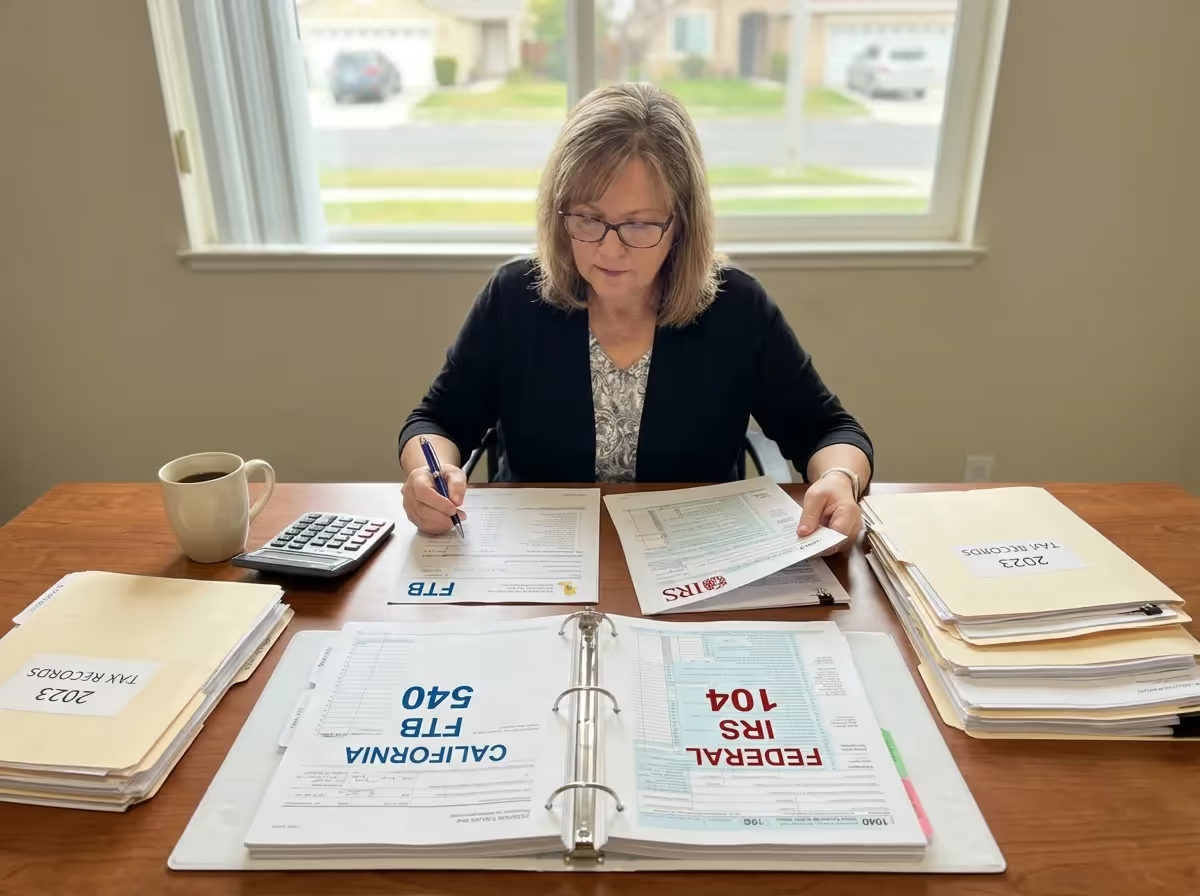
California has expanded state-federal tax data matching through a major technology upgrade at the California Franchise Tax Board, enhancing the detection of income discrepancies and filing errors. The modernization enhances coordination with federal tax records and is expected to increase notices and adjustments for some taxpayers, starting with the 2026 filing cycle.
California Rolls Out Expanded Tax Data Matching System
The California Franchise Tax Board has implemented a major upgrade to its tax compliance infrastructure, expanding how state tax data is matched against federal records. The changes are part of the agency’s Enterprise Data to Revenue Project Phase 2, or EDR2, a multi-year effort to replace aging systems and modernize enforcement workflows.
The upgraded platform allows the Franchise Tax Board to compare California tax returns more efficiently with information reported to the federal government. Officials say the consolidation reduces processing delays and improves accuracy when discrepancies are identified across millions of annual filings.
EDR2 entered full production in January 2026. According to FTB budget documents, the system supports personal income tax enforcement, which accounts for a significant share of state general funds.
New Technology Allows Deeper Comparison of State and Federal Returns
The expanded system enhances the matching of income reported on Form W-2 and other information returns with California filings, such as Form 540 and Form 540NR. Differences between federal and state reporting can now be flagged earlier through automated review models.
The Franchise Tax Board states that the upgrade also enhances the tracking of estimated tax payments and other tax payments across tax years, thereby reducing reliance on manual processing.
IRS and California Increase Coordination on Tax Records
California’s expanded matching relies on long-standing data-sharing agreements between state tax agencies and the federal government. Through these arrangements, the Internal Revenue Service provides standardized data files that states use to administer their own tax laws.
The IRS describes these exchanges as a key compliance tool, enabling states to verify that income reported at the federal level is accurately reflected on a taxpayer’s state tax return.
Automated Data Exchanges Expand Scope of Compliance Reviews
The EDR2 system enhances California's ability to ingest and analyze federal data through automated data exchanges. The Franchise Tax Board says this reduces mismatches caused by incomplete identifiers and improves internal case routing.
Officials say the goal is to identify noncompliance more consistently without expanding audit staffing at the same pace.
Income Reporting and Withholding Now Under Closer Review
The expanded matching places greater emphasis on income accuracy, particularly for taxpayers with multiple sources of income. Discrepancies between federal income records and California returns remain among the most common triggers for review.
Employment-related records play a central role. Payroll Taxes, Unemployment Insurance, State Disability Insurance, Employment Training Tax, and Voluntary Plan Disability Insurance data are reviewed alongside income reported on tax returns.
Wage, Contract, and Payroll Records Drive New Matching Models
Withholding information tied to DE 4 and the Employee’s Withholding Allowance Certificate may also be considered in compliance checks. The Franchise Tax Board has said misaligned withholding or omitted income can result in follow-up notices.
Taxpayers who file a paper income tax form may experience longer resolution times if discrepancies require manual verification, though all returns are subject to the same matching standards.
Notices and Adjustments Expected to Rise
When the system identifies a discrepancy, the Franchise Tax Board may issue a Notice of Tax Return Change proposing additional tax, penalties, or interest. These notices often involve unreported income, incorrect estimated tax calculations, or discrepancies in withholding.
Internal inquiry and debtor files are used to track outstanding balances and prior compliance history. In some cases, prior-year refunds are reviewed as part of the adjustment process.
How the Franchise Tax Board Flags Discrepancies
FTB officials note that a notice does not automatically mean an assessment is final. Taxpayers are typically allowed to respond, submit documentation, or explain discrepancies before changes are finalized.
Still, the upgraded system increases the likelihood that mismatches are detected, particularly those that may have gone unnoticed under older technology.
Aging Compliance Systems Prompted the Overhaul
State officials say the age of California’s legacy compliance systems was a primary driver behind the EDR2 project. Vendors, who had raised operational risks, no longer supported several systems that were replaced by the upgrade.
At the federal level, similar modernization efforts are underway. The Government Accountability Office has reported that updated systems are critical for improving data reliability and enforcement capacity.
State and Federal Agencies Modernize Tax Administration
The Franchise Tax Board has framed its modernization as part of a broader shift toward data-driven compliance. Officials say that improved matching enables the agency to focus its resources on higher-risk cases while enhancing service for compliant taxpayers.
Officials Say Upgrade Improves Accuracy and Efficiency
“The EDR2 project modernizes how we identify and address noncompliance while improving service for taxpayers who file accurately,” the California Franchise Tax Board said in budget documentation.
The IRS has stated that state information-sharing programs help ensure income reported federally is reflected consistently at the state level.
Oversight Reports Point to Broader Enforcement Trends
The Government Accountability Office has said modernized systems reduce reliance on manual processes and help agencies resolve cases more efficiently through earlier detection.
What the Changes Mean for California Taxpayers
For California taxpayers, expanded state-federal tax data matching increases the importance of accuracy when filing. Income reported to the federal government should align closely with California returns, particularly for wage earners and contractors.
Errors can delay a tax refund, disrupt direct deposit to a bank account, or trigger follow-up correspondence. Taxpayers are encouraged to review Forms W-2 carefully and confirm that estimated tax payments are properly credited.
Steps Filers Can Take to Avoid Delays or Notices
Taxpayers who receive a Notice of Tax Return Change should respond promptly and review their options, including providing documentation or consulting a tax professional to ensure accurate tax reporting. While the Franchise Tax Board says its goal is voluntary compliance, unresolved discrepancies are now more likely to surface.
Official Sources and Documentation
- California Franchise Tax Board, Enterprise Data to Revenue Project Phase 2 Budget Change Proposal
- Internal Revenue Service, State Information Sharing Programs
- U.S. Government Accountability Office, IRS Information Technology: Continued Oversight Needed
By William Mc Lee, Editor-in-Chief & Tax Expert—Get Tax Relief Now
If you need help with a tax issue discussed in this article, you can reach a licensed tax professional at Get Tax Relief Now at (888) 260-9441 or visit our contact page.
Thank you for submitting!
Start My Confidential, No-Judgment Case Review
Ready to stop penalties and garnishments? Complete the form or call/email us directly—our experts are standing by to assist.

Have a question?
+ (888) 260 9441
Write email
info@gettaxreliefnow.com
Address