Gracias por contactar
Obtenga TaxReliefNow.com!
o embargo de salario: llámenos ahora al + (88) 260 941 para obtener ayuda inmediata.



TC 530 IRS Code Meaning & Collection Impact
TC 530 on an IRS transcript means your account is currently not collectible (CNC) status due to financial hardship. In this situation, the IRS determines that your income cannot cover both basic living expenses and your tax debt, so it pauses collection actions such as wage garnishments and bank levies.
However, this status does not remove your liability. Instead, interest and penalties continue to accrue, notices like CP71A may still be issued, and future tax refunds can be applied to your balance. Typically, taxpayers qualify after submitting a Collection Information Statement (Form 433-A, 433-B, or 433-F), which the IRS uses to assess financial condition.
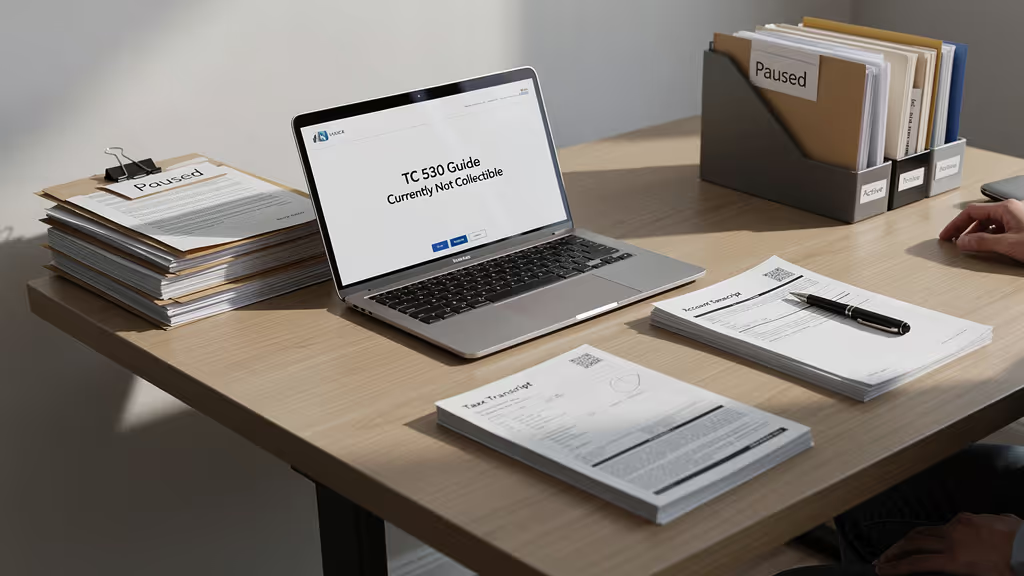
What Is Currently Not Collectible (CNC) Status?
Currently not collectible status allows the IRS Collection Division to pause active collection actions when a taxpayer cannot meet their essential living expenses. The IRS evaluates your financial status using a Collection Information Statement and supporting financial documents before granting this hardship program. This status is often reflected as TC 530 on your IRS transcript, indicating that collection actions cannot proceed without causing economic hardship.
When your account enters a currently not collectible status, several collection actions stop immediately. The IRS suspends bank account levy activity, wage garnishments, and most active collection efforts from a revenue officer. Your account moves out of active collection inventory, reducing direct contact while your income situation remains limited.
- The IRS pauses collection actions such as levies against bank accounts and wages, which protects your ability to cover basic living expenses and utilities.
- In some cases, the IRS may release existing levies after confirming financial hardship under Internal Revenue Code provisions, helping prevent further pressure on essential income sources such as Social Security.
- The IRS Collection Division continues monitoring your account by reviewing filed tax returns and income changes to ensure you still qualify for this status.
Certain obligations continue even while your account remains in currently not collectible status. Interest and late payment penalties continue to grow, increasing the total balance over time. The IRS may still file a Notice of Federal Tax Lien to protect its interest in real estate or other assets.
- The IRS applies future tax refunds to your outstanding balance through the offset refund process while your account remains in CNC status.
- You will continue receiving balance due notices, including CP71A notice statements, which confirm that your debt remains active despite the pause in collection actions.
- To remain in compliance, you must file all required income tax returns and make estimated tax payments when applicable, as failure to meet these requirements can result in removal from IRS hardship status.
The IRS bases hardship determinations on collection financial standards, which define allowable living costs and acceptable monthly expenses. The IRS evaluates disposable income, business expenses, and essential expenses to determine whether payment plans are realistic.
Understanding the currently not collectible status helps you recognize how the IRS balances taxpayer rights with ongoing collection efforts. This status provides temporary relief, yet it requires careful compliance and accurate filings to maintain protection. You should review your income situation regularly and prepare for possible reactivation if your financial condition improves.
The IRS grants not collectible status when you show financial hardship that prevents you from paying your tax debt while covering basic living expenses. You must submit a Collection Information Statement, such as Form 433-A, 433-B, or 433-F, along with proof of income, expenses, and financial condition. The IRS reviews these records against its financial standards to determine whether you can pay.
Several hardship factors can support a currently not collectible determination when backed by accurate financial documents:
Additional conditions may also support a hardship determination depending on your financial status and supporting evidence:
The IRS follows Internal Revenue Manual 5.16.1.2 when reviewing hardship determinations and deciding whether to pause collection actions. This internal guidance outlines how revenue officers evaluate financial status, allowable living expenses, and documentation submitted with Form 433 or Form 433-F.
A strong hardship case depends on accurate filings, complete documentation, and consistent reporting of income and expenses. You should keep records updated and ensure all unfiled returns are submitted before requesting hardship relief. Careful preparation improves your chances of qualifying and maintaining protection from active collection efforts.
TC 530 Closing Codes
The IRS follows the Internal Revenue Manual 5.16.1.2 when reviewing hardship determinations and deciding whether to pause collection actions. Some codes relate directly to economic hardship, while others reflect administrative or legal barriers to collection. Reviewing the closing code on your account helps clarify your current non-collectible status and future risk.
Closing codes within the CC 24 through CC 32 range are closely tied to hardship status and indicate that collection actions would interfere with your ability to meet basic living expenses. The IRS assigns these codes based on your monthly income, allowable living expenses, and disposable income calculations, using collection financial standards to determine whether you qualify for CNC status.The IRS continues monitoring these hardship codes through the income reported on each tax return you file. Increased earnings may trigger automatic reactivation of collection activity. You can review your assigned code through your IRS transcript or by contacting the IRS Collection Division, and you may request clarification through the Collection Appeals Program if needed. Staying aware of your financial position and maintaining compliance helps reduce the risk of renewed collection actions.
What Happens During CNC Status?
Currently not collectible status pauses active collection actions, although your account remains open and under review. The IRS monitors your financial condition to confirm that economic hardship continues to prevent payment. You receive relief from immediate enforcement, while certain obligations and risks remain in place.
When the IRS places your account in a currently not collectible status, key enforcement actions stop to protect your ability to cover basic living expenses:
- Wage garnishments stop: The IRS halts wage garnishments so you can maintain enough income to cover housing, food, and utility expenses.
- Bank levies are paused: During this period, the IRS suspends levies, allowing you to retain access to funds needed for essential expenses.
- Collection contact decreases: In most cases, calls and field visits from a revenue officer stop as your account moves out of active collection status.
- Interest and penalties continue: Even while enforcement is paused, your balance continues to grow because interest and late payment penalties still accrue.
- Tax refunds are offset: The IRS applies future refunds to your outstanding balance through the offset program without requiring additional action.
- Federal tax liens may apply: In some situations, the IRS may still file a lien to secure its legal interest in your property.
The IRS continues to review your financial activity using tax returns and third-party income data. Increases in income or changes in financial status may trigger renewed collection efforts. You will also receive periodic balance notices, such as CP71A, confirming that the debt remains active.
To remain in this status, you must stay compliant with filing requirements and report all income accurately. Monitoring your financial situation and maintaining compliance helps reduce the risk of collection activity resuming.
How Long Does CNC Status Last?
Removal Risks: When CNC Status Ends
Currently not collectible status can end when your financial condition changes or when the IRS identifies new collection potential. The IRS Collection Division monitors your income situation, financial documents, and compliance history to determine whether hardship still applies. Once the IRS determines that you can pay, active collection actions may resume quickly.
Several triggers can cause the IRS to remove your account from the currently not collectible status. These triggers often relate to income increases, new assets, or compliance issues that affect your financial status.
Income increases reported: The IRS reviews each income tax return for changes in monthly income and total earnings, and a rise above allowable living expenses can trigger renewed collection efforts.
New sources of income identified: When wages, 1099 income, or Social Security benefits appear through third-party reporting, the IRS may reassess your hardship status even outside the standard review cycle.
Failure to file required returns: Missing tax return filings or estimated tax payments can lead to immediate removal from currently not collectible status, as ongoing compliance is required to maintain hardship relief.
Acquisition of assets: If you purchase real estate, receive an inheritance, or gain access to available funds, the IRS evaluates whether those assets can support payment plans or partial payment arrangements.
Updated address or contact information: When new address details become available, the IRS Collection Division may reactivate collection efforts and assign the case to a revenue officer.
Business tax issues: If an active business fails to stay current with employment taxes or reporting requirements, the IRS may remove the currently not collectible status and assess additional liabilities.
Periodic IRS review: The IRS may conduct reviews under Internal Revenue Manual 5.16.1 to determine whether hardship status still applies based on updated financial and income information.
Resume enforced collection: Once the currently not collectible status ends, the IRS may restart wage garnishments, bank levies, or seizure actions through the collection process.
Propose payment plans: Based on your updated financial condition, the IRS may require an installment agreement using an Online Payment Agreement or Form 9465 with consistent monthly payments.
File or enforce a Federal Tax Lien: The IRS may file or enforce a Notice of Federal Tax Lien to secure its legal claim against your assets during collection efforts.
If your currently not collectible status ends, you still have options to address your account. You can submit an updated Collection Information Statement using Form 433-F, Form 433-A, or Form 433-B with current financial documents. You may also request review through the Collection Appeals Program or consult tax professionals, including a licensed tax attorney, to evaluate hardship relief options.
Understanding removal risks helps you maintain control over your finances and avoid unexpected IRS collection actions. Staying compliant with filing requirements, monitoring income changes, and keeping financial records current can reduce the likelihood of reactivation. Careful planning supports continued protection and prepares you for any changes in your IRS hardship status.