


Alaska Tax Problems: Enforcement Checklists
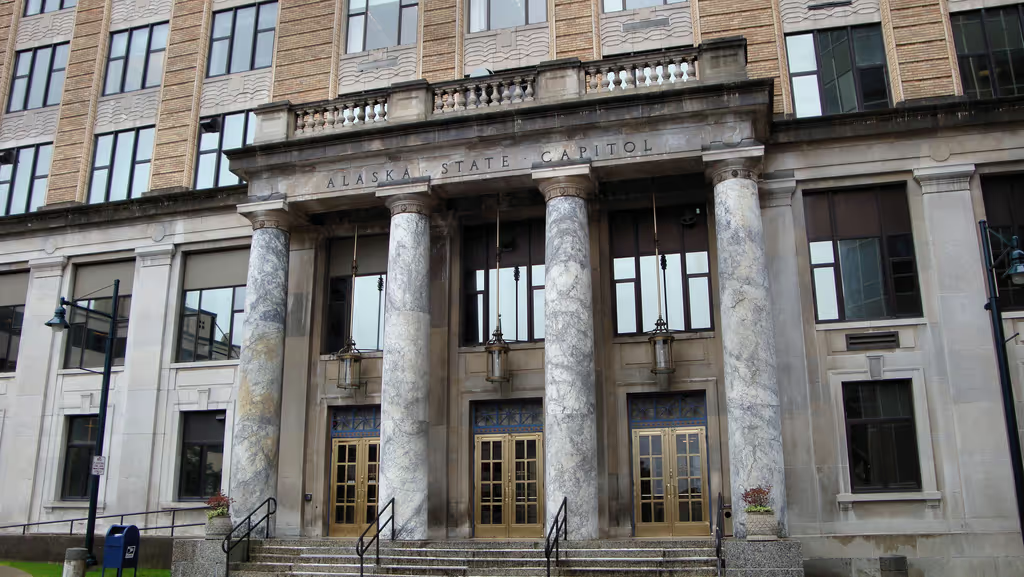
Start Your
Alaska
Tax Checklist Path
Alaska tax enforcement can move quickly, particularly during periods of revenue volatility, fiscal relief efforts, or changes affecting the state budget and general fund expenditures. Choosing the correct checklist path early helps reduce exposure to escalating collection actions. Use the links above to enter the correct Alabama checklist hub and move forward with clarity.
How
Alaska
Enforces Taxes (High-Level Overview)
Alaska tax enforcement is primarily handled by the Alaska Department of Revenue, which administers corporate income tax, oil and gas taxes tied to the petroleum industry, and other state-level revenue measures. While Alaska does not impose a statewide sales tax or an individual income tax, sales tax collection is enforced at the municipal level, with varying rates across Alaska communities.
Local property taxes and seasonal sales tax obligations are administered by Alaska municipalities, such as the City of Kenai and the Ketchikan Gateway Borough, and often fund public services, education levies, and infrastructure maintenance backlogs.
Despite Alaska’s unique structure under its constitution, most enforcement cases follow a similar escalation pattern:
- An assessment or notice is issued.
- The balance becomes delinquent.
- Collection actions begin
- Enforcement tools are applied.
- State or municipal tax liens
- Bank levies
- Wage garnishment
- License suspensions
- Responsible person liability
Unresolved disputes may intersect with broader state fiscal risk concerns, revenue volatility, or appeals processes connected to state government enforcement authority.
This page does not explain how to resolve those actions. Instead, it routes you to the correct Alaska checklist based on who you are and which tax type is involved.
Choose Your
Alaska
Tax Problem Type
Select the category below that best matches your situation. Each link leads to an Alaska-specific checklist hub tailored to your role and enforcement exposure within Alaska’s tax system.
Alaska Payroll Tax Problems (Employers)
For:
- Employers
- Business owners
- Corporate officers
- Responsible persons
Payroll-related tax issues in Alaska typically involve employer obligations connected to unemployment insurance and workforce assessments. These obligations help support public services and education funding tied to the base student allocation and local school board budgets. Enforcement actions may still result in personal liability.
.avif)
Alaska Sales Tax Problems (Merchants)
For:
- Retailers
- Restaurants
- Online sellers
- Service-based businesses
Alaska does not impose a state-level sales tax, but many Alaska municipalities enforce local sales tax rates, destination-based sales tax rules, and seasonal sales tax requirements. Issues may arise from remote sales, tax apportionment, or intergovernmental agreements affecting sales tax collection.
.avif)
Alaska Individual Tax Problems (Consumers)
For:
- Alaska residents
- Retirees
- Self-employed individuals
- Pass-through business owners
Although Alaska does not impose a state income tax, individuals may still face enforcement actions tied to property taxes, business activity, or obligations connected to investment income, asset sales, or participation in Alaska’s economy. These issues are separate from the Internal Revenue Service's federal income tax administration.
Alaska Business Tax Problems (Entities)
For:
- LLCs
- Corporations
- Partnerships
- Industry-specific entities operating in Alaska
Business tax enforcement in Alaska often involves corporate income tax, oil and gas industry obligations, alcohol tax requirements, and compliance issues affecting pass-through businesses. Revenue contraction, fiscal cliff concerns, and changes debated by the Alaska Legislature or Finance Committee can influence enforcement priorities.
Each Alaska checklist hub will guide you to:
- Identifying the exact enforcement action involved
- Routing you to the correct decision checklist
- Connecting related enforcement checklists you may face next
- Surfacing the correct forms layer when applicable
- Linking to the federal equivalent checklist for context under the federal tax code
This structure helps you understand enforcement risk before taking action, without requiring you to analyze budget presentations, spending cap debates, or Permanent Fund dividend policy tied to investment returns and realized gains managed by the Alaska Permanent Fund Corp.
Not Sure Where You Fit?
If you’re unsure where to start, use these guidelines
- Notice addressed to you personally → Individual Tax Problems
- Notice addressed to a business entity → Business Tax Problems
- Employer- or workforce-related language → Payroll Tax Problems
- Municipal sales or merchant tax language → Sales Tax Problems
You can move between checklist paths as needed.