


Alabama Tax Problems: Enforcement Checklists
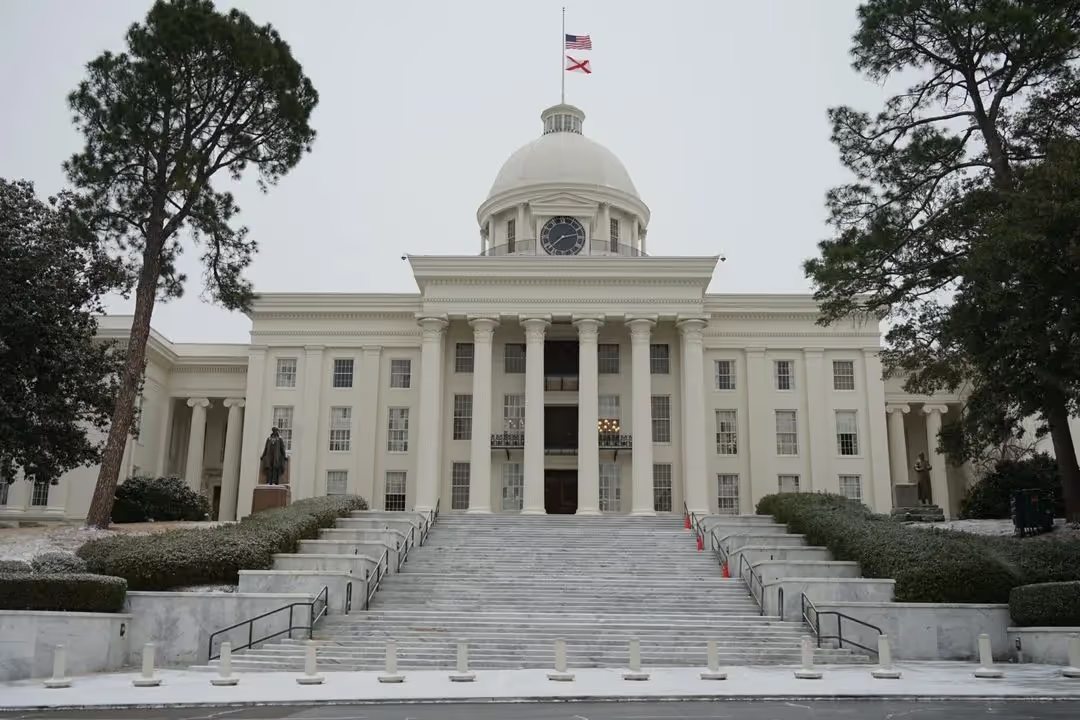
Start Your
Alabama
Tax Checklist Path
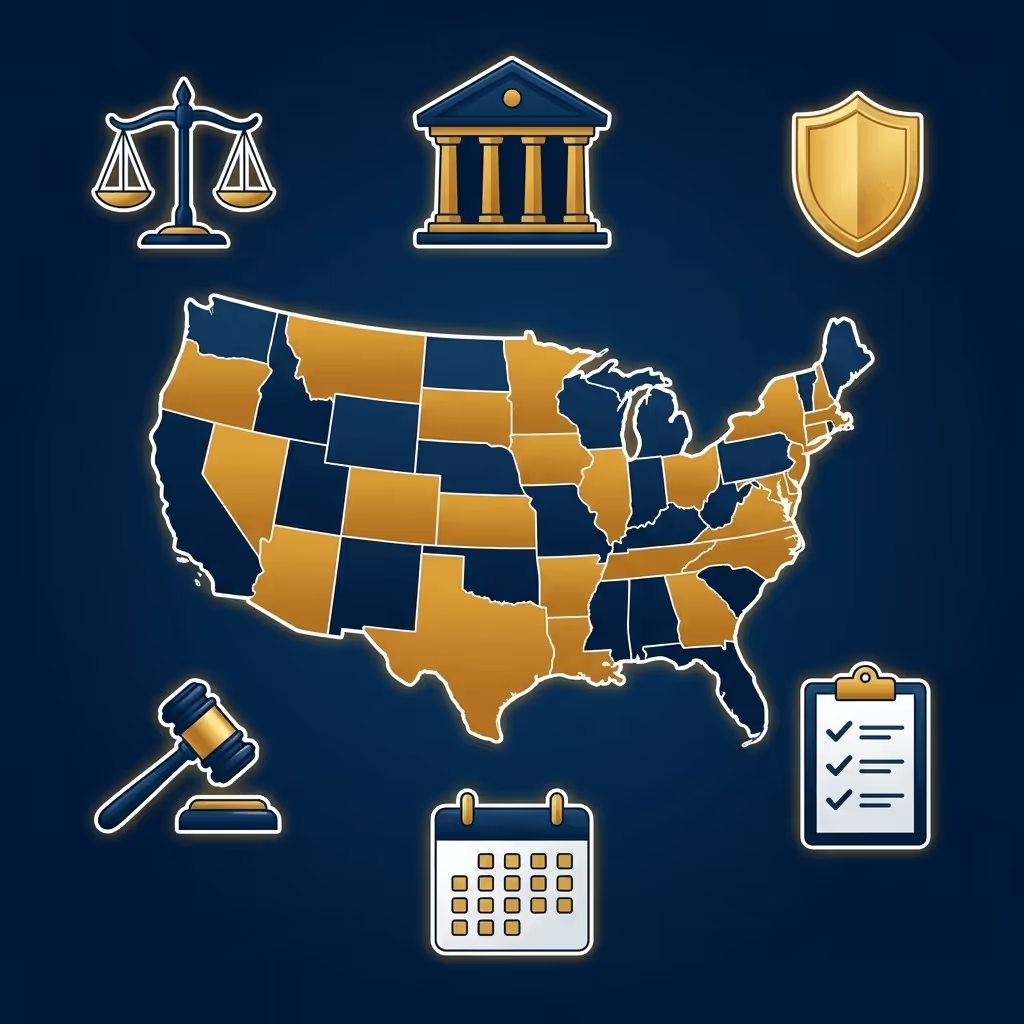
Alabama tax enforcement can move quickly, particularly during periods of legislative change, such as the spring 2025 Alabama tax legislation or fiscal 2025 adjustments. Choosing the correct the checklist path early helps reduce exposure to liens, levies, and extended disputes that may escalate to the Alabama Tax Tribunal or beyond. Use the links above to enter the correct Alabama checklist hub and move forward with clarity.
How
Alabama
Enforces Taxes (High-Level Overview)
Alabama tax enforcement is primarily handled by the Alabama Department of Revenue, which administers income tax, corporate income tax, sales tax, the Simplified Sellers Use Tax, property tax oversight, and various excise taxes, including cigarette excise tax, vaping taxes, and electric vehicle taxes.
Most filings, payments, and enforcement notices are issued through My Alabama Taxes. At the same time, disputes may be reviewed by the Alabama Tax Tribunal or, in limited cases, appealed to the Montgomery Circuit Court.
While enforcement varies by tax type and sales tax rates may differ across jurisdictions overseen by County Commissions of Alabama, most Alabama cases follow a similar escalation pattern:
- An assessment or notice is issued.
- The balance becomes delinquent.
- Collection actions begin
- Enforcement tools are applied.
- Tax liens
- Bank levies
- Wage garnishment
- License suspensions
- Responsible person liability
- Unresolved matters can intersect with federal oversight from the Internal Revenue Service, including IRS appeals or coordination issues involving tax returns filed on Form 1040. This page does not explain how to resolve those actions. Instead, it routes you to the correct Alabama checklist based on who you are and which tax type is involved.
Choose Your
Alabama
Tax Problem Type
Select the category below that best matches your situation. Each link leads to an Alabama-specific checklist hub tailored to enforcement exposure within Alabama’s tax system, including state and local tax collections that support public services, education trust funds, and public infrastructure.
Alabama Payroll Tax Problems (Employers)
For:
- Employers
- Business owners
- Corporate officers
- Responsible persons
Payroll tax issues in Alabama typically involve withholding obligations tied to income tax and may overlap with federal requirements under the Tax Cuts and Jobs Act of 2017. Enforcement actions may trigger personal liability, even if the business is closed or reorganized.
.avif)
Alabama Sales Tax Problems (Merchants)
For:
- Retailers
- Restaurants
- Online sellers
- Service-based businesses
Sales tax enforcement in Alabama includes state and local sales taxes, Simplified Sellers Use tax obligations under South Dakota v. Wayfair, and compliance with varying sales tax rates across counties and municipalities. These taxes are a core component of Alabama’s tax system and are often criticized for being regressive, including the impacts on grocery taxes.
.avif)
Alabama Individual Tax Problems (Consumers)
For:
- W-2 employees
- Retirees
- Freelancers and gig workers
- Small business self-employed individuals
Individual enforcement actions commonly arise from unfiled or inaccurate tax returns, mismatches with IRS data, or payment failures affecting tax refund eligibility. Issues may overlap with federal filings, including Schedule A, Schedule E, or Form 2555 for nonresident alien or foreign income scenarios.
Alabama Business Tax Problems (Entities)
For:
- LLCs
- Corporations
- Partnerships
- Nonprofits with Alabama filing requirements
Business tax enforcement in Alabama may involve corporate income tax, business privilege tax, GILTI-to-NCTI conversion issues, and liability questions under Chapter 31D of the Alabama Constitution. Legislative changes enacted through the Alabama Legislature, the Alabama House, and measures such as Act 2019-361 and Alabama Act 2021-1 can affect compliance obligations.
Each Alabama checklist hub is designed to help you understand enforcement risk before taking action by:
- Identifying the exact enforcement action involved
- Routing you to the correct decision checklist
- Routing you to the correct decision checklist
- Surfacing the correct forms layer when applicable
- Linking to the federal equivalent checklist for context under the federal tax code
This structure reflects research commonly cited in State Tax Maps, the State Tax Competitiveness Index, and reports from the Public Affairs Research Council of Alabama.
Not Sure Where You Fit?
If you’re unsure where to start, use these guidelines
- Notice addressed to you personally → Individual Tax Problems
- Notice addressed to a business entity → Business Tax Problems
- Withholding, payroll, or trust language → Payroll Tax Problems
- Sales, seller’s permit, or resale issues → Sales Tax Problems
You can move between checklist paths as needed.