



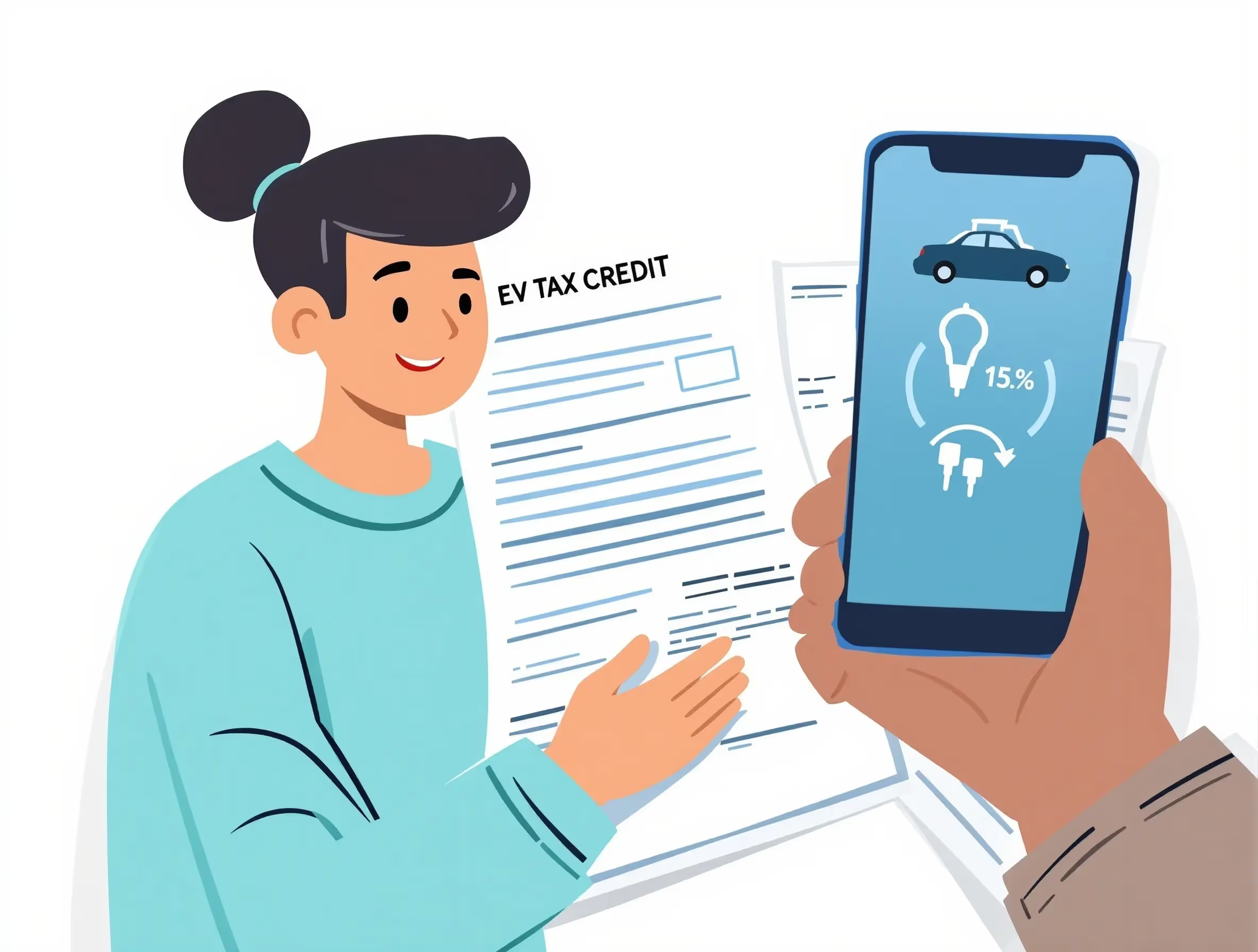
Para qué sirve el formulario
El formulario 8936-A es el formulario tributario del IRS que las empresas y organizaciones exentas de impuestos utilizan para solicitar el crédito calificado para vehículos limpios comerciales, un valioso incentivo tributario para comprar vehículos de energía limpia para uso empresarial. Este crédito, establecido por la Ley de Reducción de la Inflación de 2022, recompensa a las empresas y organizaciones que invierten en vehículos eléctricos (VE), vehículos eléctricos híbridos enchufables (PHEV) y vehículos con pila de combustible de hidrógeno con fines comerciales.
Piense en el formulario 8936-A como su boleto para recuperar una parte importante de su inversión al comprar vehículos limpios que califiquen para su negocio. El crédito puede tener un valor de hasta 7,500 dólares para vehículos más pequeños (como furgonetas de reparto o camiones de trabajo de menos de 14 000 libras) o de hasta 40 000 dólares para vehículos pesados (como autobuses eléctricos, semirremolques o equipos comerciales grandes). No se trata de monedas de bolsillo, sino que está diseñado para que la transición a un transporte limpio sea económicamente atractiva para las empresas de todos los tamaños. IRS.gov
¿Quién usa este formulario? Empresas (sociedades anónimas, sociedades de responsabilidad limitada), personas que trabajan por cuenta propia que utilizan vehículos para su profesión y organizaciones exentas de impuestos (entidades gubernamentales, organizaciones sin fines de lucro, gobiernos tribales) que adquieren vehículos comerciales limpios que reúnen los requisitos y los ponen en servicio después del 31 de diciembre de 2022.
Distinción importante: no confundas el formulario 8936-A con el formulario 8936 normal. El formulario 8936 es para personas que compran vehículos eléctricos personales, mientras que el formulario 8936-A es específicamente para vehículos limpios comerciales/empresariales.
Cuándo utilizaría este formulario (incluidas las devoluciones tardías o modificadas)
Presentará el formulario 8936-A junto con su declaración de impuestos comerciales correspondiente al año en que puso el vehículo en servicio, es decir, cuando comenzó a usarlo con fines comerciales. Por lo general, esto ocurre cuando recibes la entrega y comienzas a operar el vehículo, no necesariamente cuando firmaste el contrato de compra. IRS.gov
Plazo típico de presentación:
- Para el año fiscal 2022: Si adquirió y puso en servicio un vehículo que reúne los requisitos entre el 1 de enero de 2023 y el 31 de diciembre de 2023, lo reclama en su declaración de impuestos de 2023 (presentada en 2024).
- Nota: La ley que creó este crédito entró en vigor el 1 de enero de 2023, por lo que los vehículos puestos en servicio en 2022 no califican para este crédito en particular.
Devoluciones tardías o modificadas: Si olvidó solicitar el crédito en su declaración original, puede presentar una declaración de impuestos enmendada mediante el formulario 1040-X (personas individuales/empresas unipersonales) o el formulario 1120-X (corporaciones) junto con el formulario 8936-A completo. Por lo general, tiene tres años a partir de la fecha en que presentó su declaración original para enmendar y reclamar el crédito perdido. Del mismo modo, si descubres un error en el cálculo de tu crédito después de presentarla, debes presentar una declaración enmendada para corregirla.
Alianzas y corporaciones S: Estas entidades deben presentar el formulario 8936-A para calcular el crédito y luego pasarlo a sus socios o accionistas mediante el Anexo K-1. Luego, los propietarios individuales lo declaran en sus declaraciones personales mediante el formulario 3800 (crédito comercial general).
Reglas y requisitos clave para 2022 (año tributario 2023)
Dado que este crédito comenzó en 2023 para vehículos adquiridos después del 31 de diciembre de 2022, estas son las reglas esenciales que se aplicaron: IRS.gov
Calificaciones del vehículo:
- Debe ser nuevo (no usado)
- Debe tener al menos cuatro ruedas
- Debe ser fabricado por un fabricante calificado que se haya registrado en el IRS
- Debe ser propiedad depreciable a efectos fiscales (utilizada en su negocio)
- Debe usarse principalmente en los Estados Unidos
- Requisitos de batería: al menos 7 kilovatios hora (kWh) para vehículos de menos de 14 000 libras de peso bruto vehicular (GVWR), o al menos 15 kWh para vehículos más pesados
- Los vehículos de pila de combustible de hidrógeno también cumplen con los requisitos técnicos específicos
- No se puede adquirir para revender; debe ser para uso empresarial o para arrendar a terceros
Normas de propiedad:
- Debes ser el propietario del vehículo para solicitar el crédito. Si alquilas un vehículo a otra persona, el arrendador (no tú) se queda con el crédito.
- Si arriendas vehículos a clientes como empresa, puedes reclamar el crédito como propietario.
El crédito no puede «caer dos veces»:
- No puede solicitar tanto el crédito para vehículos limpios comerciales calificados (formulario 8936-A) como el crédito para vehículos limpios nuevos (formulario 8936) en el mismo vehículo. Elige uno.
Cálculo del crédito:
- El crédito equivale al menor de los siguientes valores:
- El 15% de la base del vehículo (su costo a efectos fiscales) o el 30% si el vehículo no tiene ningún motor de gasolina o diésel
- El costo incremental: la cantidad adicional que pagaste en comparación con un vehículo de gasolina o diésel comparable
- Límites máximos: $7,500 para vehículos de menos de 14,000 libras; $40,000 para vehículos más pesados
- Puerto seguro de «costo incremental»: para 2023 (el primer año), el IRS proporcionó estimaciones simplificadas: 7 500 dólares para la mayoría de los vehículos de calle de menos de 14 000 libras (excepto los vehículos PHEV de automóviles compactos, de 7 000 dólares) y 40 000 dólares para los vehículos pesados. Esto facilita los cálculos. IRS.gov
Guía paso a paso: Cómo completar el formulario 8936-A (nivel alto)
Este es el proceso de presentación en inglés sencillo:
Paso 1: Reúna su documentación
- Contrato de compra del vehículo y factura
- Número de identificación del vehículo (VIN): lo necesitarás
- Certificación del fabricante de que el vehículo cumple con los requisitos
- Documentación basada en los costos (lo que pagó)
- Cualquier deducción de gastos de la Sección 179 que haya solicitado por el vehículo
Paso 2: Complete el Anexo 1 (formulario 8936-A) para cada vehículo
Completarás un Anexo 1 por separado para cada vehículo que cumpla los requisitos:
- Introduzca el año, la marca, el modelo y el VIN (línea 2)
- Marque las casillas para confirmar que el vehículo cumple con los requisitos (líneas 4a-4e)
- Introduzca su base de costes en el vehículo (línea 5)
- Reste cualquier deducción de la Sección 179 ya reclamada (línea 6)
- Calcule su base ajustada (línea 7)
- Aplica el porcentaje apropiado: 15% o 30% (línea 8)
- Introduzca el costo incremental (línea 9); utilice los montos de puerto seguro si están disponibles
- Ingresa el límite máximo de crédito según el peso del vehículo (línea 10)
- La cantidad más pequeña de estas cantidades es su crédito por vehículo (línea 12)
Paso 3: Complete el formulario principal 8936-A
- Transfiera el crédito total de todos los programas del Anexo 1 a la línea 1
- Agregue los créditos transferidos por asociaciones o corporaciones (línea 2)
- Ingresa tu crédito total (línea 3)
Paso 4: Informe sobre su declaración de impuestos
- Alianzas y corporaciones S: Adjunte el formulario 8936-A a su declaración y transfiera el crédito a los propietarios mediante el Anexo K-1
- Todos los demás contribuyentes: Indique el crédito en la línea 1y del formulario 3800, parte III (o 1zz si solo proviene de entidades de transferencia)
- Organizaciones exentas de impuestos: Presente el formulario 990-T con el formulario 3800 adjunto, incluso si normalmente no lo presentaría
Paso 5: Reduzca la base impositiva de su vehículo
A menos que elija lo contrario, reduzca la base depreciable del vehículo en el monto del crédito para fines tributarios futuros.
Errores comunes y cómo evitarlos
- Error #1: Reclamar el crédito de los vehículos puestos en servicio demasiado pronto
El formulario 8936-A solo se aplica a los vehículos adquiridos después del 31 de diciembre de 2022. Los vehículos puestos en servicio en 2022 o antes pueden calificar para obtener diferentes créditos según las reglas anteriores; utilice el formulario correcto. - Error #2: VIN faltante o incorrecto
El número de identificación del vehículo de 17 caracteres es obligatorio. Comprueba que coincide exactamente con la matrícula de tu vehículo. Los VIN faltantes o incorrectos provocarán que el IRS los rechace. IRS.gov - Error #3: Reclamar el porcentaje de crédito incorrecto
Presta atención: es del 30% para los vehículos eléctricos puros o de pila de combustible (sin motor de gasolina/diésel), pero solo del 15% para los híbridos enchufables que también tienen motores de gasolina. Mezclarlos exagera tu crédito. - Error #4: No verificar la calificación del fabricante
El fabricante debe tener un acuerdo con el IRS y figurar en la lista de fabricantes calificados. Verifica siempre antes de comprar: si compras a un fabricante que no reúne los requisitos, no obtendrás ningún crédito. - Error #5: Olvidarse de coordinar con las deducciones de la Sección 179
Si solicitó una deducción inmediata de gastos de la Sección 179 para el vehículo, debe restar esa cantidad de su base antes de calcular el crédito (Anexo 1, línea 6). Si omite este paso, su crédito se infla de manera ilegal. - Error #6: créditos de «doble inmersión»
No puede reclamar tanto el Formulario 8936 (crédito personal para vehículos limpios) como el Formulario 8936-A (crédito comercial) en el mismo vehículo. Si utilizas un vehículo tanto para uso personal como profesional, debes asignar cuidadosamente su uso y solo puedes solicitar un tipo de crédito. - Error #7: Arrendatarios que intentan reclamar el crédito
Si arriendas un vehículo comercial a otra persona, el arrendador (propietario) reclama el crédito, no tú como arrendatario. Esto es diferente de los arrendamientos de vehículos eléctricos personales. En el caso de los arrendamientos comerciales, la propiedad determina el crédito. - Error #8: Cálculos de costos incrementales incorrectos
Para 2023, utilice los montos de puerto seguro del IRS siempre que sea posible ($7,500/$40,000). Si los calculas manualmente, documenta cuidadosamente cómo se determinó el vehículo comparable a gasolina o diésel. La documentación deficiente invita al IRS a hacer preguntas.
Qué sucede después de presentar la solicitud
Procesamiento: El IRS procesará su formulario 8936-A como parte de su declaración general de impuestos comerciales. El crédito es un crédito comercial general no reembolsable, lo que significa que puede reducir su obligación tributaria a cero, pero no recibirá un reembolso por los montos que superen el impuesto adeudado.
Traslado hacia adelante/devolución: Si su crédito supera su obligación tributaria del año en curso, por lo general, puede transferir la parte no utilizada un año hacia atrás y hacia adelante hasta 20 años según las reglas generales de crédito empresarial.
Coincidencia del IRS: El IRS recibe información de fabricantes calificados sobre los vehículos vendidos, incluidos los VIN. Compararán esta información con su reclamación. Las discrepancias pueden dar lugar a correspondencia o auditorías.
Posibles resultados:
- Aceptado: Su crédito está aprobado y reduce su obligación tributaria. ¡Felicidades!
- Preguntas: El IRS puede enviar una carta solicitando documentación adicional (registros de compra, comprobantes de uso comercial, certificación del fabricante). Responda con prontitud con la información solicitada.
- Ajuste: Si el IRS encuentra errores, ajustará el monto de su crédito y le enviará un aviso. Si no está de acuerdo, tiene derecho a presentar una disputa.
- Riesgo de recaptura: Si en un plazo de tres años el vehículo deja de cumplir los requisitos (por ejemplo, si lo conviertes para uso personal o lo exportas), es posible que tengas que recuperar (reembolsar) parte o la totalidad del crédito en una devolución futura.
- Retención de registros: Guarde toda la documentación durante al menos siete años: acuerdos de compra, documentación del VIN, certificaciones del fabricante, comprobantes de uso comercial, cronogramas de depreciación y copias de las declaraciones presentadas.
Preguntas frecuentes
Pregunta 1: ¿Puedo solicitar este crédito si trabajo por cuenta propia o administro una pequeña empresa desde casa?
¡Sí! Siempre y cuando utilices el vehículo para tu profesión o negocio (no para uso personal), cumples los requisitos. Los propietarios únicos, las LLC de un solo miembro y las empresas basadas en el hogar son todos elegibles. Solo asegúrese de mantener un buen registro que separe el uso comercial del personal.
P2: ¿Qué pasa si uso el vehículo parcialmente para uso profesional y parcialmente para uso personal?
Solo puede solicitar el crédito calificado para vehículos limpios comerciales en el formulario 8936-A si el vehículo es propiedad comercial depreciable. Los vehículos de uso mixto crean complicaciones; por lo general, no puedes solicitar tanto el crédito comercial (formulario 8936-A) como el crédito personal (formulario 8936). Consulta a un experto en impuestos para asignarlos correctamente, pero por lo general, los vehículos que se utilizan principalmente en empresas reúnen los requisitos para el 8936-A.
Pregunta 3: ¿Necesito una aprobación previa del IRS antes de comprar un vehículo que califique?
No se requiere aprobación previa. Sin embargo, verifique que el vehículo cumpla con los requisitos antes de comprarlo: verifique que el fabricante esté en la lista de vehículos calificados del IRS, confirme que la capacidad de la batería cumple con los requisitos mínimos y asegúrese de que cumple con todos los requisitos. Una vez que lo compres y lo pongas en servicio, solicita el crédito en tu declaración de impuestos.
Pregunta 4: ¿Pueden las organizaciones exentas de impuestos, como las organizaciones sin fines de lucro y las entidades gubernamentales, solicitar este crédito?
¡Sí! Esta es una característica única del crédito comercial. Las entidades exentas de impuestos (organizaciones sin fines de lucro, agencias gubernamentales, gobiernos tribales) pueden solicitar el crédito aunque normalmente no adeuden impuestos sobre la renta. Presentan el formulario 990-T con un formulario 3800 adjunto para solicitarlo. Las entidades exentas de impuestos no tienen el requisito de depreciación. IRS.gov
P5: ¿Cuál es la diferencia entre el formulario 8936 y el formulario 8936-A?
El formulario 8936 es para el crédito personal para vehículos limpios, cuando los consumidores individuales compran vehículos eléctricos nuevos o usados que reúnan los requisitos para uso personal. El formulario 8936-A se refiere específicamente al crédito calificado para vehículos comerciales limpios, cuando las empresas adquieren vehículos con fines comerciales. Reglas diferentes, montos de crédito diferentes, formularios diferentes. ¡No los mezcle!
Pregunta 6: Si arriendo vehículos comerciales a mis clientes como modelo de negocio, ¿puedo solicitar el crédito?
¡Sí! Si te dedicas al arrendamiento de vehículos (eres el arrendador o propietario), puedes solicitar el crédito. La clave es que el crédito sea el propietario del vehículo a efectos fiscales, no el arrendatario que te alquila. IRS.gov
Pregunta 7: ¿Qué pasa si vendo o me deshago del vehículo poco después de solicitar el crédito?
El crédito está sujeto a las reglas de recuperación. Si en un plazo de tres años el vehículo deja de reunir los requisitos (se convierte para uso personal, se vende, se exporta, etc.), es posible que tengas que recuperar y reembolsar una parte del crédito. El monto de la recuperación depende del tiempo que hayas mantenido el vehículo para un uso comercial que cumpla los requisitos. Consulta siempre las secciones 45W (d) (1) y 30D (f) (5) del IRC o consulta con un asesor fiscal antes de deshacerte anticipadamente de los vehículos acreditados.
Recursos adicionales
- Instrucciones del formulario 8936-A del IRS: IRS.gov/instructions/i8936a
- Página de crédito para vehículos comerciales limpios: IRS.gov/Credits-Deductions/Commercial-Clean-Vehicle-Credit
- Preguntas frecuentes sobre vehículos comerciales limpios calificados: Preguntas frecuentes sobre el tema G de IRS.gov
- Aviso 2023-9 (Puerto seguro de costos incrementales): Boletín 2023-03 de IRS.gov