Multi-Year IRS Penalties & Interest Calculator

Multiple years compound faster than most people expect
When more than one tax year remains unresolved, IRS penalties and IRS interest can compound in parallel across each year. Interest accrues daily, and interest rates — including the interest rate on underpayments tied to the Federal short-term rate — apply separately to each tax year, even when no new estimated tax payments are added.

This Penalty and Interest Calculator estimates how multi-year unpaid taxes may increase total risk, federal tax debt, and exposure to collection action under the Internal Revenue Code.
Takes about 60–90 seconds
No Social Security Number required
Estimate only
Person using a calculator and laptop on a desk with a clipboard and glass of water nearby.
Step 1 of 4

Step 1 — Years to Include

Pick how many tax years you want to include (max 10). We’ll show exactly that many year blocks.
How many tax years do you want to include?
Please choose how many years you want to include.
Next
Severity Level: SEVERE

Estimated Multi-Year Impact: $XXX,XXX

This means interest may be accruing across multiple tax years at IRS rates that change quarterly, while penalties can be applied separately to each unresolved year even if returns were filed. When balances span multiple years, enforcement risk can escalate more quickly, increasing the likelihood of actions such as federal tax liens, Revenue Officer assignment, or other collection activity triggered by repeated IRS notices.

Why Multi-Year IRS Debt Is Different

Multi-year IRS debt is treated differently from single-year unresolved debt. Each tax year carries its own penalties, interest charges, and compliance requirements under the Internal Revenue Code, regardless of whether the taxpayer filed by the tax filing deadline, requested a tax extension, or missed key filing due dates such as April 15.When several years remain open at the same time, balances may grow more quickly, limit available payment options such as an installment agreement or payment plan, and draw greater scrutiny during the IRS collection process — especially when estimated tax or prior tax return obligations remain unresolved.

How Penalties Stack Across Years

IRS penalties are generally assessed per tax year. When multiple years go unpaid, civil penalties such as the failure-to-pay penalty, the failure-to-file penalty, and other IRS penalties can stack, increasing overall tax debt even if the original tax amounts were relatively modest.In some situations, taxpayers may qualify for penalty abatement, penalty relief, or first-time penalty abatement if they can demonstrate reasonable cause, financial hardship, or a history of compliance. These determinations are made separately for each tax year.

How Interest Compounds in Parallel

IRS interest compounds daily and applies separately to each unresolved tax year. The applicable interest rate, based on the federal short-term rate, applies to both unpaid taxes and penalties.Changes in the quarterly interest rate, combined with daily compounding, can cause interest expense to grow simultaneously across multiple years, accelerating total tax debt even when no new tax is assessed.

Why Fixing One Year Often Fails

Resolving a single tax year does not necessarily stop interest from accruing or from continuing in other open years. Remaining balances may continue to generate new interest charges and remain subject to IRS collection action until each unresolved tax year is fully resolved, placed in Currently Not Collectible status, or addressed through an offer in compromise or other approved payment options.

Illustration showing stacked IRS tax year folders on fire surrounded by icons representing tax notices, payment plans, audits, and disputed payments with money and documents.
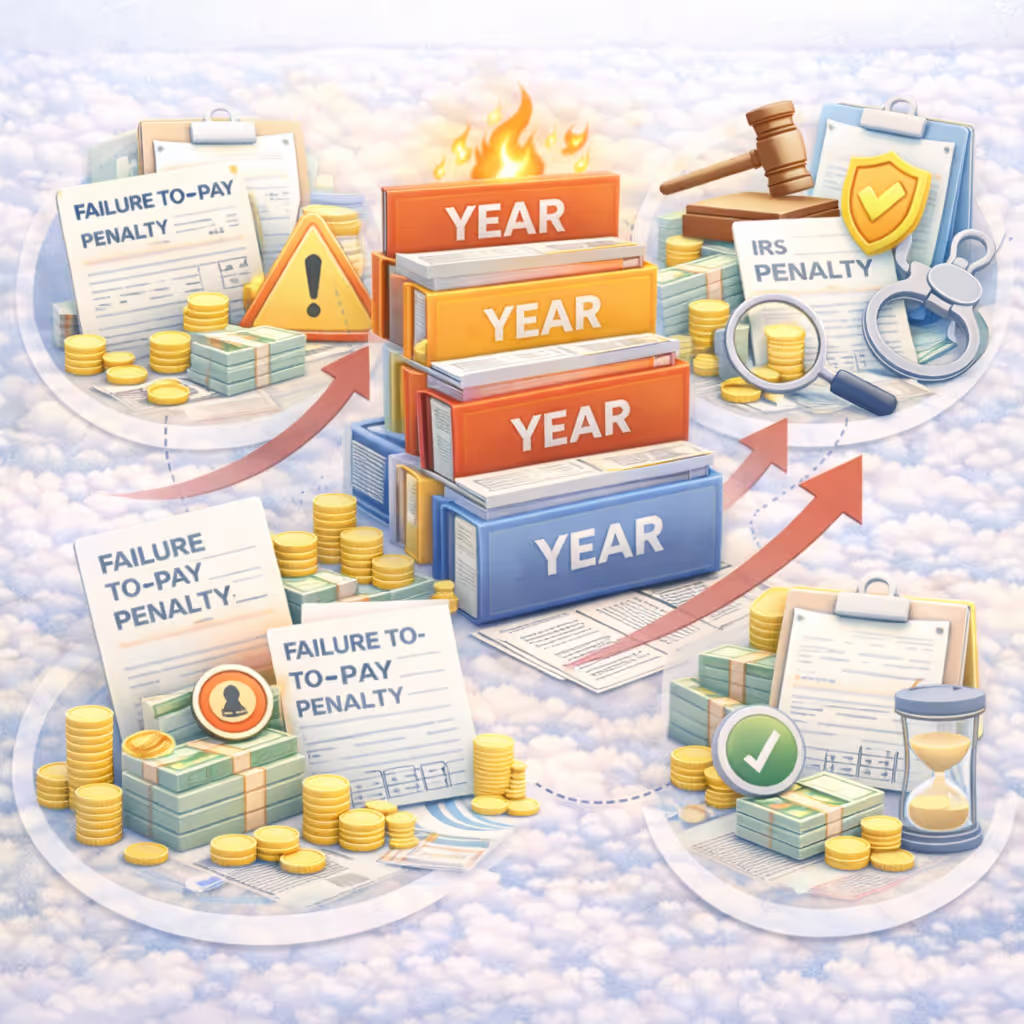
Illustration showing a stack of year-labeled binders in the center with arrows pointing to documents labeled 'Failure to-Pay Penalty' and 'IRS Penalty,' surrounded by money, coins, legal symbols, and warning signs indicating penalties accumulating over years.
Illustration of stacked years on folders with money, an hourglass, and a clock, surrounded by charts, magnifying glasses, and percentage signs indicating financial growth and compounding over time.
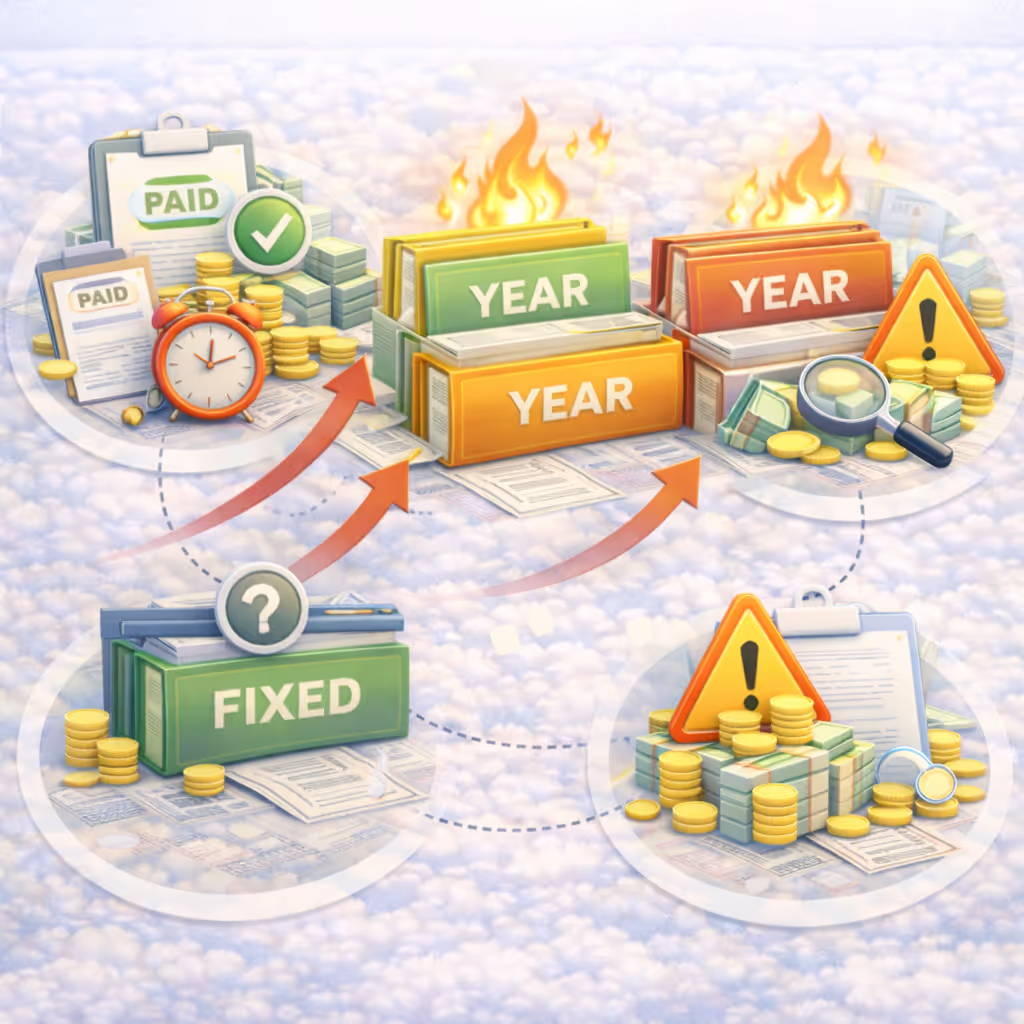
Illustration showing folders labeled FIXED and YEAR with arrows pointing to stacks of documents and money; some YEAR folders are on fire indicating financial issues.

Use the Calculator — Then Act

If your results show meaningful wage garnishment exposure, delaying action usually benefits the IRS — not you.

Understanding your numbers early helps you make informed decisions before each paycheck is affected.

A workspace with US dollar bills and coins, a calculator, eyeglasses, pens, legal documents, a clipboard with lined paper, and a wooden judge's gavel on a light marble surface.

Frequently Asked Questions (FAQs)

Is this an official IRS calculation?
Does interest stop on older tax years?
Does this include state or local taxes?
Do penalties apply separately for each year?
Does resolving one year stop interest on others?

Result sent!

Please check your email to review the result.
Oops! Something went wrong while submitting the form.