IRS Penalties & Interest Calculator — Tax Year 2016

Why your 2016 tax balance may feel precise but difficult to reduce
If you owed unpaid taxes for tax year 2016, your balance may feel precise, persistent, and higher than expected. This Penalty and Interest Calculator estimates how penalties and interest may have accumulated on your 2016 tax debt and why this year often contributes to enforcement risk when the Internal Revenue Service evaluates an account.
Takes about 60–90 seconds
No Social Security Number required
Estimate only
Step 1 of 4

Step 1 — 2016 Taxes

If you do not currently owe federal taxes, the calculator will stop.
Did you owe federal taxes for tax year 2016?
Please select an option.
Next
Important Disclosure
This calculator provides general informational estimates only and does not constitute tax, legal, or financial advice. Actual IRS decisions depend on documentation, compliance history, current rules, and your specific financial situation.
Take the Next Step
Use this calculator to understand your position before agreeing to any IRS action or payment arrangement. If results indicate risk, reviewing options early may help preserve flexibility.
Severity Level: HIGH / SEVERE

Estimated Impact for Tax Year 2016: $XX,XXX

This means penalties and interest related to tax year 2016 may have been assessed under federal tax law once an unpaid balance existed, applying automatically regardless of filing method or intent. Interest accrued on both unpaid tax and assessed penalties at IRS rates tied to the federal short-term rate, often increasing balances steadily even without active enforcement. As a result, unresolved 2016 balances are typically well-documented and defensible in later IRS reviews, which can strengthen enforcement considerations.

Many taxpayers describe 2016 balances as methodical rather than chaotic, with interest and penalties applied cleanly and consistently. The 2016 tax year aligns with a period when IRS systems applied penalties and interest with fewer administrative delays. Penalties were assessed according to the rule, IRS interest accrued predictably, and balances grew steadily when left unresolved.

How IRS Penalties & Interest Work

When a balance from a US income tax return, including a Form 1040 income tax return, amended return, or estimated tax filing such as Form 1040-ES, is not paid in full by April 15th or the applicable due date, penalties and interest apply automatically under the Internal Revenue Code. These charges may include late payment penalties, failure-to-file penalties, failure-to-pay penalties, or penalties for underpayment of estimated tax.Interest accrues daily using IRS interest calculation rules and established interest categories. IRS interest rates are updated quarterly, meaning interest on underpayments continues to accrue regardless of whether the balance resulted from miscalculation, delayed payment, or partial payments.

Why Tax Year 2016 Is Different

Tax year 2016 stands out because penalties and interest were applied with greater consistency and fewer processing disruptions than in earlier periods. Late filing and late payment penalties were assessed and accrued according to statutory timelines, penalty caps were reached as designed, and interest accrued continuously without interruption. As a result, 2016 balances often grew in a clean, predictable way, leaving little room for dispute.

How Balances Grow Over Time

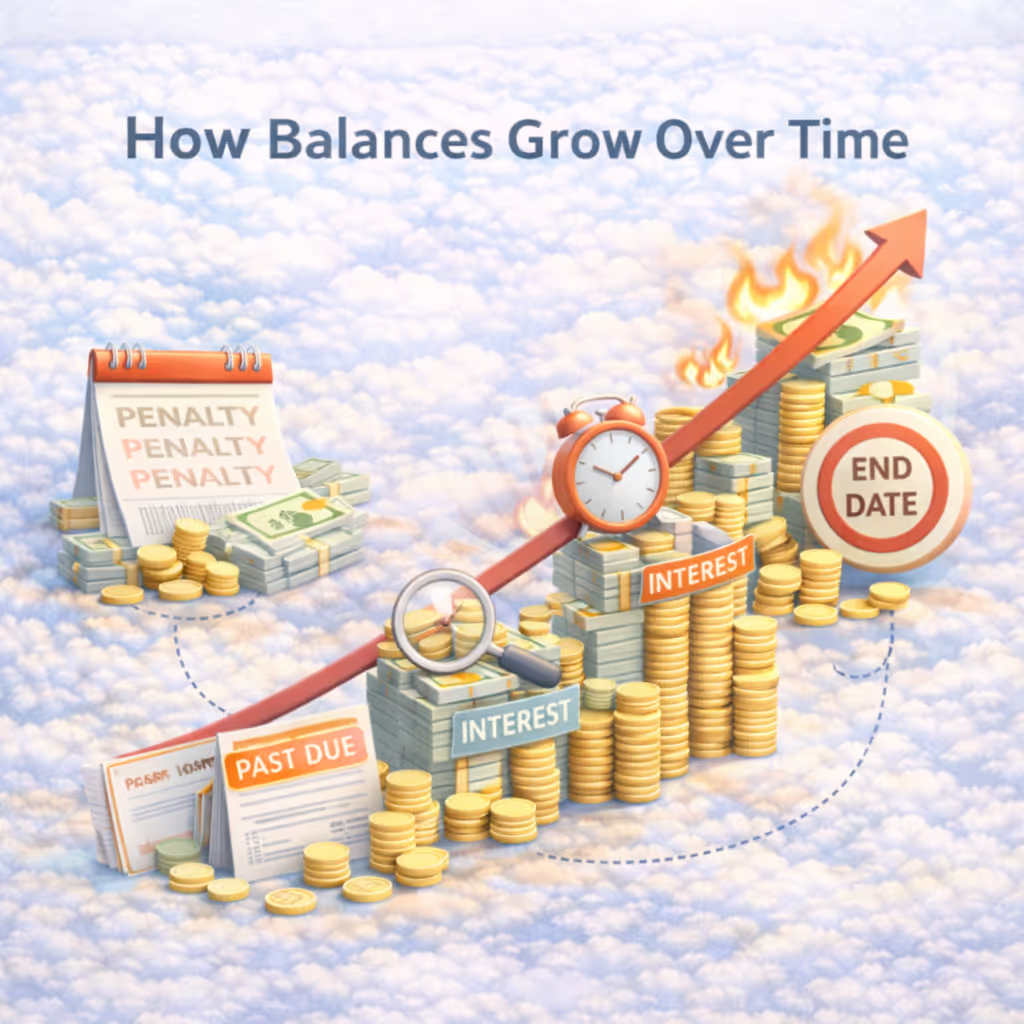
Interest accrues continuously on unpaid tax and assessed penalties using IRS interest formulas. Interest rates by category may change each tax quarter, but accrual continues as long as a balance exists.For tax year 2016, balances often grew because payments were delayed beyond the due date, partial payments did not stop interest and penalties, and manageable balances were assumed to remain manageable. Without processing noise or delayed posting, consistent accrual allowed interest to compound quietly over time.

What to Do After Seeing Your Estimate

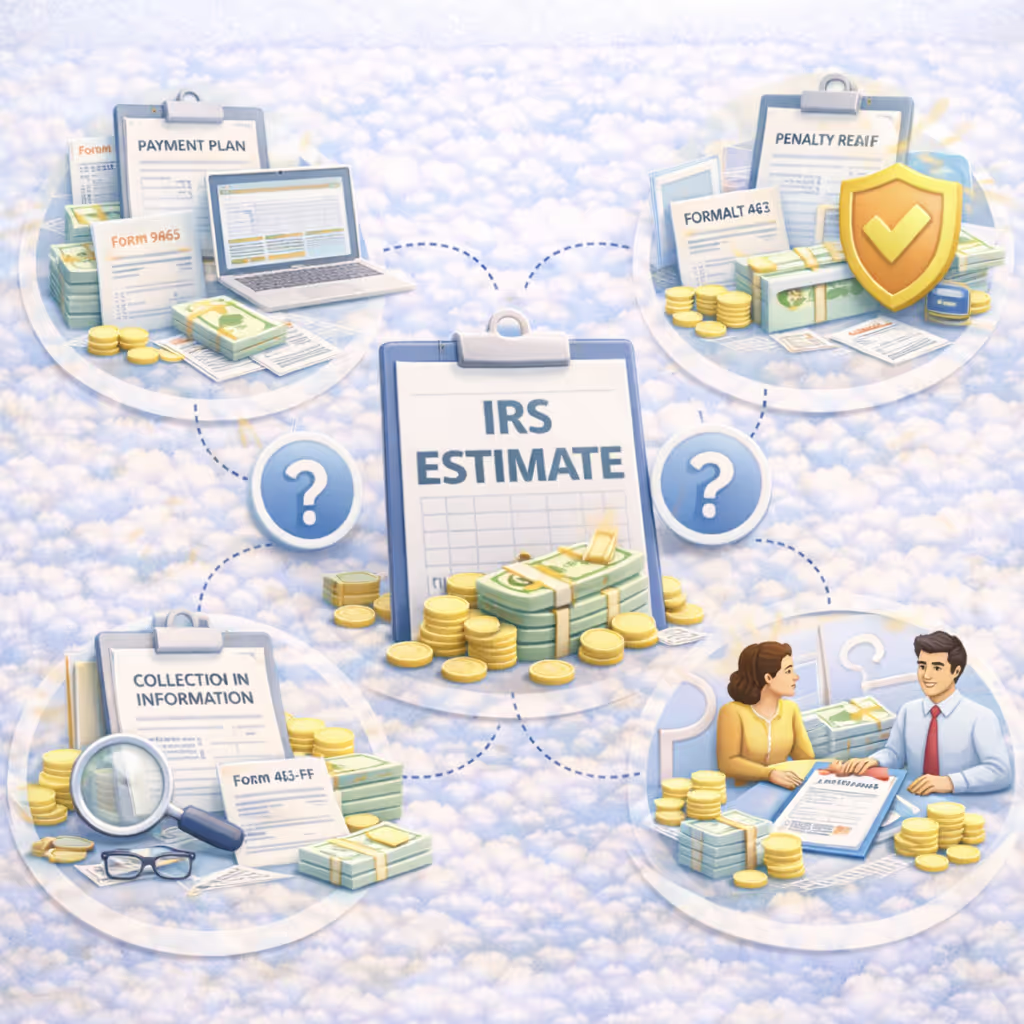
An estimate from this IRS Interest or penalty calculator can help clarify how consistent accruals affected your 2016 balance, as cleanly accrued years are often easier to overlook but harder to reverse. After reviewing the estimate, taxpayers typically compare it to IRS transcripts or notices, assess whether penalties may qualify for abatement, evaluate payment options, and consider broader resolution paths such as an offer in compromise or Currently Not Collectible status when hardship applies.

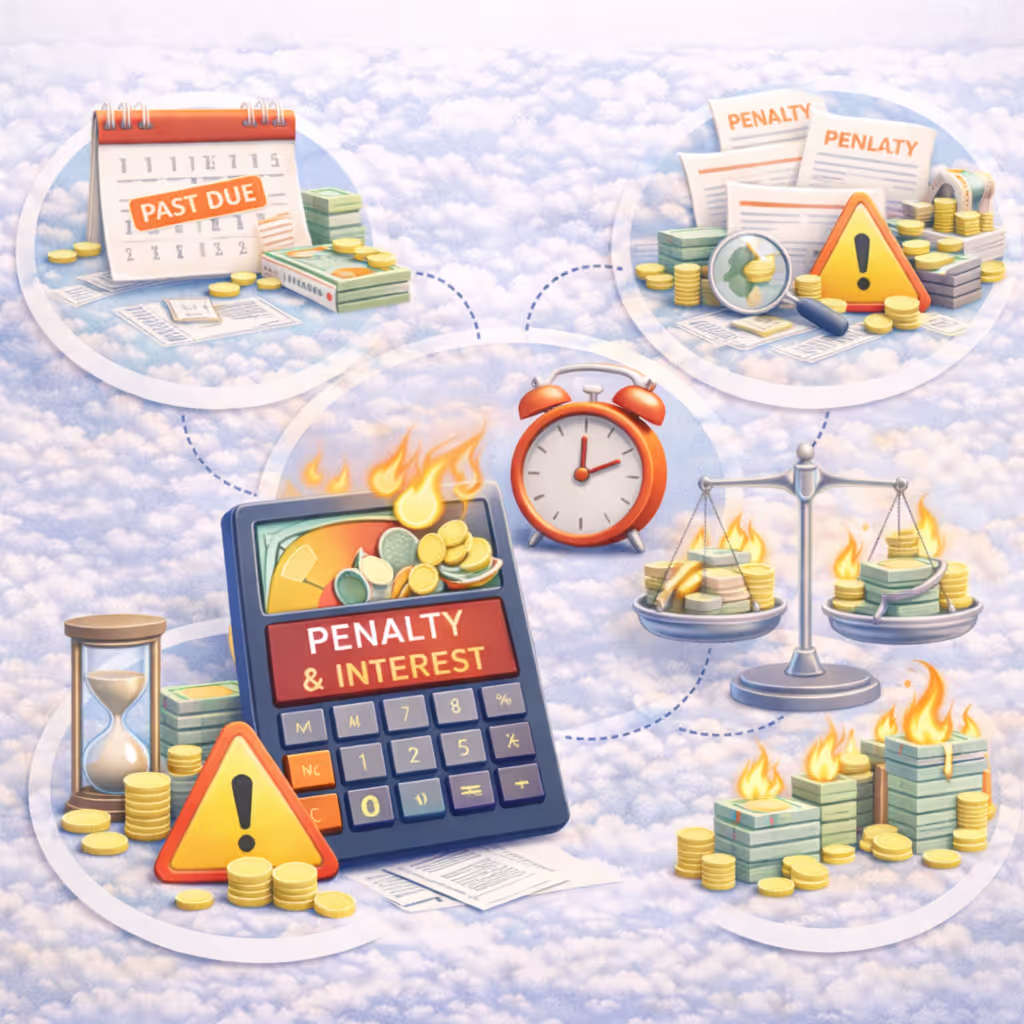
Illustration of IRS penalty and interest concepts featuring a burning calculator labeled 'Penalty & Interest,' a past due calendar, penalty notices, burning stacks of money, a clock, and a balance scale with money and flames.
Illustration of a 2025 calendar surrounded by tax forms, money stacks, magnifying glasses, a clock, and a person checking a phone, representing tax year 2025 and related financial activities.
Illustration showing how balances grow over time with penalty and past due bills leading to increasing interest and an end date, represented by stacks of money, coins, a clock, and a rising arrow.
Illustration showing an IRS estimate at the center surrounded by four scenarios: payment plan with forms and a laptop, penalty relief with shield and money, collection information with magnifying glass and glasses, and a man and woman discussing an IRS response with money stacks.

Use the Calculator — Then Act

If your results show meaningful wage garnishment exposure, delaying action usually benefits the IRS — not you.

Understanding your numbers early helps you make informed decisions before each paycheck is affected.

A workspace with US dollar bills and coins, a calculator, eyeglasses, pens, legal documents, a clipboard with lined paper, and a wooden judge's gavel on a light marble surface.

Frequently Asked Questions (FAQs)

Why does my 2016 balance look more structured than earlier years?
Does interest still accrue on a 2016 balance?
Can penalties from 2016 still be reduced?
Why didn’t I notice the balance growing?
Does 2016 matter if I have other unresolved years?
Is it safer to focus on years with obvious problems instead?

Result sent!

Please check your email to review the result.
Oops! Something went wrong while submitting the form.