IRS Penalties & Interest Calculator — Tax Year 2013

Why your 2013 tax balance may still influence enforcement decisions
If you owe the Internal Revenue Service for tax year 2013, you may remember this year as the point when IRS notices started to feel more serious. For many income tax return filers, 2013 was the first time collection letters used firmer language, clearer deadlines, or stronger warnings — even though enforcement did not immediately follow.
Takes about 60–90 seconds
No Social Security Number required
Estimate only
Step 1 of 4

Step 1 — 2013 Taxes

If you do not currently owe federal taxes, the calculator will stop.
Did you owe federal taxes for tax year 2013?
Please select an option.
Next
Important Disclosure
This calculator provides general informational estimates only and does not constitute tax, legal, or financial advice. Actual IRS decisions depend on documentation, compliance history, current rules, and your specific financial situation.
Take the Next Step
Use this calculator to understand your position before agreeing to any IRS action or payment arrangement. If results indicate risk, reviewing options early may help preserve flexibility.
Severity Level: HIGH / SEVERE

Estimated Impact for Tax Year 2013: $XX,XXX

This means that if a balance remained unpaid for tax year 2013, penalties and interest may have been assessed automatically once the return showed a balance due, with interest continuing to accrue regardless of IRS notices or correspondence. While escalating letters often created urgency without immediate enforcement, interest and penalties continued accumulating internally under standard IRS procedures, increasing the total balance over time.

Tax year 2013 often marks a transition from quiet accumulation to escalation. Earlier fiscal years may have faded into the background, but 2013 is when unpaid individual income taxes began appearing in stronger IRS notice language, while penalties and interest continued to accumulate quietly under the Internal Revenue Code. This combination makes 2013 a year that still carries weight when accounts are reviewed later. This page and calculator explain why 2013 balances are often tied to escalation, how penalties and interest continued growing after notices slowed, and why this year still affects enforcement decisions long after the original federal income tax return was filed.

How IRS Penalties & Interest Work

IRS penalties and interest apply automatically once a balance is assessed, regardless of notice timing or enforcement activity. Penalties for filing or payment issues are typically assessed early and remain attached to the balance, while interest continues accruing on both unpaid tax and penalties over time, often becoming the largest driver of balance growth.

Why Tax Year 2013 Is Different

Tax year 2013 often marks the transition from quiet balances to enforcement-relevant debt. IRS notices intensified during this period, creating urgency without immediate action, which led many taxpayers to underestimate the risk while penalties and interest continued accumulating under standard IRS procedures.

How Balances Grow Over Time

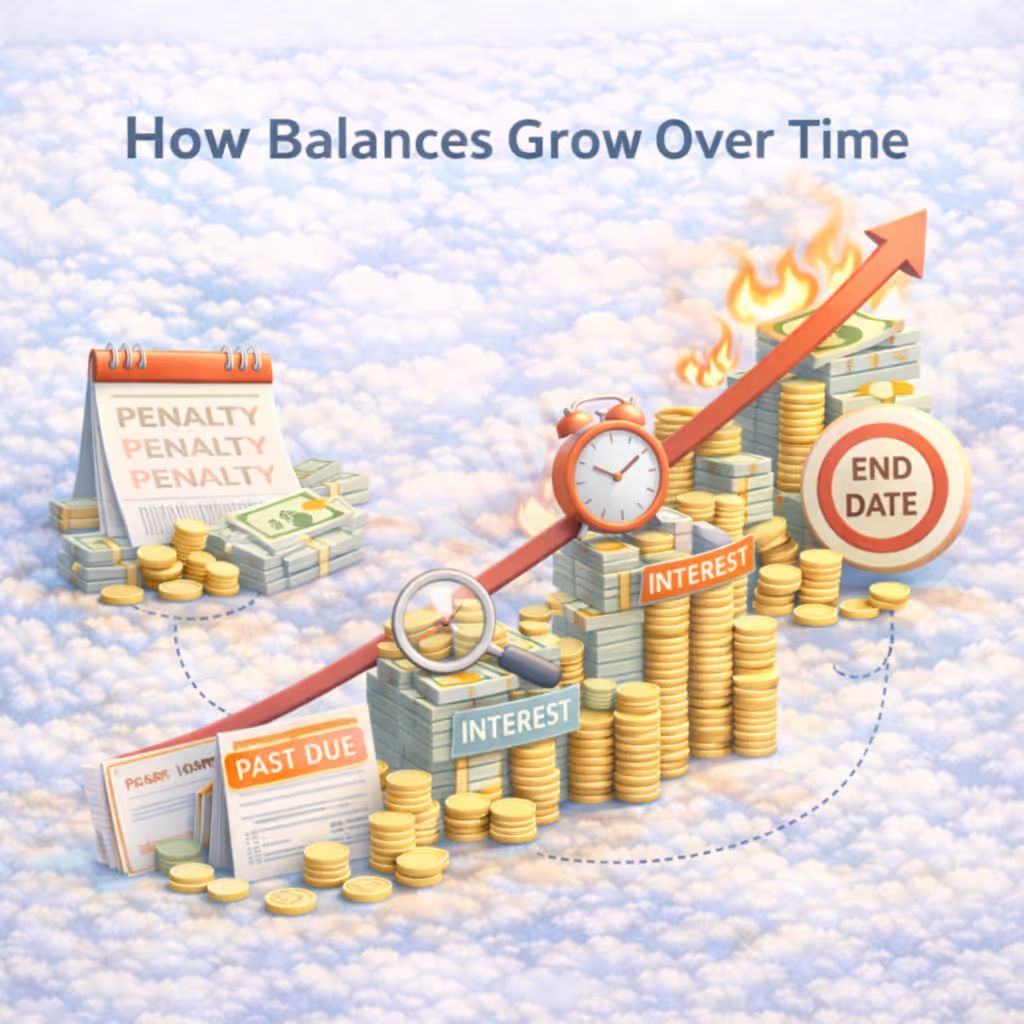
Even after IRS correspondence slows, interest accrues continuously on unpaid tax and assessed penalties. Over long periods, this compounding effect can cause the balance to grow far beyond the original amount owed, making older years like 2013 disproportionately influential when the IRS evaluates overall compliance.

What to Do After Seeing Your Estimate

After reviewing your estimate, the next steps typically include comparing it to IRS notices or transcripts, reviewing whether penalties may qualify for relief, evaluating how 2013 interacts with other unresolved years, and addressing balances tied to notice escalation before they strengthen enforcement decisions. Older escalation years often carry more weight than taxpayers expect.

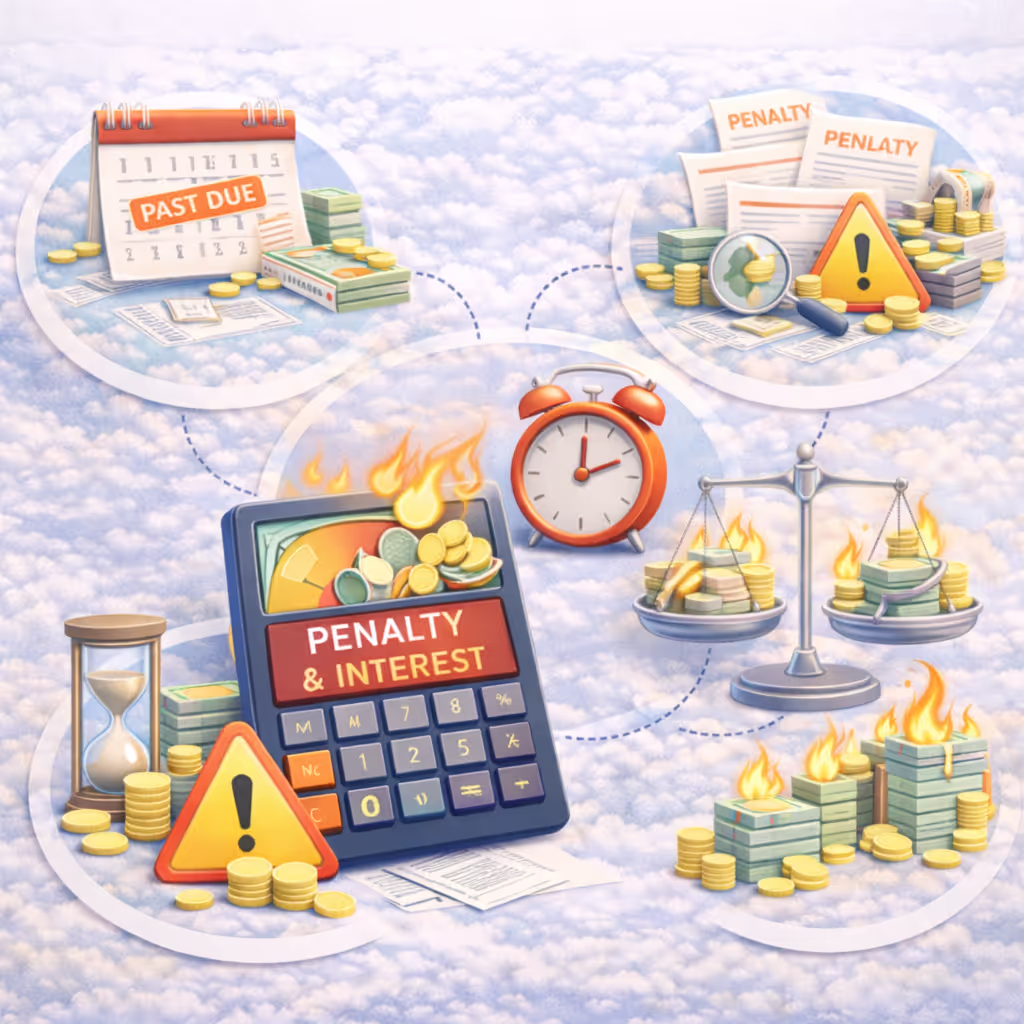
Illustration of IRS penalty and interest concepts featuring a burning calculator labeled 'Penalty & Interest,' a past due calendar, penalty notices, burning stacks of money, a clock, and a balance scale with money and flames.
Illustration of a 2025 calendar surrounded by tax forms, money stacks, magnifying glasses, a clock, and a person checking a phone, representing tax year 2025 and related financial activities.
Illustration showing how balances grow over time with penalty and past due bills leading to increasing interest and an end date, represented by stacks of money, coins, a clock, and a rising arrow.
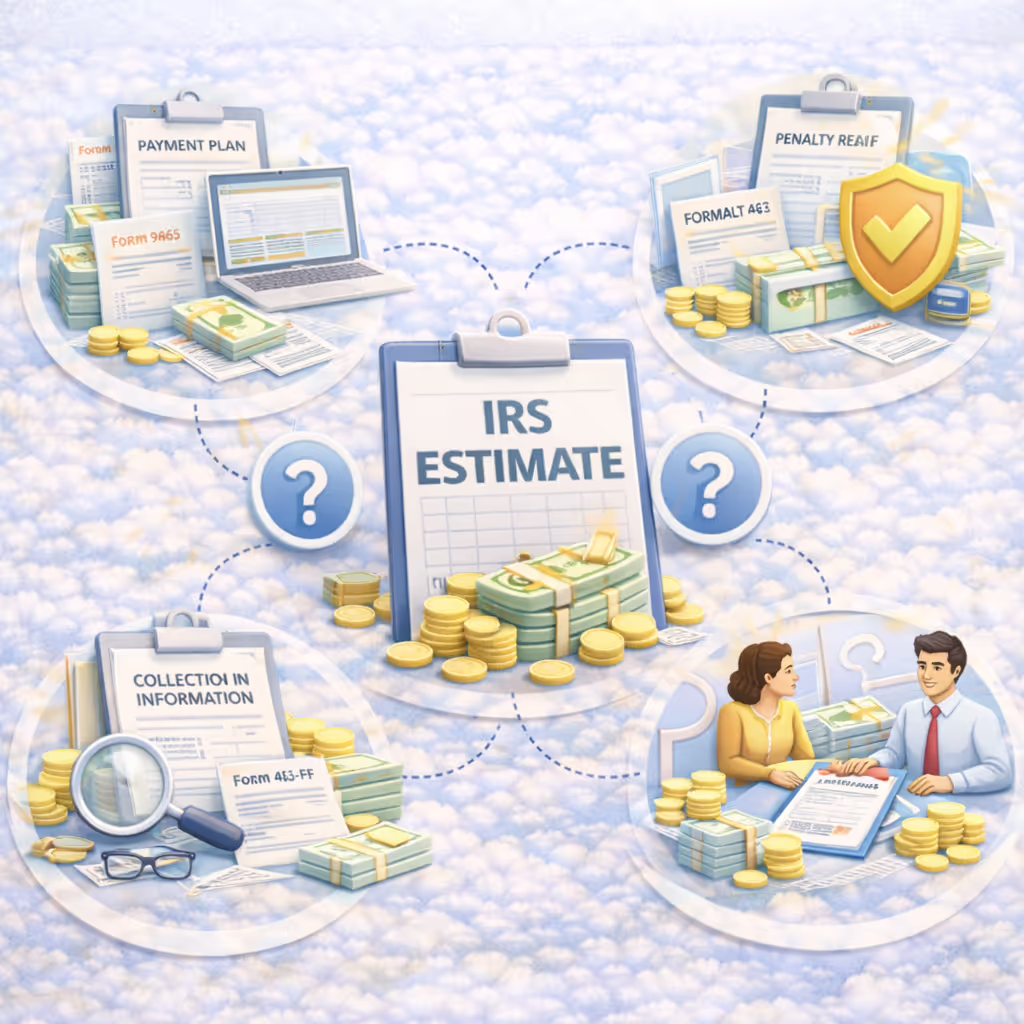
Illustration showing an IRS estimate at the center surrounded by four scenarios: payment plan with forms and a laptop, penalty relief with shield and money, collection information with magnifying glass and glasses, and a man and woman discussing an IRS response with money stacks.

Use the Calculator — Then Act

If your results show meaningful wage garnishment exposure, delaying action usually benefits the IRS — not you.

Understanding your numbers early helps you make informed decisions before each paycheck is affected.

A workspace with US dollar bills and coins, a calculator, eyeglasses, pens, legal documents, a clipboard with lined paper, and a wooden judge's gavel on a light marble surface.

Frequently Asked Questions (FAQs)

Why did IRS letters feel more serious in 2013?
Does interest still accrue on a 2013 balance?
Why did nothing happen after I received notices?
Can penalties from 2013 still be reduced?
Does resolving newer years affect how 2013 is treated?
Is 2013 less critical than newer years?

Result sent!

Please check your email to review the result.
Oops! Something went wrong while submitting the form.