IRS Penalties & Interest Calculator — Tax Year 2010

Why the IRS still cares about a tax year this old
If you owe the Internal Revenue Service for tax year 2010, you are probably asking a reasonable question: “Why is the IRS still dealing with something that happened more than a decade ago?” Many taxpayers assume that very old tax years simply fade away, but they do not. In fact, unresolved balances from 2010 often remain active and expensive precisely because so much time has passed. This is not an official IRS payoff tool, but it helps clarify whether a 2010 balance has grown into a serious issue.
Takes about 60–90 seconds
No Social Security Number required
Estimate only
Step 1 of 4

Step 1 — 2010 Taxes

If you do not currently owe federal taxes, the calculator will stop.
Did you owe federal taxes for tax year 2010?
Please select an option.
Next

Step 2 — Original Balance

Original IRS tax balance owed for 2010 (before penalties and interest)
Must be greater than $0.
Please enter a valid dollar amount greater than $0.

Step 3 — Filing, Payment, Payments Made

Did you file your 2010 tax return late?
Please select an option.
Did you pay the 2010 tax balance late or not at all?
Please select an option.
Have you made any payments toward the 2010 balance since filing?
Please select an option.

Step 4 — Filing Status

Do you believe the 2010 tax debt is still unpaid today?
Please select an option.

Not Applicable

This is an estimate only and not legal or tax advice. IRS approval is not guaranteed.

Estimated IRS Penalties & Interest Impact — 2025 Taxes

Original 2025 balance: Estimated balance today: Estimated added:

Growth tier: -

IRS penalties and interest continue to grow on unpaid balances until resolved or expired. Older tax years like 2010 often carry significant hidden growth.

What You Entered

If any of this is inaccurate, go back and update your answers for a more reliable estimate.
Disclaimer: This is an estimate only and not legal or tax advice. Actual IRS balances require transcript review.
Important Disclosure
This calculator provides general informational estimates only and does not constitute tax, legal, or financial advice. Actual IRS decisions depend on documentation, compliance history, current rules, and your specific financial situation.
Take the Next Step
Use this calculator to understand your position before agreeing to any IRS action or payment arrangement. If results indicate risk, reviewing options early may help preserve flexibility.
Severity Level: HIGH / SEVERE

Estimated Impact for Tax Year 2010: $XX,XXX

This means that if a balance from tax year 2010 was not fully paid by the original due date, penalties and interest may still be attached to the account today. Filing a return or receiving IRS notices did not stop interest from accruing, and later actions such as partial payments, payment plan requests, or periods of inactivity can affect whether the IRS still considers the balance collectible. Over long periods, interest often becomes the primary driver of balance growth.

How IRS Penalties & Interest Work

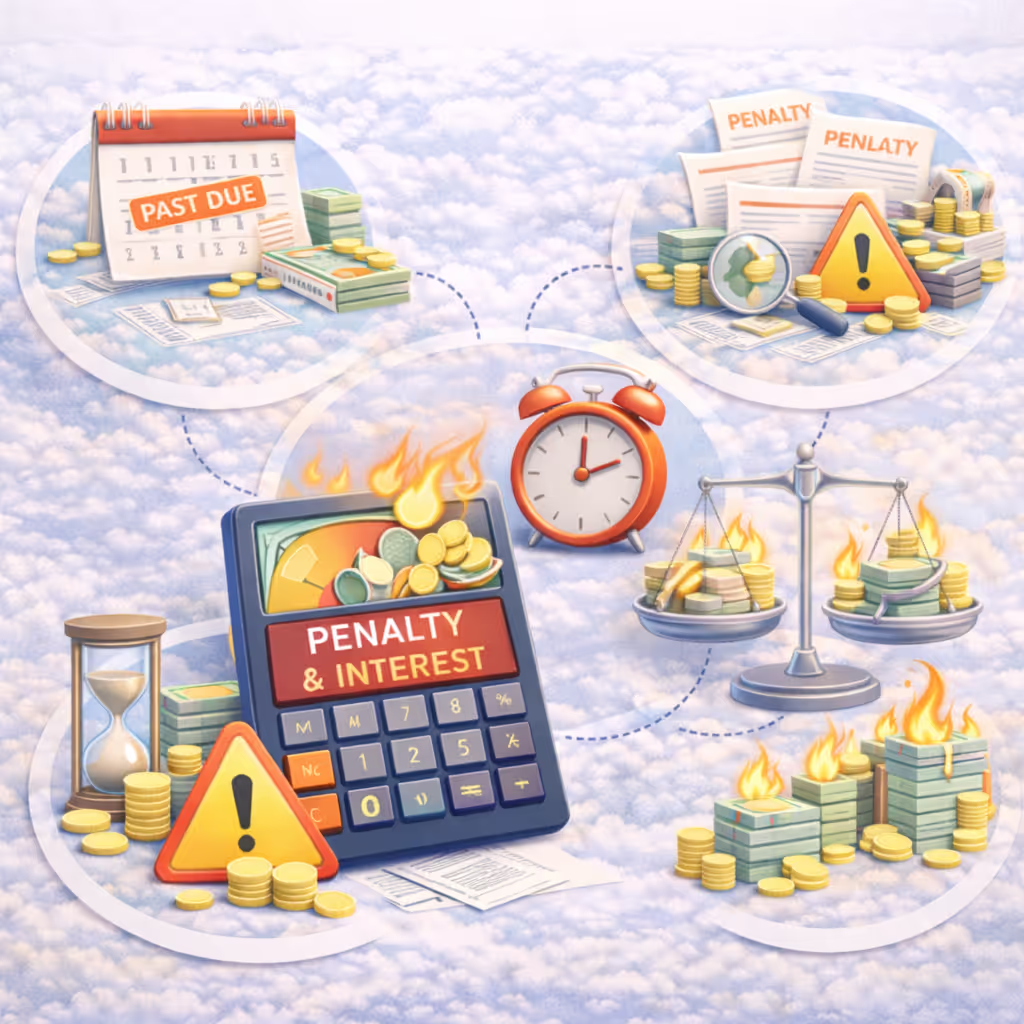
IRS penalties and interest apply automatically once a balance exists, even without enforcement activity. Penalties for filing or payment issues are typically assessed early and then stop increasing once capped, but they remain part of the balance. Interest continues accruing on both unpaid tax and penalties at rates adjusted quarterly, often becoming the dominant driver of long-term growth.

Why Tax Year 2010 Is Different

Tax year 2010 stands out because time itself became the biggest factor. Many penalties reached their maximum early and then faded from attention, while interest continued compounding quietly for years. Because IRS accounts are reviewed as a whole, unresolved 2010 balances can still matter today—especially if later actions extended collection timelines or triggered broader account reviews.

How Balances Grow Over Time

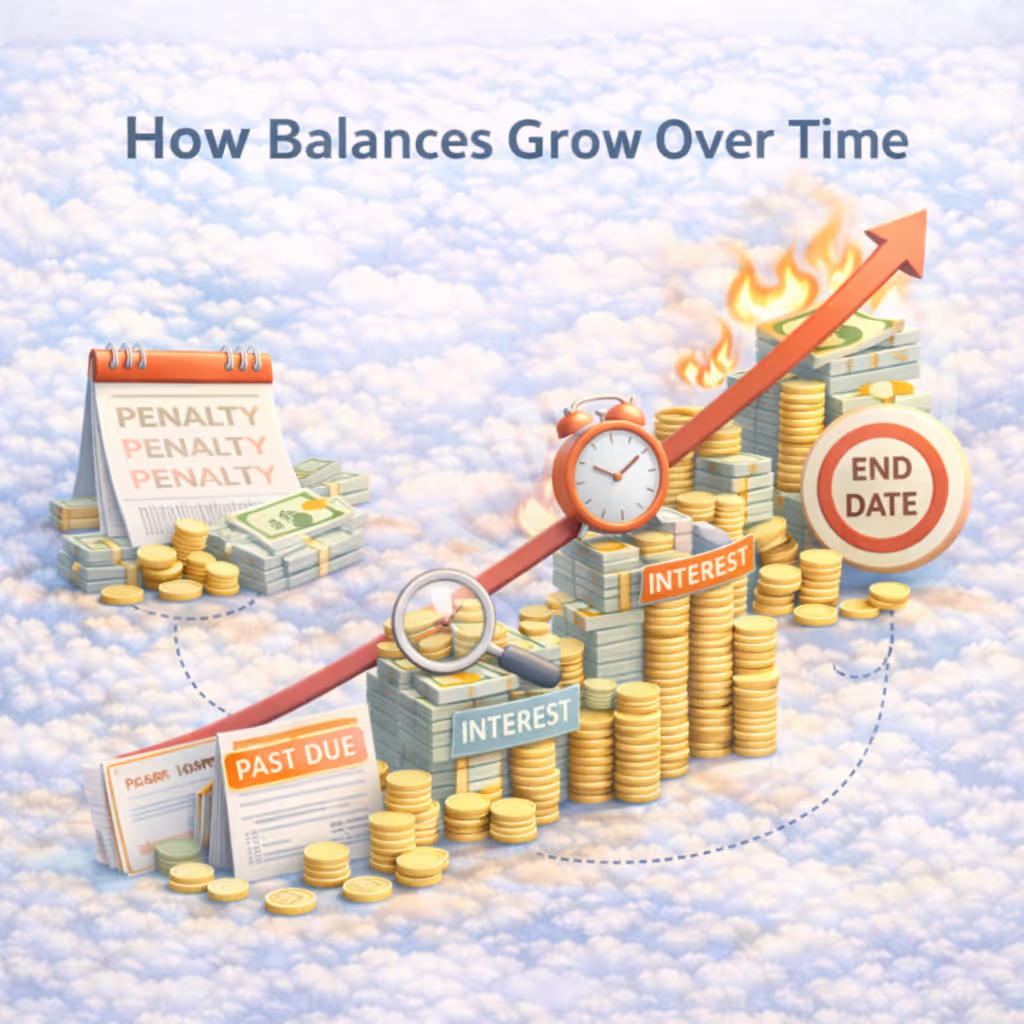
Most 2010 balances did not grow suddenly but expanded steadily through long-term interest accrual during periods of little or no IRS communication. Partial payments, inactive periods, or delayed follow-up reduced urgency without stopping interest, which is why old balances from 2010 often look unrecognizable when reviewed years later.

What to Do After Seeing Your Estimate

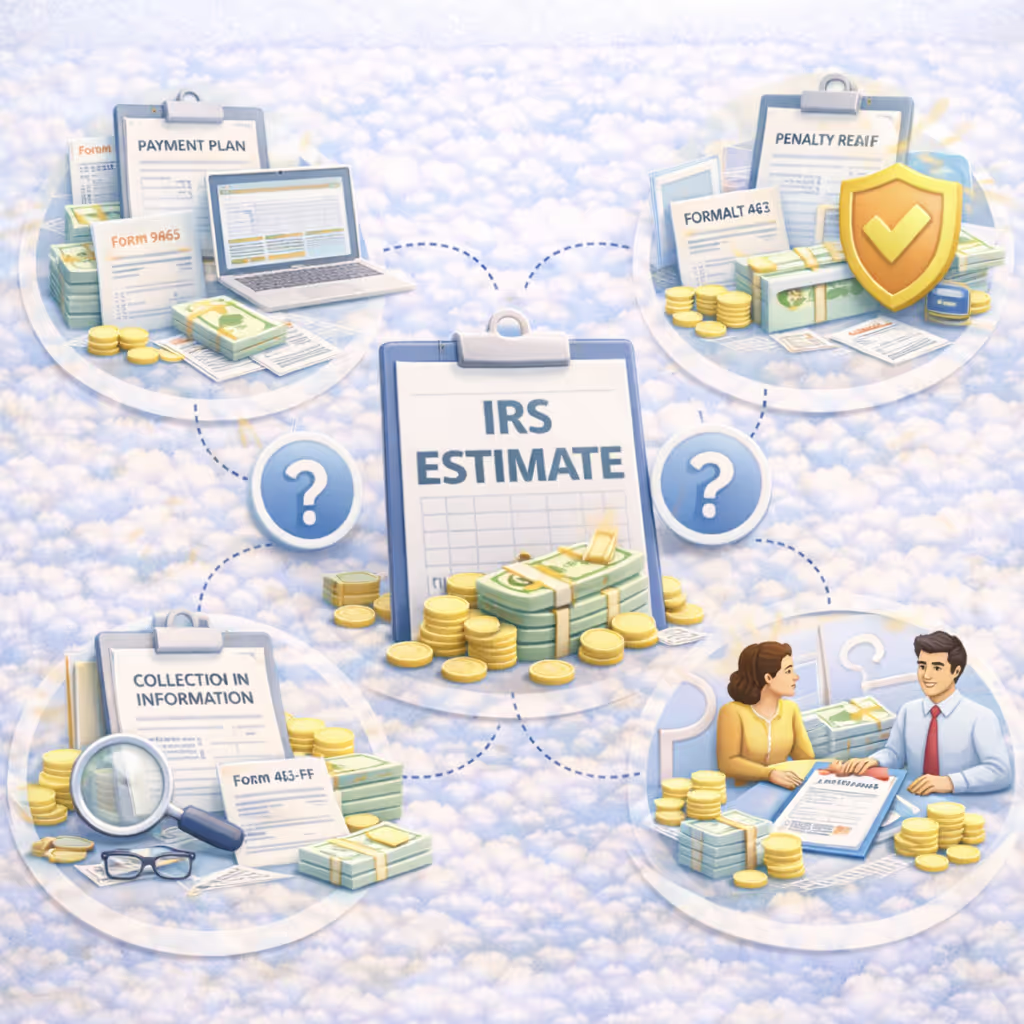
After reviewing your estimate, common next steps include comparing it to IRS notices or transcripts, determining whether penalties may qualify for abatement, evaluating whether resolution options still exist, and addressing the year before it complicates newer filings or enforcement decisions. Older unresolved years often carry more influence than taxpayers expect because they shape the IRS’s view of overall compliance.

Illustration of IRS penalty and interest concepts featuring a burning calculator labeled 'Penalty & Interest,' a past due calendar, penalty notices, burning stacks of money, a clock, and a balance scale with money and flames.
Illustration showing how balances grow over time with penalty and past due bills leading to increasing interest and an end date, represented by stacks of money, coins, a clock, and a rising arrow.
Illustration showing an IRS estimate at the center surrounded by four scenarios: payment plan with forms and a laptop, penalty relief with shield and money, collection information with magnifying glass and glasses, and a man and woman discussing an IRS response with money stacks.

Use the Calculator — Then Act

If your results show meaningful wage garnishment exposure, delaying action usually benefits the IRS — not you.

Understanding your numbers early helps you make informed decisions before each paycheck is affected.

A workspace with US dollar bills and coins, a calculator, eyeglasses, pens, legal documents, a clipboard with lined paper, and a wooden judge's gavel on a light marble surface.

Frequently Asked Questions (FAQs)

Does the IRS really still care about a tax year this old?
Does interest still accrue on a 2010 balance?
Can the IRS still collect on a 2010 balance?
Why did this year resurface now after so long?
Can penalties from 2010 still be reduced?
Is it better to ignore 2010 and focus on newer years?

Result sent!

Please check your email to review the result.
Oops! Something went wrong while submitting the form.

Result sent!

Please check your email to review the result.
Oops! Something went wrong while submitting the form.