IRS Bank Levy (Personal) Calculator

An IRS bank levy is one of the most aggressive collection tools the government uses to recover unpaid federal tax debt. Unlike wage garnishment, which limits how much can be taken from each paycheck, a bank levy targets the funds already sitting in your account — often all at once.

This calculator helps you estimate how much of your personal bank account may be frozen, how urgent your enforcement risk is, and whether resolution options still exist before funds are transferred to the IRS.
Bank levies can freeze accounts without warning
Funds for rent, groceries, or medical bills are not automatically protected
Timing is critical once a levy is issued

IRS Bank Levy (Personal) Calculator

Understand Your Exposure Before Funds Are Seized

When a notice of levy is issued to your bank, your account may be restricted immediately. Many taxpayers are caught off guard because the IRS does not provide advance notice beyond letters that are often overlooked, misunderstood, or mistaken for routine correspondence.

This IRS bank levy calculator provides an estimate to help you understand:

How much of your current bank balance may be frozen
How close your account may be to enforcement
Whether options such as a payment plan, Offer in Compromise, or Currently Not Collectible status may still be available

Use the calculator to assess urgency before enforcement escalates further.

Step 1 of 4

Step 1 — Current Bank Levy Status

If the IRS has already frozen or taken funds, this is treated as an emergency signal.
Has the IRS frozen or taken money from your bank account already?
Please select an option.
Have you received a Final Notice of Intent to Levy from the IRS?
Please select an option.
Next

Step 2 — IRS Balance

Select the range that best matches what you believe you owe.
About how much do you currently owe the IRS?
Please select an option.

Step 3 — Bank Funds & Payment Plan

These factors affect the likelihood and impact of a bank levy.
Do you currently have money in a checking or savings account?
Please select an option.
Are you currently on an IRS payment plan?
Please select an option.

Step 4 — Filing Status

Unfiled tax returns can increase enforcement risk.
Have you filed all required federal tax returns?
Please select an option.

Not eligible

This is an estimate only and not legal or tax advice.

Your IRS Bank Levy Individual Result

Risk tier, score, and confidence are based on your scoring rules (including the emergency override).

-

-
Score: “Not sure” answers:
If any of this is inaccurate, go back and update your answers for a more reliable estimate.

What You Entered

Bank levies operate on strict timelines, and mistakes during the hold period can permanently affect your options.

This checklist explains what to do immediately after a levy hits, how release decisions are made, and how to prevent repeat levies once the immediate issue is addressed.
Download Emergency Checklist
This is an estimate only and not legal or tax advice.
Important Disclosure
This calculator provides general informational estimates only and does not constitute tax, legal, or financial advice. Actual IRS decisions depend on documentation, compliance history, current rules, and your specific financial situation.
Take the Next Step
Use this calculator to understand your position before agreeing to any IRS action or payment arrangement. If results indicate risk, reviewing options early may help preserve flexibility.

What Is an IRS Bank Levy?

An IRS bank levy is a legal seizure that allows the Internal Revenue Service to freeze and take funds from your personal bank account to satisfy unpaid tax debt. Unlike wage levies, a bank levy applies to the available funds in your checking and savings accounts at a single point in time, with no per-paycheck exemption, and it may include money intended for everyday living expenses.

Illustration showing a crossed-out gavel symbol, an envelope, locked bank building and cash, a pile of bank levy documents, and a worried couple holding bills.

What Most Taxpayers Don’t Realize About Bank Levies

Many taxpayers don’t realize the IRS can issue a bank levy without going to court. Once notice requirements are met, the IRS can freeze and seize bank funds with little warning—even money needed for daily expenses.

IRS Bank Levy Basics

No court order required
Levy sent directly to banks
Funds frozen immediately
Hardship not automatically considered

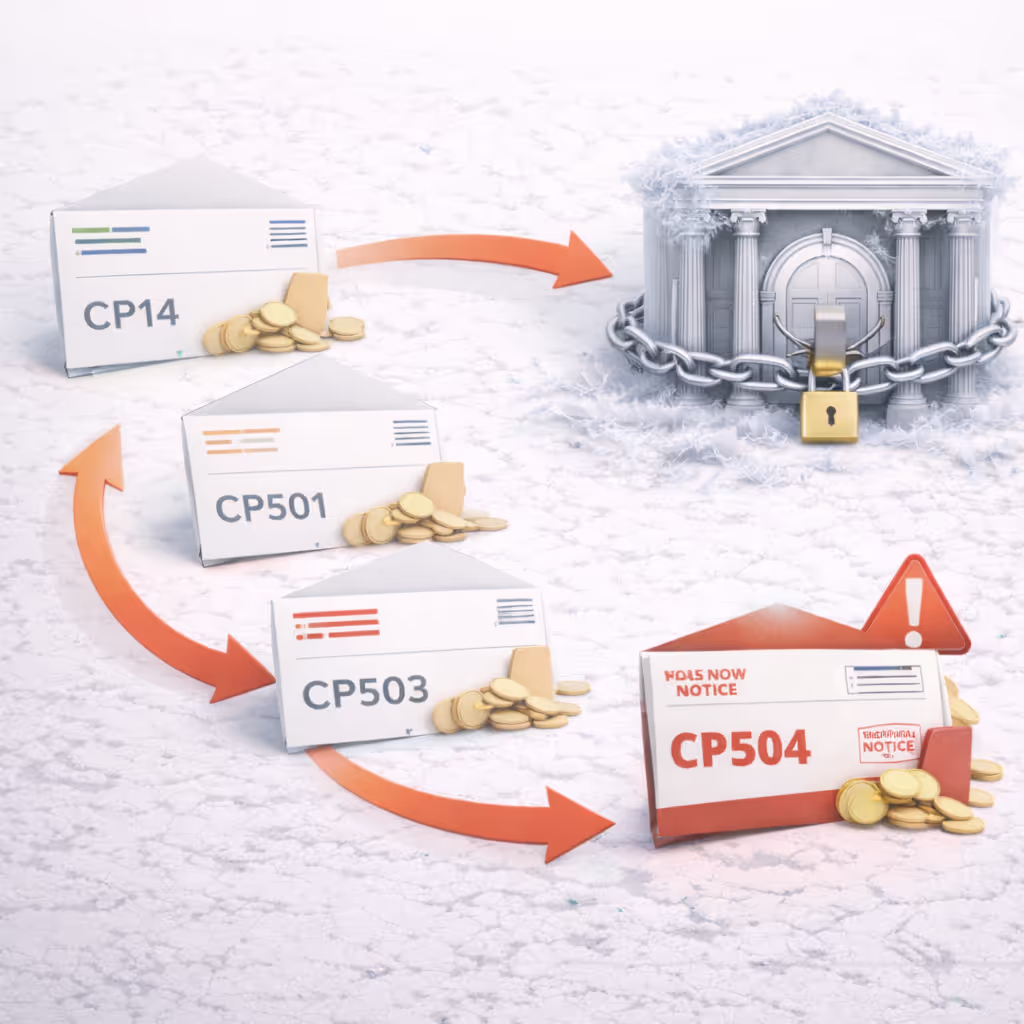
How IRS Bank Levies Typically Happen

IRS Balance-Due Notices Are Sent

Most bank levies follow a predictable timeline. Common notices include:

CP14 — First balance-due notice
CP501 — Reminder notice
CP503 — Second reminder
CP504 — Final notice before levy
Diagram showing IRS bank levy process with envelopes labeled CP14, CP501, CP503, CP504 and arrows pointing to a locked bank building symbol.
Illustration of worried couple looking at phone, overdue bills and coins, locked bank building with chain and padlock, a stack of papers with a 'Do Not Open' sign, and a ringing alarm clock with question marks.

Why Bank Levies Catch People Off Guard

Notices may have been mailed months earlier
Banks are prohibited from warning customers
The IRS does not announce levy dates

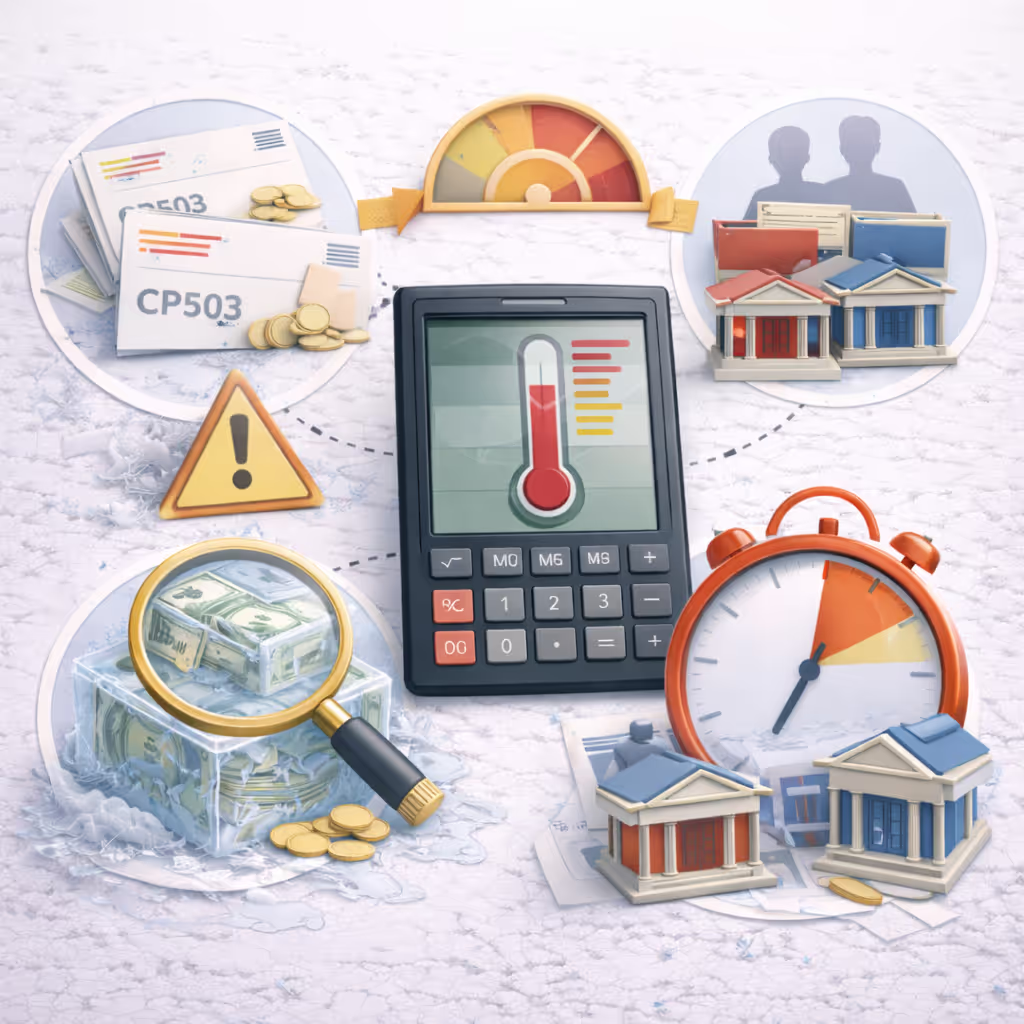
What This Calculator Estimates

This calculator provides a general estimate based on standard IRS bank levy practices.

It helps estimate:

Potential exposure
How much of your current balance may be frozen
Urgency level based on notice history and timing
Risk factors such as joint accounts or multiple banks
Calculator with a thermometer icon surrounded by images of documents, coins, magnified money bundles, warning sign, clock, and small bank buildings representing financial and time-related concepts.
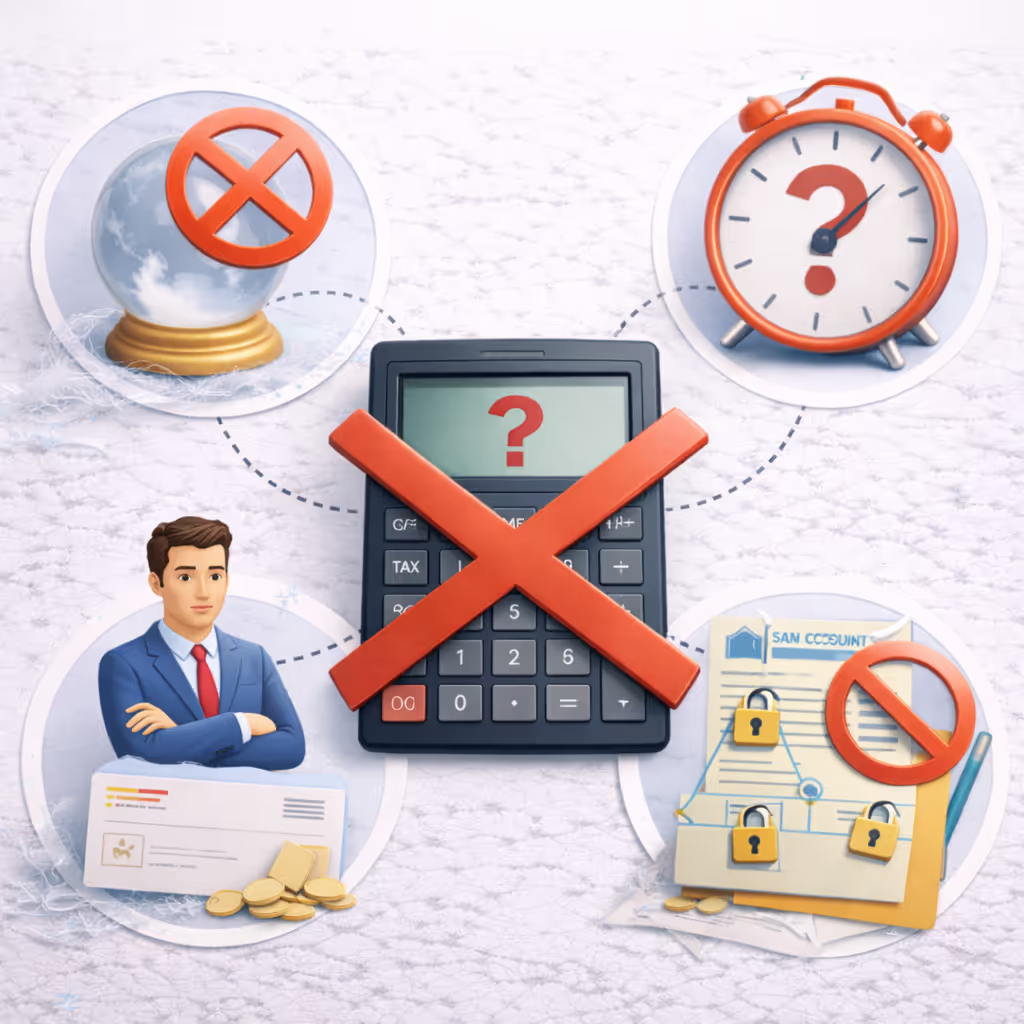
Calculator in center with red X over it and question mark on screen, surrounded by icons of a crossed-out crystal ball, a clock with question mark, a businessman with money, and locked documents with a no symbol.

What the Calculator Does Not Do

It does not guarantee a levy will occur
It does not predict exact IRS timing
It does not replace professional review
It assumes a standard personal bank account

Important Limits on Bank Levy Protection

Unlike wage garnishment, bank levies offer minimal automatic protection.

Typically not protected:

Checking and savings balances
Funds for everyday living expenses
Savings, CDs, or money market accounts
Central blue shield with a lock surrounded by four circles depicting financial elements: checking and savings accounts, grocery cart with bills and coins, cash in a container, and checks with wallet and coins.
Illustration of a man in a suit working on a laptop surrounded by icons of legal notices, locked bank building, unpaid taxes, and documents with a magnifying glass.

When a Professional Review Makes Sense

Consider a review if:

You received CP504, Letter 1058, or LT11
Your bank account is frozen
You owe back taxes with no active resolution
You are unsure how close enforcement may be

Use the Calculator — Then Act

If your results show meaningful wage garnishment exposure, delaying action usually benefits the IRS — not you.

Understanding your numbers early helps you make informed decisions before each paycheck is affected.

A workspace with US dollar bills and coins, a calculator, eyeglasses, pens, legal documents, a clipboard with lined paper, and a wooden judge's gavel on a light marble surface.

Frequently Asked Questions (FAQs)

Can the IRS empty my entire bank account with a levy?
How long does a bank levy freeze last before money is taken?
Will the IRS warn me right before freezing my bank account?
Are joint bank accounts protected from IRS bank levies?
Can the IRS issue more than one bank levy?

Result sent!

Please check your email to review the result.
Oops! Something went wrong while submitting the form.

Result sent!

Please check your email to review the result.
Oops! Something went wrong while submitting the form.